
For brands sourcing wholesale 3-piece co-ord knitwear, color selection and fabric choice directly influence collection consistency, product positioning, and production costs. A coordinated set—such as a cardigan, camisole, and matching trousers—must look cohesive while remaining comfortable and practical for everyday wear.
For autumn, winter, and early spring collections, muted colors and earthy neutrals offer versatile styling options. Soft-touch yarn blends can also help brands balance comfort, durability, and care requirements. However, no single color palette or fabric composition works equally well for every target market.
Wholesale buyers should evaluate the complete three-piece outfit rather than select each garment independently. The most effective sourcing strategy combines coordinated colorways, application-appropriate yarns, manageable care requirements, and clearly defined bulk production specifications.
1. Why Color Planning Matters for Wholesale 3-Piece Co-ord Knitwear
A three-piece knitwear collection usually contains multiple garments designed to work together. Customers may wear all three pieces as a complete outfit or combine individual pieces with other wardrobe staples.
For wholesale buyers, this creates two important design priorities: visual coordination and individual versatility.
Muted Colors for a Refined Seasonal Collection
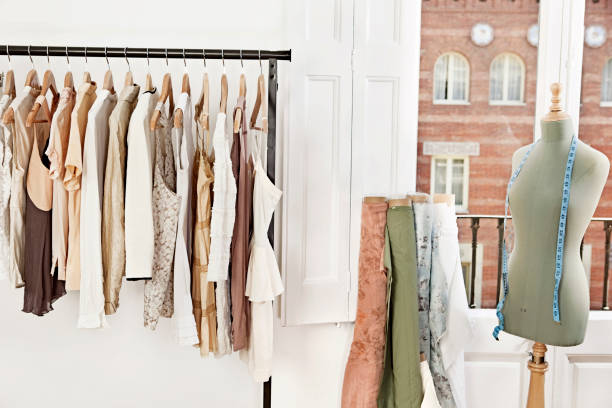
Muted colors work well for collections built around understated styling. They can create a soft, coordinated appearance without relying on high-contrast patterns or complicated color blocking.
Consider these options for autumn, winter, and early spring:
- Dusty rose: Adds warmth and softness to feminine knitwear collections.
- Sage green: Offers a nature-inspired alternative to conventional neutrals.
- Dusty blue: Introduces a cool accent while maintaining a restrained appearance.
- Mushroom gray: Provides a versatile neutral for understated everyday outfits.
- Muted lavender: Adds subtle color for transitional-season collections.
These shades are starting points rather than guaranteed bestsellers. Buyers should compare them with their brand identity, customer demographics, regional preferences, and existing product assortment.
For Fall/Winter 2026/2027, Pantone’s New York Fashion Week report provides a useful reference for seasonal color development. Buyers can use professional color forecasting to inform their palette, then confirm the final shades through physical yarn and garment samples.
Earth Tones for Commercial Versatility
Earth tones provide another practical direction for wholesale knitwear collections. Their natural appearance can support casual, minimalist, contemporary, and premium-inspired product positioning.
Useful shades include:
- Oatmeal and ecru: Suitable for light, understated outfits.
- Camel and warm beige: Create a classic autumn and winter palette.
- Chocolate brown: Adds depth and contrast to lighter neutral pieces.
- Olive and moss green: Introduce a natural tone without excessive brightness.
- Terracotta: Provides a warmer accent for seasonal collections.
A coordinated set does not need to use exactly the same color across all three garments. Buyers can create a more dimensional look by combining related shades.
For example, a cardigan in camel, a camisole in ecru, and trousers in chocolate brown create a tonal outfit with clear visual contrast. The combination remains coordinated while allowing each garment to work separately.
Build a Balanced Color Assortment
Rather than ordering too many colors at once, wholesale buyers can divide their proposed collection into three groups.
| Color Group | Example Shades | Commercial Purpose |
|---|---|---|
| Core neutrals | Black, oatmeal, ecru, charcoal | Support repeatable basic styles |
| Seasonal tones | Camel, olive, chocolate, dusty blue | Add seasonal identity |
| Accent colors | Dusty rose, muted lavender, terracotta | Introduce variety without dominating the collection |
The appropriate proportion depends on the brand, sales channel, customer profile, and previous sales data. Buyers with limited budgets can begin with a focused palette and expand after evaluating market response.
2. How to Coordinate Colors Across Three Knitwear Pieces
Color consistency becomes more complicated when a set contains garments with different yarn consumption, stitch structures, and production requirements.
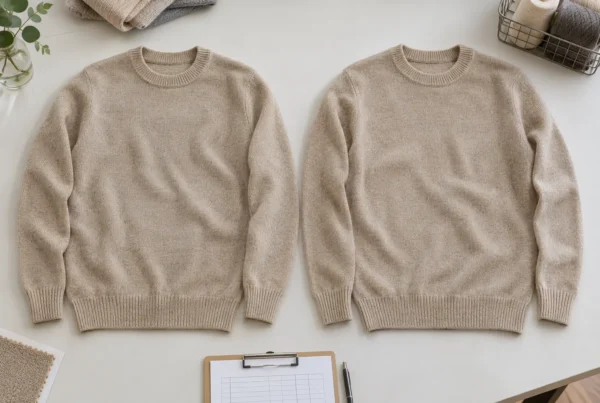
A cardigan, camisole, and pair of trousers may use the same nominal color but still appear slightly different under natural or artificial lighting.
Option 1: Use One Color Across All Three Pieces
A monochromatic set uses one color for the cardigan, inner top, and trousers.
This approach creates a clean, unified appearance. It can also simplify styling and support a minimalist product identity.
However, the supplier must confirm that all three garments can achieve a consistent visual match. Differences in yarn composition, dyeing conditions, and surface texture may affect the final appearance.
Buyers should approve samples of the complete set rather than approve only one garment.
Option 2: Use a Tonal Color Combination
Tonal coordination combines shades from the same color family.
For example:
- Oatmeal cardigan, ecru camisole, and camel trousers.
- Dusty blue cardigan, pale blue camisole, and slate trousers.
- Sage cardigan, soft gray camisole, and olive trousers.
This approach creates depth without introducing strong color contrast. It also allows customers to style each garment separately.
For wholesale production, define the exact shade for every component. Descriptions such as light beige or dark brown are not sufficiently precise for production approval.
Option 3: Combine Neutrals With One Accent Color
A neutral base with one accent color can help a collection stand out while keeping most pieces versatile.
For example, a chocolate cardigan and oatmeal trousers can be paired with a dusty rose camisole. Alternatively, a sage cardigan can complement a cream inner top and charcoal trousers.
The accent piece can also become a separate product in the brand’s wider collection. This may help buyers coordinate the three-piece set with other garments without adding unnecessary color complexity.
Approve Physical Samples Before Bulk Production
Digital mockups are useful during design development, but they cannot fully represent the final yarn color, surface texture, or lighting conditions.
Before bulk production, buyers should confirm:
- The approved yarn color or color reference.
- The appearance of each garment under consistent lighting.
- The visual match between the three components.
- The approved sample and any agreed color tolerance.
- The procedure for checking bulk production against the approved reference.
For repeat orders, retain approved samples and document the relevant yarn and dye information. This makes future color matching easier to manage.
3. Which Fabrics Work Best for Soft, Easy-Care Knitwear Sets?
For wholesale 3-piece co-ord knitwear, the ideal fabric should support the intended handfeel, drape, warmth, durability, and price point.
However, softness alone does not guarantee good performance. A fabric may feel luxurious in a sample but pill quickly, stretch out of shape, or require more careful washing than the target customer expects.
Buyers should assess fiber composition, yarn construction, knitting structure, and finishing together.
Cotton and Cotton Blends
Cotton-based knitwear can offer a familiar, breathable handfeel. Depending on yarn and fabric construction, it may suit lightweight cardigans, camisoles, and transitional-season trousers.
Cotton blends can adjust the balance of softness, stretch, stability, and cost.
Potential advantages include:
- Comfortable handfeel for everyday wear.
- Options for lightweight and medium-weight constructions.
- Compatibility with a range of knit structures.
- Potential suitability for early spring and layered outfits.
The main considerations are shrinkage, dimensional stability, drying time, and surface appearance after washing. Performance varies by blend ratio, yarn structure, finishing, and care method.
Viscose and Viscose Blends
Viscose-based yarns can create a smooth handfeel and fluid drape. These characteristics may suit refined matching sets with a softer silhouette.
However, the behavior of viscose varies according to the specific fiber, blend, yarn, and fabric construction. Some fabrics may require more careful washing or handling to maintain their shape and surface appearance.
For bulk purchasing, confirm:
- Whether the garment is intended for hand washing or machine washing.
- How the fabric behaves after repeated care cycles.
- Whether the finished garment retains its dimensions.
- Whether the selected knit structure provides adequate recovery.
A viscose blend should be selected based on tested garment performance rather than softness alone.
Acrylic and Acrylic Blends
This is widely used in knitwear where warmth, color options, and cost control matter. Acrylic blends can help brands develop accessible seasonal collections, depending on the selected yarn and construction.
Potential benefits include a lightweight feel, a broad range of available colors, and suitability for different knit structures.
However, acrylic knitwear can still pill. Fiber characteristics, yarn spinning, fabric construction, and finishing influence surface performance.
Buyers should not assume that acrylic automatically means low maintenance or superior durability. Evaluate the finished garment and care instructions before selecting it for a large order.
Wool and Wool Blends
Wool and wool-blend yarns can provide warmth and a natural handfeel for autumn and winter collections.
Depending on the fiber grade, yarn construction, and finishing, they may support premium positioning. Wool blends can also combine wool’s thermal characteristics with other fibers to adjust cost, weight, and handling.
Important considerations include:
- Fiber quality and yarn consistency.
- Surface softness and potential skin sensitivity.
- Pilling and surface fuzzing.
- Shrinkage and shape retention.
- Care instructions and consumer expectations.
For early spring, lighter constructions or suitable wool blends may provide warmth without excessive bulk. Buyers should assess the fabric’s actual weight and drape instead of relying on fiber content alone.
Compare Fabrics Against the Intended Product
| Fabric Direction | Potential Advantages | Key Checks |
|---|---|---|
| Cotton blends | Familiar handfeel and versatile seasonal use | Shrinkage, drying, shape retention |
| Viscose blends | Smooth surface and fluid drape | Care requirements, dimensional stability |
| Acrylic blends | Broad color options and flexible price positioning | Pilling, surface appearance, heat sensitivity |
| Wool blends | Warmth and premium handfeel | Softness, pilling, shrinkage, care |
| Mixed-fiber blends | Opportunity to balance several performance goals | Actual blend ratio, compatibility, test results |
No fabric category is automatically the best choice. The correct option depends on the intended silhouette, price range, climate, care expectations, and performance requirements.
4. How to Reduce Pilling in Wholesale Knitwear
Pilling occurs when fibers work loose from a fabric surface and form small tangled balls through friction. It can affect the appearance of knitwear, especially in areas that experience repeated rubbing.
For a three-piece matching set, inconsistent pilling performance can become particularly noticeable. The cardigan, camisole, and trousers may use different constructions and experience different levels of friction.
Understand the Factors That Affect Pilling
According to ASTM International, pilling depends on several interacting factors, including fiber type, fiber dimensions, yarn and fabric construction, and finishing treatments.
This means buyers should avoid choosing yarn based on fiber composition alone.
The following factors deserve attention:
- Fiber properties: Different fibers and blends behave differently under friction.
- Yarn construction: Spinning method and yarn structure influence how fibers move at the surface.
- Knit structure: Loop geometry and fabric density affect surface behavior.
- Finishing: Treatments can influence fuzzing, pilling, and the appearance of the finished fabric.
- Use and care: Washing, rubbing, and garment wear affect real-world performance.
A soft, brushed surface may feel attractive initially but require more careful evaluation for pilling. The goal is to balance the intended handfeel with acceptable durability.
Request Pilling Tests for the Actual Fabric
For buyers concerned about long-term appearance, discuss pilling testing with the manufacturer before placing a bulk order.
ASTM D4970/D4970M uses a Martindale tester to assess pilling resistance and related surface changes. The standard also recognizes that test results should be interpreted in context because real-world wear differs from controlled laboratory conditions.
When setting requirements, buyers should agree with the supplier on:
- The test method and testing conditions.
- Whether samples are tested before or after laundering.
- The required performance level.
- How results will be recorded and evaluated.
- The acceptance criteria for bulk production.
A test result should be linked to the specific fabric and agreed conditions. It should not be treated as a universal guarantee that a garment will never pill.
Test the Complete Three-Piece Set
A cardigan may use a loose-gauge knit, while a camisole may use a fine rib structure and trousers may use a denser construction.
These differences can affect the appearance and durability of each component. Therefore, buyers should inspect the complete set and test the actual materials intended for production.
Where necessary, test separate fabric constructions and review the results alongside garment samples. This helps identify whether a particular yarn or structure is suitable for each piece.
5. Easy-Care Knitwear: Balance Washability and Shape Retention
Easy-care performance can make a knitwear collection more practical for everyday customers. However, the term should describe verified garment behavior rather than serve as an unsupported marketing claim.
For wholesale buyers, the important question is whether the garment maintains an acceptable appearance after the recommended care process.
Check Shrinkage and Dimensional Stability
Knitwear can change dimensions during washing, drying, or repeated wear. The amount of change depends on fiber content, yarn structure, knit construction, finishing, and care conditions.
Before approving production, request a suitable wash test for the intended care label.
Measure key garment dimensions before and after washing, including:
- Body length and width.
- Sleeve length.
- Trouser inseam and waist dimensions.
- Ribbed cuffs and hems.
- Overall fit and shape.
The supplier and buyer should agree on the test procedure and acceptable dimensional changes for the specific garment.
Review Stretch and Recovery
Matching knit trousers and fitted tops need suitable stretch and recovery to maintain their intended silhouette.
A garment may stretch during wear but fail to return to its original dimensions. Conversely, a fabric with limited stretch may feel restrictive in a fitted design.
Assess the fabric’s behavior in the areas most affected by movement. Check waistbands, elbows, knees, cuffs, and other high-stress areas as relevant to the style.
The correct balance depends on the garment design and target fit.
Make Care Instructions Part of Product Development
Care instructions influence the customer experience and should be confirmed during sampling.
If the garment requires delicate washing, flat drying, or other special handling, the instructions should reflect the tested product rather than the preferred marketing message.
For wholesale collections, confirm that care labels, packaging information, and product listings communicate consistent instructions.
Clear guidance helps customers care for the garment appropriately and gives retailers a more accurate basis for product descriptions.
6. How Fabric Selection Affects Wholesale Production Costs
The lowest-cost yarn does not always produce the lowest total product cost. Yarn price, consumption, knitting efficiency, finishing, quality requirements, and order quantity all influence the final quotation.
For three-piece co-ord knitwear, buyers should assess the total cost of the set rather than compare only the unit price of one garment.
Consider Yarn Cost and Consumption
Different fibers, yarn counts, and blends have different price structures. Garment dimensions and knit density also influence yarn consumption.
A heavier cardigan may use substantially more yarn than a lightweight camisole. A complex stitch pattern may also require more machine time or finishing work.
When comparing quotations, ask suppliers to clarify the main cost drivers and whether the quoted price covers all three components.
Evaluate Color Count and Dyeing Requirements
Each additional custom color can introduce more sampling, yarn preparation, dyeing, and quality-control work.
If all three garments use different shades, the buyer should confirm the required yarn quantities and minimum dyeing quantities for each color.
A tonal palette can still require separate color development. Similar-looking shades are not necessarily produced from the same dye recipe or yarn lot.
For smaller orders, choosing from available yarn colors may be more economical than requesting multiple custom shades. The actual saving depends on supplier stock, material availability, and order specifications.
Account for Construction Complexity
Ribbing, cables, jacquard, intarsia, special textures, and garment-specific shaping can affect production time and cost.
A coordinated set with three different constructions may require more development work than a set using a shared stitch structure.
Buyers can manage cost by prioritizing the design features that matter most. For example, a simple cardigan may balance a more textured inner top, while matching color and trim details maintain the overall collection identity.
Compare Total Cost With Product Performance
A lower-cost fabric may become less economical if it fails agreed quality requirements or does not suit the intended retail positioning.
When comparing supplier quotations, consider the following:
| Cost Factor | What Buyers Should Confirm |
|---|---|
| Yarn and fiber | Composition, yarn count, quality, and availability |
| Yarn consumption | Estimated usage for all three garments |
| Color development | Stock colors, custom dyeing, and sample requirements |
| Knitting and construction | Gauge, stitch complexity, and garment shaping |
| Finishing | Washing, softening, pressing, or other specified treatments |
| Quality control | Pilling, dimensional stability, color consistency, and inspection scope |
| Packaging | Labels, hangtags, sets, and individual garment packing |
| Production planning | Minimum order quantities, lead times, and repeat-order requirements |
A clear specification allows buyers to compare quotations more accurately and understand where cost differences originate.
7. A Practical Sourcing Checklist for Wholesale 3-Piece Co-ord Knitwear
Before confirming an order, buyers should ensure that the color, fabric, and production requirements are documented.
Color and Design
- Approve the color palette for all three garments.
- Confirm whether the set uses matching or tonal shades.
- Review physical samples under consistent lighting.
- Record color references and agreed tolerances.
- Check that each piece works independently as well as in the complete outfit.
Fabric and Performance
- Confirm fiber composition and yarn specifications.
- Evaluate softness, weight, drape, and intended warmth.
- Request appropriate pilling and wash tests.
- Review dimensional stability and stretch recovery.
- Approve care instructions based on the tested garment.
Production and Commercial Terms
- Confirm minimum order quantities by style and color.
- Review yarn availability and custom dyeing requirements.
- Clarify the price for the complete three-piece set.
- Agree on sample approval and bulk inspection procedures.
- Confirm packaging, labeling, delivery terms, and repeat-order expectations.
This checklist helps turn a design concept into a production-ready specification. It also gives the buyer and manufacturer a shared reference for sampling and quality evaluation.
8. Frequently Asked Questions
Q1: Which Colors Are Suitable for Wholesale 3-Piece Co-ord Knitwear?
Muted shades such as dusty rose, sage, dusty blue, and mushroom gray can create a refined seasonal palette. Earth tones such as oatmeal, camel, olive, and chocolate brown offer additional versatility.
The best colors depend on the target market, brand positioning, and collection plan. Buyers should use trend reports as references and validate the final palette through samples and customer research.
Q2: Which Knitwear Fabrics Are Soft and Resistant to Pilling?
There is no single fiber that guarantees both softness and strong pilling resistance in every construction.
Performance depends on fiber properties, yarn construction, knitting structure, and finishing. Buyers should evaluate the finished fabric and request appropriate pilling tests instead of relying on fiber content alone.
Q3: How Can Buyers Keep the Three Pieces Color-Matched?
Approve the complete set using physical samples and documented color references. Confirm that all three garments use the intended yarn and dye specifications.
Where different yarn compositions or constructions are necessary, evaluate the visual match carefully because the same color reference may not appear identical across every material.
Q4: How Can Wholesale Buyers Reduce the Cost of Custom Knitwear Sets?
Start with a focused color palette and avoid unnecessary construction complexity. Ask the manufacturer about available yarn colors, minimum dyeing quantities, and the cost implications of different knit structures.
Compare quotations for the complete three-piece set and retain the quality requirements that matter to the intended customer.
Q5: What Should Buyers Test Before Approving Bulk Knitwear Production?
Prioritize the tests that correspond to the garment’s intended use. Common checks include pilling resistance, dimensional stability after washing, color appearance, stretch recovery, and overall garment construction.
The appropriate methods and acceptance criteria should be agreed with the manufacturer before testing.
Conclusion: Build a Knitwear Collection Around Color, Performance, and Cost
Successful wholesale 3-piece co-ord knitwear development requires more than choosing attractive colors and soft yarns. Buyers need a coordinated palette, fabric performance that matches the target customer, and production specifications that support consistent bulk quality.
Muted colors and earth tones provide useful directions for autumn, winter, and early spring collections. Cotton, viscose, acrylic, wool, and blended yarns each offer different advantages, but none should be selected without considering construction, care requirements, and tested performance.
For HDL’s wholesale customers, the most practical approach is to define the collection’s target price and intended use first. Then select a manageable color palette, compare suitable yarn options, approve complete-set samples, and agree on quality requirements before bulk production.
A well-planned sourcing process helps brands develop knitwear sets that look coordinated, feel appropriate for their market, and meet realistic expectations for durability and care.