
Take one reference sweater and develop it twice, once with a full-zip front and once with a half-zip, and the same yarn will not guarantee the same garment. The opening changes the front design, the way the piece hangs, and what it costs to make. The comparison worth making is between two finished options, not between two zipper lengths.
In form, a full-zip is a cardigan and a half-zip stays a pullover. That difference in garment type is what makes a full-zip vs half-zip sweater comparison a design question before it becomes a costing one.
Zipper Options and Sourcing Lead Times
We can customize the zipper to suit your design. Our regular zipper suppliers keep common options in stock, so these usually have a shorter sourcing lead time. A standard zipper can be a practical choice when it meets your quality, appearance and budget requirements.
If you require a branded option such as YKK or YKK EXCELLA, zipper sourcing typically takes around 20–40 days, and the price can be substantially higher than a standard zipper. The exact cost and lead time depend on the specification and quantity. This is the zipper sourcing time, which needs to be considered when agreeing on the garment production schedule.
Choose the zipper according to your collection’s quality requirements, target price and delivery schedule.
What Can You Customize?
For both full-zip and half-zip sweaters, customization can cover:
- Yarn material and blend composition.
- Design and knit structure.
- Special techniques and finishing requirements.
- Colors, sizes and size grading.
- Labels and hangtags.
- Zipper type, color and quantity.
Specify the details you want to keep from the reference and the changes you need for your collection.
What Do You Need to Send Us?
You can provide reference images, a tech pack or a physical sample to start a custom full-zip or half-zip sweater project. Any one of these can be the starting point; you do not need all three.
Include your preferred yarn material, design changes, colors, size range, order quantity and zipper requirements if you have already decided them. These details help us review the construction, prepare the quotation and plan the sample.
How Does the Closure Change the Finished Design?
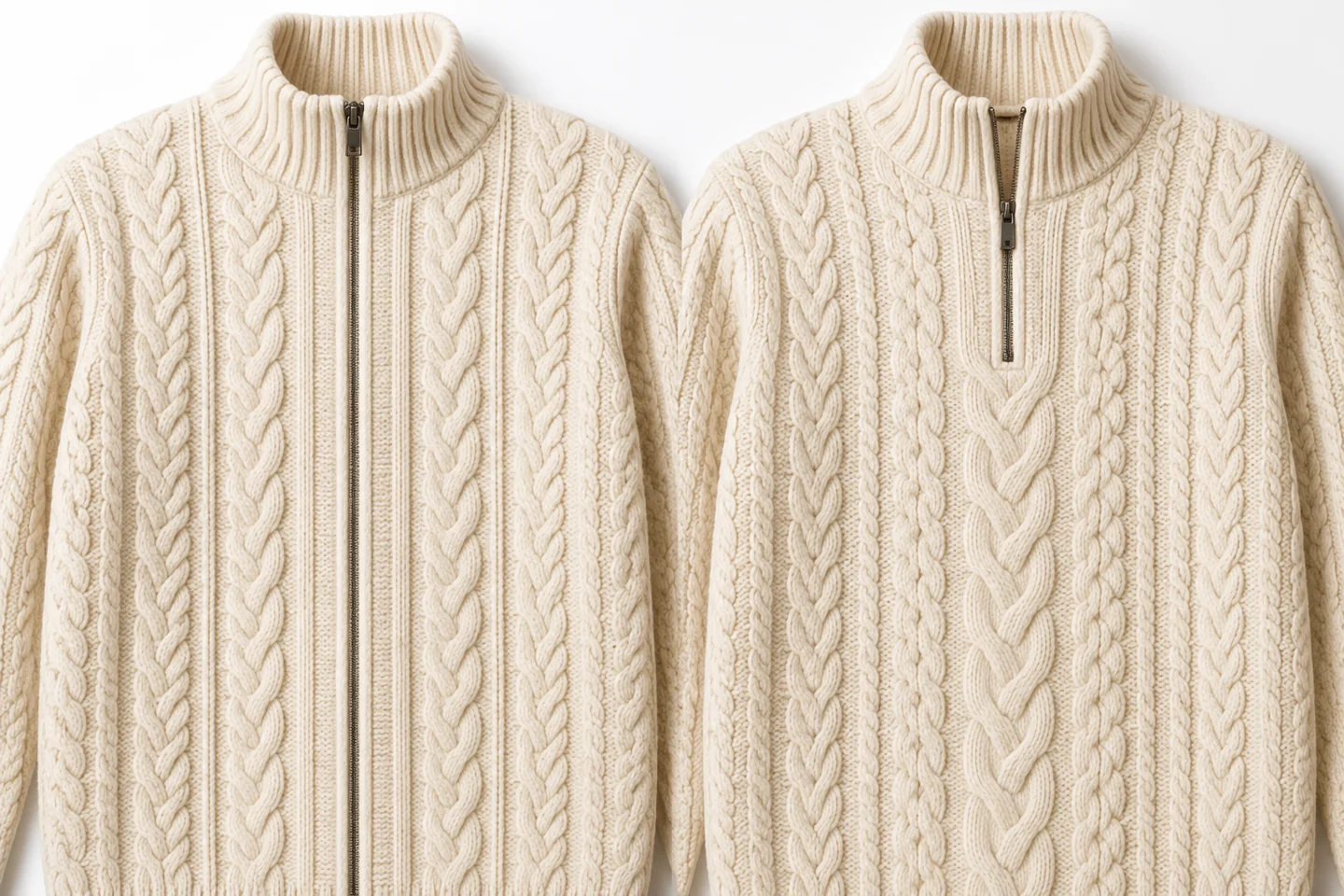
A full-length opening divides the front, so the pattern has to be arranged on both sides of it. Cables, jacquard motifs and stripes can be set to meet at the closed zipper, to mirror across it, or to stay clear of the center. A half-zip leaves the front below the opening in one piece, so a central motif can run through the body without interruption.
One cable design shows the choice. On the half-zip version, a single center cable can run unbroken below the chest opening. On the full-zip version, the same cable can sit to both sides of the placket, or be resolved in another layout you confirm with us. Both are workable treatments of the same design; neither is the rule for cable knitwear.
The zipper is part of the front design as well. Decide how much of it should read as a visible line, and choose the tape color, puller and placket treatment together, against your reference rather than in isolation. On a solid plain-knit style there is no pattern to align, so the front is judged on the zipper, the placket and the collar matching the reference.
Can Both Versions Use the Same Yarn and Fit?
The same yarn can be used to develop both versions. Changing the closure does not mean changing material by default.
Yarn, color, knit structure and target finished garment measurements can form a shared development brief. The two versions may differ in weight and drape because of their front opening and collar construction. Set the finished measurements and acceptable tolerances for each version in the sample specification.
On a light, soft knit, a long zipper and its placket can change the weight, firmness and drape of the front edge. Review the placket construction against the reference, yarn and knit structure during development, and use the sample to assess the result. Changes to the knit or supporting materials should follow the needs of the design.
On the half-zip, the collar type and the opening depth are what reproduce the neckline effect of your reference, so those two are developed against your reference rather than against a general rule. The half-zip guide covers how the opening and collar are specified.
If a different placket, collar or knit structure is needed, compare its effect on local thickness, hand feel, garment weight and price before approving it. The guide to yarn count and ply explains how yarn specification relates to garment weight.
What Explains the Price Difference?
Zipper specification can explain part of the price difference. Compare the brand, series, size and customization of tape color, slider or finish used in each quote. If one uses a standard zipper and the other uses YKK or YKK EXCELLA, identify this specification difference when comparing the two styles. The resulting price difference cannot be attributed to zipper length alone.
Placket and collar construction can also affect the price. The two versions may use different treatments for the front edges, zipper opening and collar, with different material and assembly requirements. Yarn consumption follows the actual garment dimensions, the knit structure and the placket and collar specifications. The zipper is a trim, so its weight is not yarn use and is counted separately.
Third, check what each quotation was built on. Given the same yarn quality target, size range, order quantity and color allocation, each version is quoted on its own specification, and the differences are stated with it. If a version was adjusted to reach a target price, by changing the yarn, the garment weight or a placket detail, that adjustment is listed alongside the price. Even a single garment price then shows which materials and methods it covers. The cost breakdown guide sets out what a knitwear quotation normally includes.
Zipper length alone does not tell you which version costs less. Compare the materials and methods each price actually covers.
What Should the Comparison Samples Confirm?
Use the comparison samples to decide which version meets the design, fit and price requirements. Compare both in the same size and at the same stage of finishing.
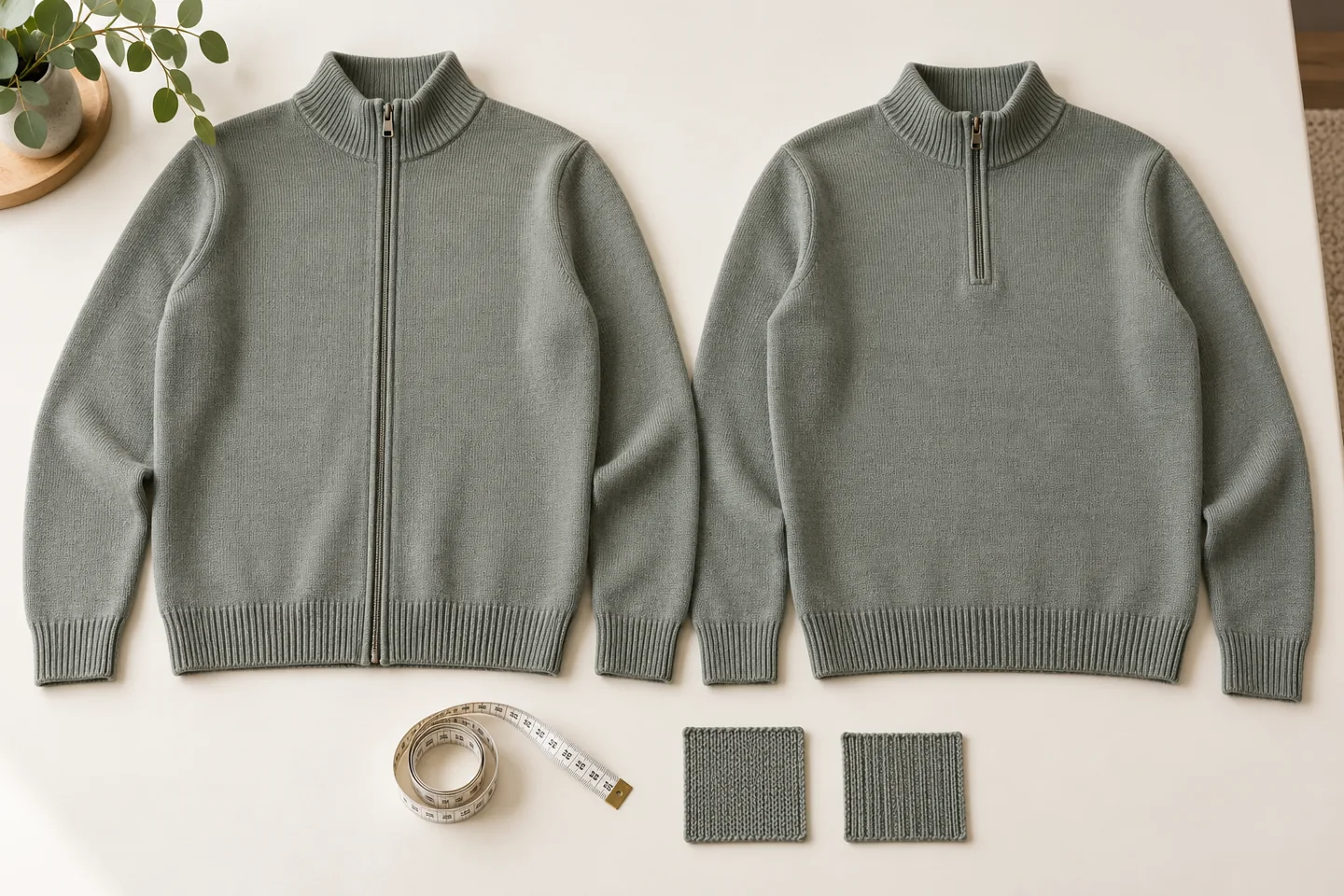
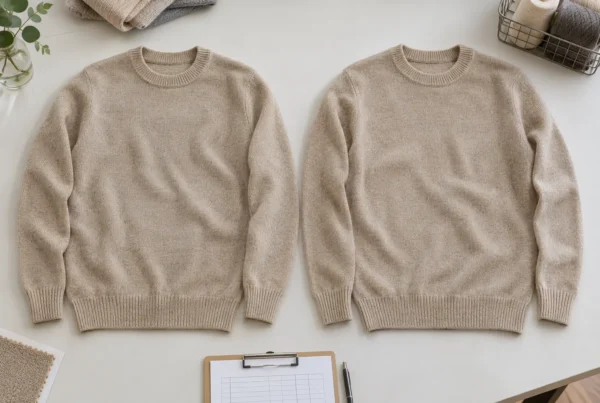
Finished appearance. Set the two samples side by side and check them against the reference: the pattern at the front, the center line, the collar, and the neckline when open. The question is not which one is nicer, but whether either version shows a change you are not willing to accept.
Fit, hand feel and drape. Compare the actual measurements and garment weight, then assess the fit on the body. Check the full-zip with the front open and closed, and the half-zip with the neckline open and closed. Assess whether each version keeps the intended body shape and collar position.
Production finishing and garment care. First compare samples that have received the proposed production finishing. This establishes the appearance, hand feel and measurements that the quotation and approval refer to.
Then assess changes after the agreed garment care method. Compare the front edges, collar shape and key dimensions before and after care. Agree on the measurement points and tolerances and record the measurement stage so both versions use the same basis.
Whether the samples and the quotes correspond. Record which yarn, which zipper and which construction each sample used. A sample made with a temporary component does not mean the final component has been approved, and a quote based on the temporary version does not describe the final garment. The sample approval checklist covers the points to sign off before bulk.
Choose the version that meets the product target at an acceptable price, with its materials, construction and approval requirements clearly recorded.
Full-Zip vs Half-Zip Sweater FAQs
Is a half-zip sweater cheaper to manufacture than a full-zip sweater?
Not necessarily. A shorter zipper is only one cost factor. Collar construction, yarn consumption, garment weight and the other operations in the make-up can each move the price, in either direction. Compare the two complete garment quotations on the same quality target and order conditions before treating either version as the cheaper one.
Can I develop full-zip and half-zip versions from the same reference?
Yes. We can use your reference as the starting point for both versions. State which yarn, color, fit, pattern and weight targets you want to keep. Develop and approve the front opening, placket and collar for each version, and record any differences in the sample specifications and quotations.
Can full-zip and half-zip styles share the same MOQ?
Confirm it separately rather than assuming one minimum covers both styles because they use the same yarn. Our regular MOQ is around 100 pieces per design, depending on the yarn, craftsmanship, color quantity and customization requirements. Send the quantity and color allocation for each style and the factory will confirm what applies to your order. The two styles are not combined into one minimum automatically.
If you have a reference you want developed in both closures, send it with the yarn, fit and weight targets you want to keep. Note which design details are fixed and which are still open.