
Knit baby romper manufacturing starts with a reference photo, sample or tech pack, plus your size range and estimated quantity. Tell the factory which details you want to keep and whether the romper should fit over a diaper. If you do not have measurements or yarn specifications, the factory can propose a starting point for your approval. Use the first sample to review the look, fit, openings and diaper room.
Can You Make a Knit Baby Romper Like My Reference?
A photo helps the factory understand the shape, colors, knitted pattern and opening positions. A physical sample also lets the factory examine the texture, weight and construction and take measurements.
Mark the details that must stay, such as the opening position, knitted pattern or cuff shape. Also identify anything you are willing to change. The factory can explain where its proposed materials or construction may differ from the reference.
Send your own size chart if you have one. Otherwise, share your intended age group, size range and diaper-fit requirement, and ask the factory to propose a measurement chart. Review it with the first sample, then agree which other sizes need checking.
You can also browse our knit baby romper styles for product examples.
What Do I Need to Decide Before Sampling?
You do not need to choose the knitting method yourself. Explain the look, fit, openings and size range you want, and tell the factory what is still open. The factory can then propose materials, measurements and construction for your review.
Body length and the room over a diaper
Say whether the romper should fit over a diaper and describe the fit you want through the body and seat. Send your size chart if available. If you only have age labels, ask the factory to propose measurements and explain the measuring points. Review the body length and diaper room on the first sample.
The leg opening
Show the leg opening you want: a rib cuff, folded band or plain hem, with a gathered or flat look. The factory can propose dimensions and check the opening against the intended size and dressing method. If you already have relaxed or stretched measurements, share them and explain how you measured them.
The closure and its placket
Show where you want the romper to open for dressing and diaper changes. This may be a snap opening between the legs, a front opening, a wrap design or a pull-on style. The factory should propose how to make the opening and explain any changes to your reference.
On the sample, check that the closure lines up and that the bands lie as intended when fastened. If the snaps do not align, ask the factory to review the finished band lengths, snap positions and assembly before deciding what needs changing.
Yarn, gauge and weight
Describe the thickness, surface texture, hand feel and garment weight you want, using a physical reference if possible. The factory can suggest yarn and knitting options and show the result in a swatch or sample.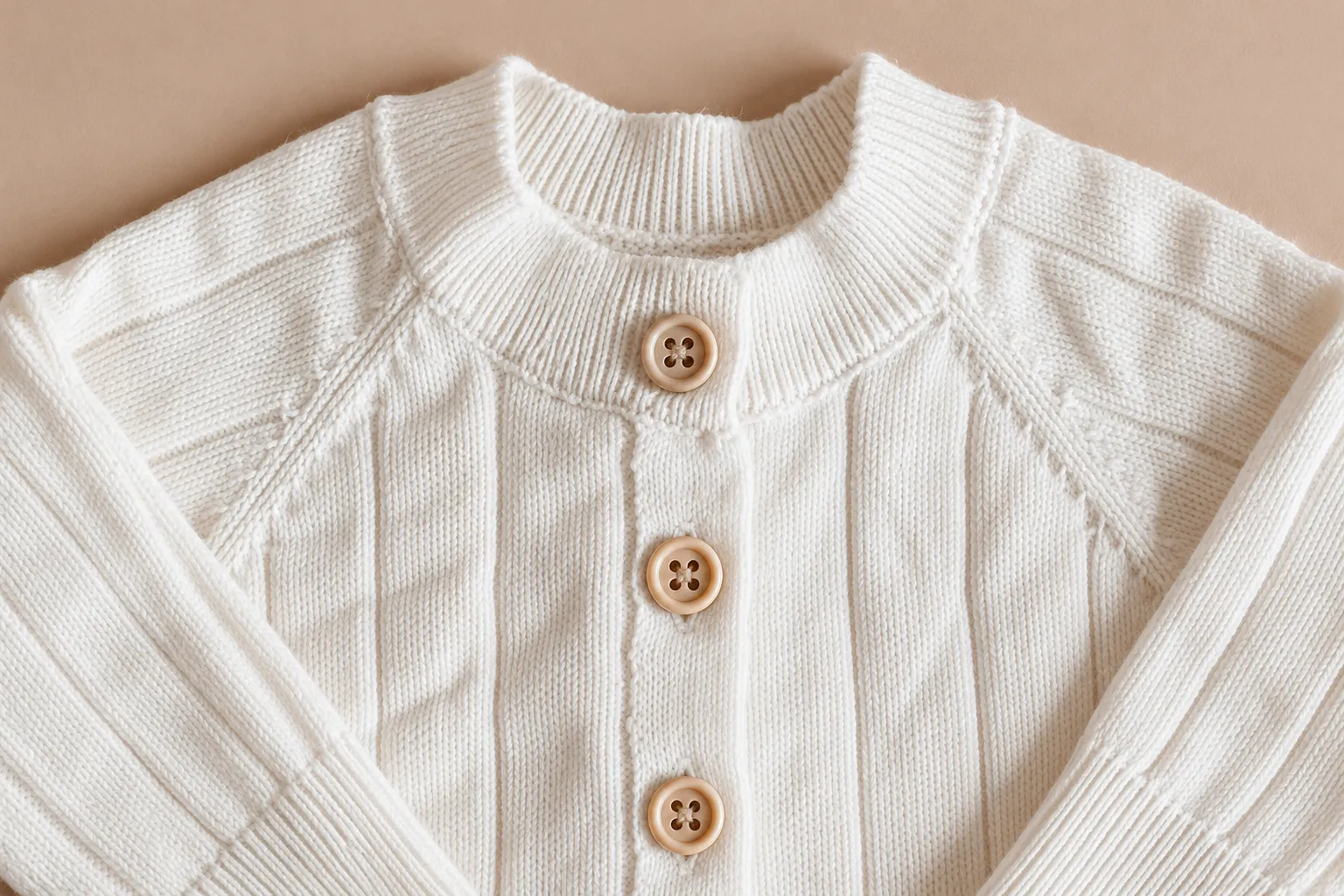
Gauge alone does not determine thickness or weight. Yarn, stitch structure, knitting density and finishing also affect the result. If the reference fiber is unknown, explain which appearance and hand-feel details matter most.
For more background, see our guide to the construction behind a baby knit garment.
The size range
List the sizes you plan to order and an estimated quantity for each. Agree which size the factory should sample first. Then review the measurement chart for the full range and confirm which additional sizes need samples. The approval plan should state what the first sample covers and what still needs checking.
What Should I Check on the First Sample?
Compare the sample with your reference and agreed size chart. Check the overall look, fit and openings, then mark any differences on photos. Use the agreed measurement method and sample condition, including after washing if your approval plan requires it. The sample approval checklist covers the wider approval process.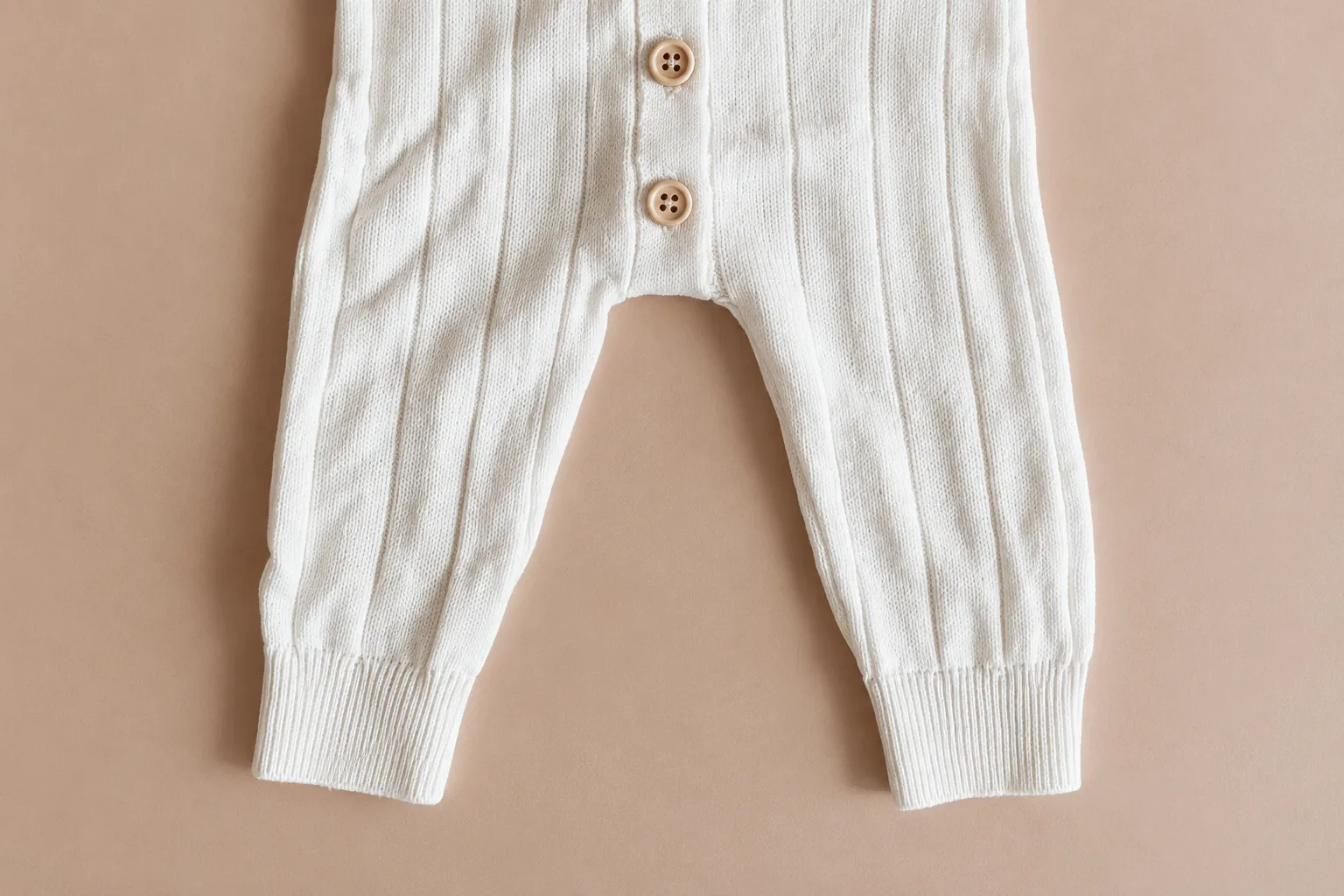
| What to compare | What you may notice | What to discuss with the factory |
|---|---|---|
| Body length and rise | The crotch sits higher or lower than the reference | Mark where it pulls or hangs too low. Ask the factory to review body length and diaper room. |
| Leg opening, relaxed and stretched | The cuff looks tight on the leg, or gapes when the leg moves | Show the fit you want. Ask the factory to propose dimensions and a method for checking stretch. |
| Snap placket alignment | Snaps offset at one end, or a placket edge that waves | Ask the factory to check finished band lengths, snap positions and assembly. |
| Neck opening | The opening is tight over the head, or stretches out of shape when pulled | Ask the factory to review opening dimensions and fastening options. |
| Side seams and crotch join | A seam that twists toward the front, or a join that pulls at the inseam | Mark the affected seam on a photo and ask the factory to review the join. |
| Cuff recovery | The cuff stays stretched after being pulled over the leg | Ask the factory to review the yarn, cuff construction and finishing. |
Photograph each issue and describe the result you want. Include a tape measure when the issue concerns a dimension. Let the factory assess the cause and propose a change. Before approving the revision, confirm whether it needs a new sample; see what can change after a first sample.
What Can Change the Price, and What Can I Simplify?
The cost of knit baby romper manufacturing depends on yarn, garment weight, quantity and design details. Size and color allocation, openings, knitted patterns, trims and packaging can also affect the quote.
If the first quote is above target, tell the factory which details must stay. Then ask it to price alternatives for the yarn, pattern coverage, color plan or packaging. Check how each option changes the appearance, hand feel or intended use before choosing it.
Compare suppliers against the same specification and quantity breakdown. Otherwise, a price difference may reflect different materials or requirements.
If your design includes buttons, snaps or decorative trims, ask how the factory plans to attach and check them. Include any project-specific testing requirements in the brief.
Our starting MOQ is 100 pieces per style for suitable projects. Size and color allocation depend on the yarn, color plan and production requirements.
If you want a matching hat and booties, send quantities for each item. Ask whether the quotation and MOQ apply to the set or to individual items. For more on yarn minimums and order allocation, see knitwear MOQ and yarn quantity.
What Should I Send for a Quote?
You do not need a complete tech pack to start. Send what you have, and mark anything you still need help deciding.
- Reference images showing the front, back and openings, or a physical sample
- Your size chart if available, or the intended age group and size range
- Whether the romper should fit over a diaper, and the fit you want through the body and seat
- The opening style and leg opening finish you prefer
- Your yarn or fiber preference, or the appearance and hand feel you want to match
- Estimated order quantity, with a size and color breakdown if available
- Label and packaging requirements, target budget if any, and the delivery date you need
If you do not yet know the yarn, measurements or final color split, say so. The factory can explain its initial assumptions, suggest what to confirm next and update the quote when the specification changes. For more detail, see how a knitwear quotation is built.
Knit Baby Romper FAQs
1. Can a knit romper be made without a snap placket?
Yes. A romper can use a front opening, wrap opening or pull-on design instead. Removing the inseam placket changes how the garment opens for dressing and diaper changes. Show the factory your preferred opening, and check dressing access and fit on the sample before approving the style.
2. Do I need a full tech pack before asking for a quote?
No. A reference or clear photographs, the size range and an indicative quantity are enough for a first review and an estimated quotation. A tech pack becomes more useful once the construction is settled, because it records decisions instead of leaving them to be re-agreed at each sample round.
3. Will the sample measurements match my size chart exactly?
Not necessarily. Agree on measurement points, methods and tolerances with the factory before sample approval. Check the sample against those agreed limits. A measurement within tolerance may be acceptable; ask the factory to review anything outside the limits before approval. For more detail, see sweater measurement tolerances.
4. Does a hat and booties set count as one style for MOQ?
Not automatically. Confirm whether the quotation and MOQ apply to the complete set or to each item. Shared yarn and colors may affect the arrangement. Send quantities for the romper, hat and booties, and ask which samples need approval.
If you have a romper reference and the sizes you sell, send both. We can review the construction, list the points that still need a decision and reply with a quotation based on your quantity and color plan. Send your romper reference for a construction review.