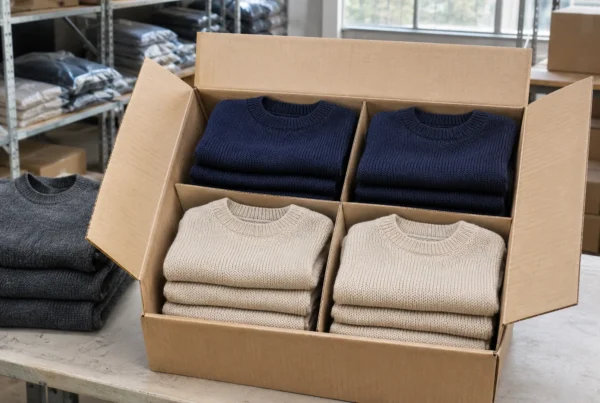

For example, you ordered 200 black sweaters and 100 cream sweaters. The factory can have 120 black sweaters ready first. Is it worth shipping them ahead of the rest? Check whether those 120 pieces include the sizes you need for launch. Then ask when the remaining sweaters can ship and what it would cost to send the order in two shipments.
Which Sweaters Should Ship First?
Buyers ask for a first lot for a few reasons: a launch date that covers only one color, a store sold out of black, or a wholesale account that cannot wait for the full order. That job decides what belongs in the first lot.
Start with what you want first: colors, sizes, pieces. Then ask which of those are finished, inspected and ready to pack, and which are still on the machines. Our article on sweater production tracking shows how to read an update by color and stage.
In the example order, the first lot is 120 black sweaters. The remaining pieces are 80 black and 100 cream, and they make up the second lot.
| Color | First shipment | Remaining pieces |
|---|---|---|
| Black | 120 | 80 |
| Cream | 0 | 100 |
The table fixes colors and pieces only. Break each lot down by size next, and confirm the expected ready-to-ship date for it. The example sets no size split or date; both depend on your size curve and on how far the order has run.
Shipping one color first can work for a launch or restock. Check that the first shipment includes the sizes your customers need.
What Will It Cost to Ship Twice?
Ask for both options in one quotation: the whole order in one shipment, and a split shipment in two lots. Two numbers side by side answer the question faster than one number and a list of assumptions.
Get these in writing for each option: freight per shipment, any extra packing or inspection charge, and who books the space and pays. If your forwarder quotes separately, ask the factory what it needs to confirm a handover date.
Keep the factory handover date and the estimated arrival date apart. Handover is when cartons leave; arrival depends on routing, sailing or flight schedules and customs. With a launch date, plan against arrival.
Two situations sit behind a split:
- The production plan stays the same and only the dispatch is split. Check freight, packing and the booking for each lot, then confirm the second lot’s handover date.
- Production changes so that part can leave earlier. That can mean a separate knitting run, another dye batch or extra yarn. Ask whether the unit price, the minimum or the handover date changes, and get the answer before you approve the plan.
On minimums: they are confirmed per style rather than per shipment, and colors and sizes can be mixed within that minimum. Yarn choice, a special color treatment or a trim can bring its own requirement. Splitting the dispatch does not change the minimum by itself. A changed production plan can.
Payment follows the terms in your order. If the split changes when anything is due, confirm the new arrangement before the first lot leaves.
What Should You Confirm Before Each Shipment Leaves?
Check what is actually in the lot: style, color, size and pieces. The packing list should show what each carton holds, and the invoice should follow the prices and charges you agreed. Our guide to sweater packaging and shipping covers the usual documents and packing confirmation.
Confirm the document format with your forwarder or broker; what they need for entry differs by destination.
Number the cartons so each lot can be identified on arrival: A01, A02 for the first lot, B01, B02 for the second. Anything that identifies the lot and the carton works.
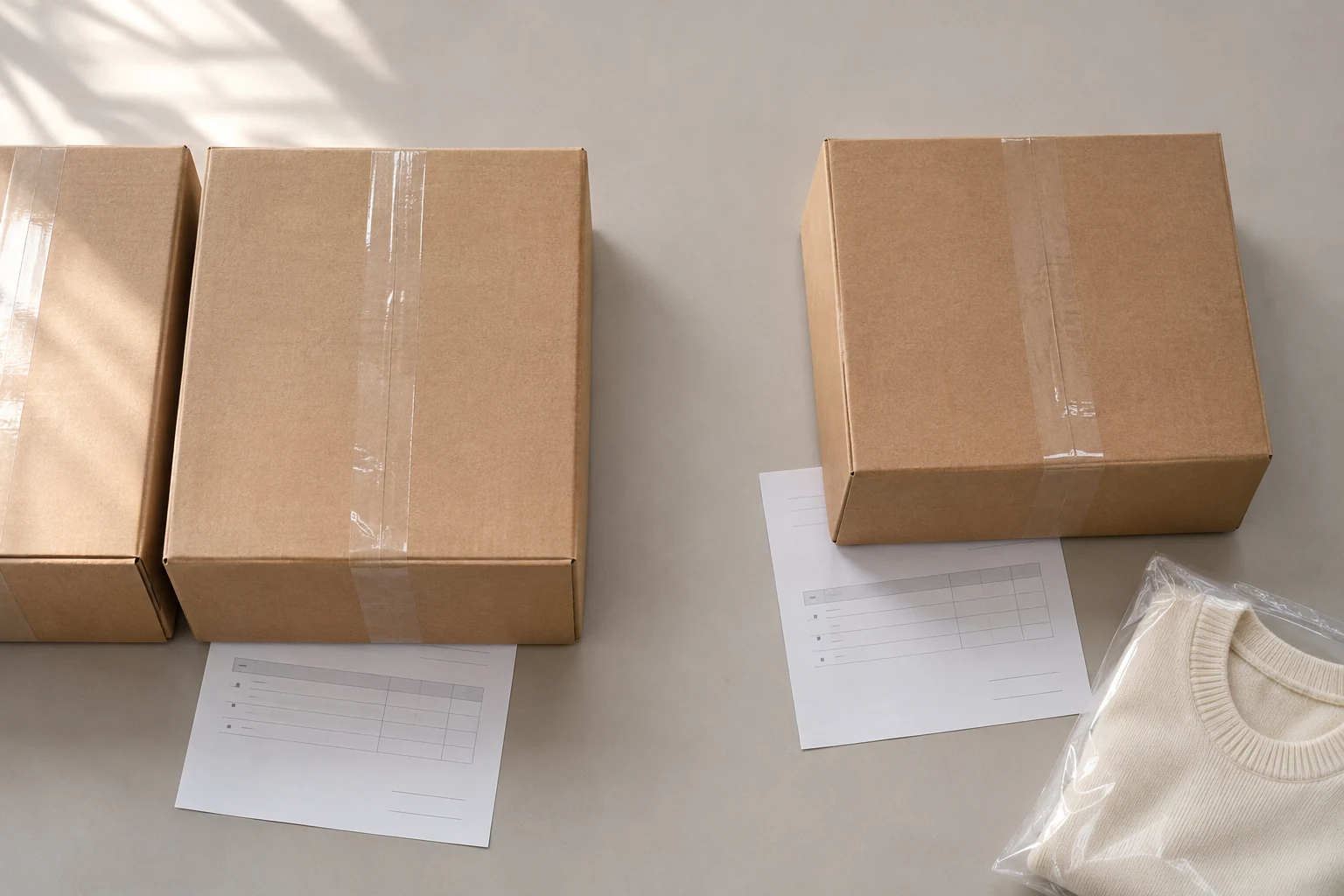
If your order requires inspection before shipment, book it before that lot leaves, not once at the end. A lot that has gone cannot be corrected.
If the same color ships in two batches, ask whether the factory used the same yarn batch for both. If the yarn batch changes, compare a finished sweater from the new batch with the approved color sample under the same lighting. Our guide to knitwear color approval and shade differences explains what to check.
How Do You Keep Track of What Still Has to Ship?
When a lot arrives, check it against its own packing list first. Then update three numbers on the original order: shipped, received, still to ship. One sheet stops the second lot being checked against memory.
In the example, once the 120 black pieces are received, still to ship is 80 black and 100 cream. After the second lot arrives, check it color by color and size by size against the order, not only against the total.
If the first shipment arrives short, record the missing quantities by color, size and carton number. Keep this discrepancy separate from the pieces already scheduled for the second shipment. Add the missing pieces to the second shipment plan once the factory confirms it can include them. Our guide to sweater quantity tolerance explains how to check and resolve a shortage.
Planning a split shipment? Send the style number, the colors and sizes you want first, the piece counts, the destination and the arrival date you need. We will check what can leave first and what the rest of the order looks like. Send your order details here.
Sweater Split Shipment FAQs
Can I ship just one color first?
You can ask to ship one color first. Ask the factory to confirm how many pieces are ready in each size and when they can ship.
Does splitting a shipment change the sweater MOQ?
It depends on whether the production plan changes. If the same order is only dispatched separately, confirm the shipping arrangement. If a separate run, extra yarn or a new dye batch is needed, confirm the minimum and price again.
How do I know whether shipping twice is worth it?
Compare the extra cost against whether the first lot reaches your selling window. Check that it has the pieces and sizes you need, then compare both quotes and their arrival dates.
What if the first shipment is short?
Record the shortage by color, size and carton number. Ask the factory to check the discrepancy and confirm whether it can send the missing pieces with the second shipment. Update the second shipment plan once both sides agree.