When sweater defects appear in bulk knitwear, they often fall into a recurring set of categories rather than one isolated issue. Buyer-visible problems include dropped stitches, open linking points, shade differences, and measurements that move outside the agreed specification.
A sweater defect is a fault that reduces the garment’s expected performance, or one that a buyer would reject if it sat in a prominent position. In bulk knitwear, inspections typically turn up dropped stitches, holes, needle lines, uneven tension, linking faults, shade variation, surface pilling and measurement drift. These issues may relate to yarn characteristics, machine or needle condition, stitch and gauge settings, linking, washing and finishing, handling, or measurement criteria that were not fully defined before production.
What Counts as a Defect and What Is Normal Knit Variation
Not every irregularity is a defect. Whether a feature is acceptable depends on the approved yarn, the approved sample or reference, and the material and construction it was specified with. Intentional slub effects, slight hand variation between panels, or light fuzz on styles designed with those characteristics may fall within the expected appearance of the approved material and construction. Not every irregularity is a defect. Whether a feature is acceptable depends on the approved yarn, the approved sample or reference, and the agreed material, construction and appearance requirements.
For a real order, the relevant defect and acceptance criteria should be documented in the agreed specification or inspection plan. Where critical, major and minor classifications are used, the buyer and supplier should define how they apply to the style. A fault on the center front also reads differently from the same fault inside a side seam. Writing that down before production means an inspection produces a consistent answer instead of a debate about whose standard applies. The wider sequence is covered in this guide to sweater quality control and inspection stages.
Knitting Defects: Dropped Stitches, Holes, Needle Lines and Tension
A dropped stitch has come undone and run down its column. It can come from a yarn break, a bent or damaged needle, uneven feed tension, or a thick point in the yarn that does not clear the needle cleanly. A short run near a panel edge is sometimes stopped and secured during finishing, but a run that continues down the panel is structural rather than cosmetic, because it can open further with wear.
Holes often end the same story: a thin spot in the yarn, an unrepaired broken end, or needle damage that has opened a loop. On open-knit and lace constructions, openings belong to the design, so the reference has to be clear before anyone treats an opening as a fault.
Needle lines show as a vertical line where one column of stitches reads differently from its neighbors, and uneven tension shows as an irregular surface or as two points on the same line measuring differently. Both can come from needle condition, one needle set differently, feed tension, or irregularity in the yarn. Either can be barely visible on the machine and clearly visible after washing under inspection light.
Linking and Seam Defects at Shoulders, Armholes and Necklines
Linking is where panels become a garment, and faults in these areas can become buyer claims. Skipped or open linking points at the neckline, shoulder or armhole are among the faults buyers report. They can come from how the linking machine is set, from a stitch count mismatch between rib and panel, or from how the pieces are fed at the linking table. An open linking point may worsen with wear and should be reviewed against the agreed repair or rejection criteria.
Uneven linking depth creates a step or jog where the seam sits. Panel shape, link-line placement and handling during linking can affect where the seam sits, so the intended seam position should be clarified in the specification where relevant.
Loose ends are yarn tails that were not secured during finishing, easy to find on a garment laid flat and easy to miss on a folded one. A neckline or shoulder measurement outside specification can result from panel dimensions, linking tension, stretching during assembly, washing or finishing, so the cause should be checked before corrective action is assigned.
Color, Yarn and Finishing Defects
Shade Variation and Unwanted Banding
Shade differences can be visible during inspection when panels, sizes or garments do not match the agreed color reference. Variation may appear between panels on one garment, between sizes in one order, or between the approved sample and bulk production.
Different dye lots, yarn deliveries or material variation can contribute to shade differences. Unwanted horizontal banding may also appear across a knitted panel because of yarn variation, tension or machine settings during knitting.
Color and appearance should be checked against the approved sample, swatch or other agreed reference under suitable lighting. The approval process is covered separately in our guide to yarn dips and color approval.
Finishing Defects and Pilling
Finishing can reveal or create appearance problems that were less visible earlier in production. Common issues include stains, oil marks, pressing shine, flattened pile, snags and pulled threads on looser constructions. Visible mending can also affect appearance. Buyers and suppliers should agree in advance whether visible repairs are acceptable and how they should be reviewed.
Pilling is influenced by fiber characteristics, yarn construction, stitch density, surface friction and finishing. The acceptable appearance should be judged against the approved sample or the buyer’s agreed quality requirements. If pilling is part of an order’s criteria, the method and interpretation should be written into the agreed criteria. A single rating should not be treated as an automatic pass or fail. The production side is covered in this guide to preventing pilling in bulk knitwear.
Measurement Problems That Show Up After Washing
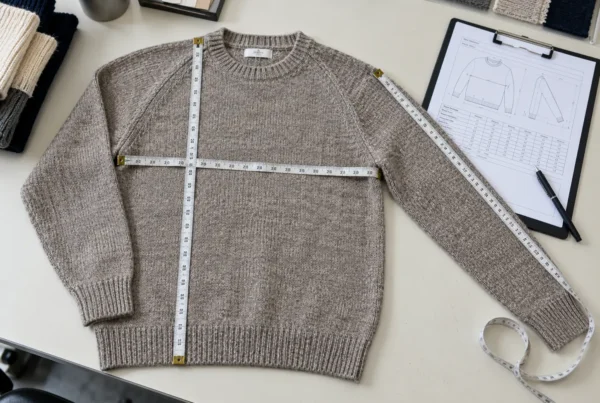
Measurement problems one category of sweater defects, and they can have more than one cause. Yarn lot changes, relaxation during washing, differences between knitting machines or needle beds, and handling during finishing can each influence garment measurements.
How a point is measured matters as much as how the garment was made. The same measurement point can read differently before and after the agreed wash or relaxation process, so the measurement condition needs to be defined together with the measurement method. Ribbed areas also require clarity on whether they are measured relaxed or extended. That ground is covered in these measurement tolerances for sweater production.
It also helps to separate two questions that often get mixed together: whether a garment measures inside the agreed tolerance, and whether the sizes follow the intended size grading across the range. Shrinkage belongs to a third question, covered in this guide to shrinkage testing before bulk production.
Common Sweater Defects: Causes and Prevention
| Defect | What it looks like | Common causes | What helps prevent it |
|---|---|---|---|
| Dropped stitch or run | An undone stitch column, often at a panel edge or front | Yarn break, bent needle, uneven feed, thick point in the yarn | Needle-condition checks, yarn-feed checks, and agreed repair/rejection rules |
| Hole | An opening that is not part of the design | Thin yarn spot, unrepaired broken end, needle damage | Yarn regularity checks, in-process inspection, careful handling |
| Needle line | A vertical line where one stitch column reads differently | Worn needle, one needle set differently, uneven feed | Needle bed maintenance, panel checks before washing |
| Open or skipped linking | Visible gaps at neckline, shoulder or armhole | Linking machine setup, rib and panel stitch count mismatch | Linking trial before bulk, stitch count check, flat seam check |
| Shade variation | Panels, sizes or deliveries reading different shades | Different dye lots, new yarn supplier, mixed deliveries | Yarn and dye lot plan, lot separation, approved swatch |
| Pilling | Surface fuzz and fiber balls after abrasion | Fiber length and fineness, yarn twist, stitch density, finish | Fiber and yarn selection, agreed test method, finishing trial |
| Measurement drift | One or more points outside the agreed tolerance | Yarn lot change, relaxation in washing, machine differences | Defined measurement points, wash test, measurement records |
Which Defects Should Hold a Shipment
Finding a fault and acting on it are two different decisions. The question before shipment is whether the fault is structural, visible, or inside what the order already allows. A measurement that remains within the agreed measurement tolerance is generally acceptable unless another approved specification or acceptance criterion is not met.
| Situation | Why it matters | What to do before shipment |
|---|---|---|
| A run or hole in a prominent position | Structural, and it can grow with wear | Segregate the affected piece and assess it against the agreed repair and rejection criteria, then check whether the same issue appears elsewhere in the lot |
| An open linking point at the neckline or shoulder | Visible, and it can open further in wear | Segregate the piece and determine whether repair is permitted under the agreed criteria, and check whether the same linking condition appears elsewhere |
| Two shades in one garment, or shade that has moved from the sample | The color may fall outside the approved reference or agreed shade criteria | Segregate the affected pieces, check dye-lot traceability, and compare them with the approved color reference under the agreed lighting conditions |
| A measurement outside tolerance on more pieces than allowed | Repeated out-of-tolerance measurements may indicate a recurring production or finishing issue rather than an isolated garment | Re-measure with the agreed method first, then look at yarn lot, machine and finishing |
What Buyers Should Confirm With the Factory Before Production
Clear written defect and acceptance criteria can reduce disputes during production and final inspection. These points are worth agreeing in advance:
- Defect and acceptance criteria — define the faults that matter for the style and, where critical, major and minor classifications are used, document how each classification applies.
- Inspection method and stages — who inspects, at which stages, on which sampling plan, against what criteria.
- Measurement points and condition — the exact points, and whether ribbed areas are measured relaxed or extended.
- Yarn and dye lot plan — whether one lot covers the order, how lots stay separate, and how they are traced if more than one is used.
- Repair policy — what will be mended, what will be rejected, and who authorizes a visible repair.
- Inspection record and claims — the measurement record and defect summary the factory will send, and the evidence needed if the two sides disagree.
Frequently Asked Questions
Which knitwear defects should a buyer look at first?
Start with the faults that are structural or consumer-visible: runs and holes, open linking at the neckline and shoulders, shade variation between panels, and any measurement outside the agreed tolerance. Surface faults such as light pilling or a small mark should be assessed against the approved references and agreed acceptance criteria.
Can defects appear even when the sample was approved?
Yes. A development or approval sample represents a limited production condition, while bulk production applies the approved specification across a larger quantity and may involve additional yarn lots, machines, linking, washing and finishing conditions, so results can shift between the two. The reasons are set out in this article on why samples and bulk can differ.
Should a buyer reject a whole shipment when defects are found?
It depends on the defect type, location, frequency and the agreed acceptance criteria. A run or open linking point in a visible position should be assessed against the agreed repair and rejection criteria. If the same issue appears repeatedly across the lot, it may indicate a recurring production or finishing issue that should be investigated before packing continues. Measurements within the agreed tolerance are assessed separately from structural or visible defects, and other appearance faults should be judged against their own agreed acceptance criteria.
What should the tech pack say about defects?
The tech pack or agreed inspection specification should identify the faults that matter for the style, the measurement points and tolerances, measurement conditions, sampling plan, acceptance criteria and repair rules. Where critical, major and minor classifications are used, define how each classification applies. Photographs or approved references can also help reduce ambiguity where practical.
Send the Defect List You Want Checked
Send the tech pack, the measurement chart and the approved sample for the style you are producing, and list the faults you want verified on inspection — measurements, linking points, shade, finishing and packing. Our team at HDL Fashion can review the relevant yarn, knitting, linking, finishing and inspection requirements against the project specification and identify which points should be recorded before production and inspection. Our knitwear manufacturing service page shows how a program runs end to end.