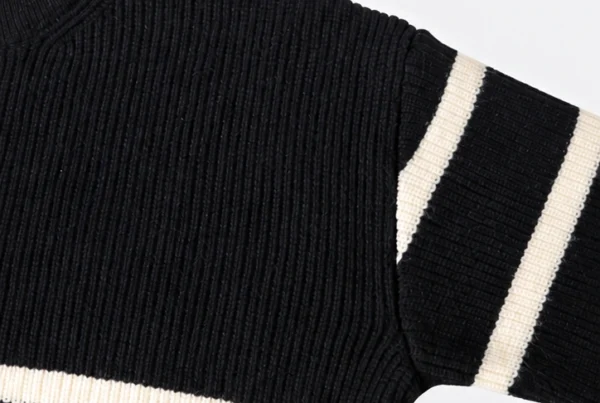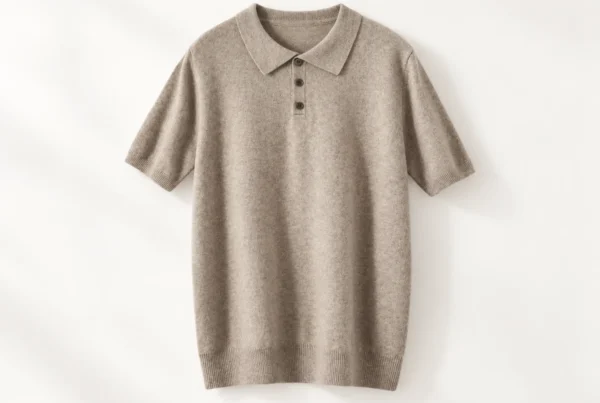

A sweater sample may look acceptable during approval, but the bulk production can show different pilling performance. Yarn batches, knitting structure and finishing processes all affect the final garment performance. Therefore, the approved sample and bulk production may not always show the same pilling results.
Pilling prevention should start before production, not after customers receive the finished garments. The most important decisions are made before the first bulk panel is knitted. These include yarn selection, knit construction, finishing and sample approval checks.
Why Sweaters Pill: The Main Factors Behind Pilling
Pilling happens when short fiber ends work loose from the yarn surface during wear and washing, then tangle with neighboring fibers into small balls. Pilling speed depends on several production factors working together. It is not controlled by a single material choice.
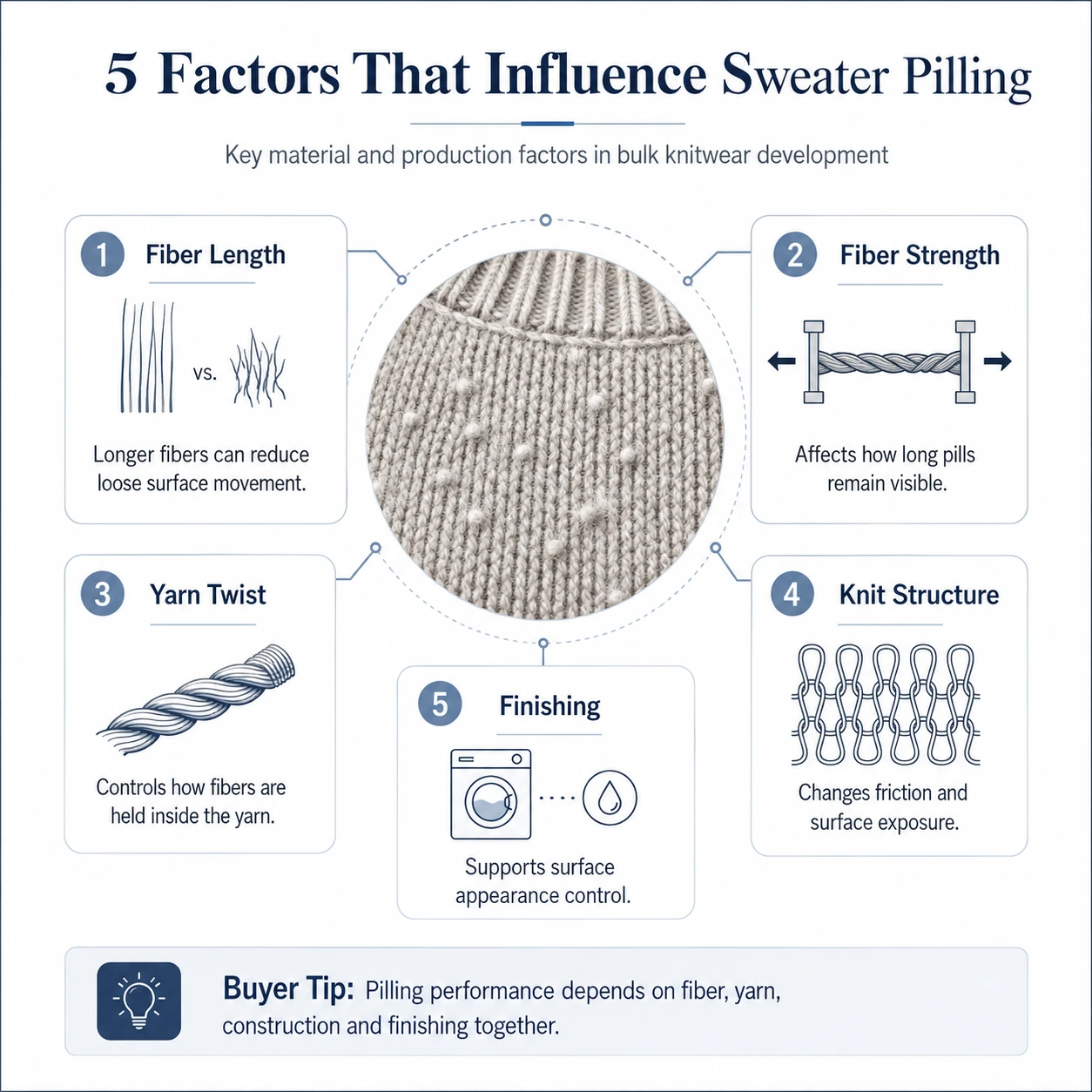 The main factors behind pilling are:
- Fiber length and fiber strength
- Yarn twist and ply structure
- Knit construction, gauge and stitch density
- Finishing processes
- The consistency of the yarn between the approved sample and bulk production
Because these factors interact, one change — a different yarn batch or a looser stitch — can shift pilling performance even when the fiber composition looks identical.
How Yarn Selection Affects Sweater Pilling
Yarn selection is the earliest point where pilling risk can be reduced, before a single panel is knitted. Two yarn properties matter most. They also work together with knit construction and finishing processes. For a broader view of fiber options, see our sweater yarn materials guide.
Fiber Length and Fiber Strength
Fiber length is one reason why two sweaters with the same fiber composition can show different pilling performance. Longer fibers can often be held more securely within the yarn structure, reducing loose fiber movement on the garment surface. Short fibers expose more ends, which are more likely to work free and tangle into pills.
Fiber strength shapes what happens after a pill forms. A strong fiber such as polyester or nylon can hold a pill together, so the pill stays visible instead of breaking away. A weaker natural fiber such as cotton or wool may form pills that snap off with wear. Neither behavior is automatically better; pilling performance depends on the relationship between fiber characteristics, yarn construction and garment finishing.
Blends follow the same logic. Adding a strong synthetic to wool or cashmere can improve abrasion resistance, but the stronger fiber may also hold pills together longer. The blend, the yarn structure and the finishing should be evaluated together rather than judged by fiber name alone.
Yarn Twist and Ply Structure
Twist and ply affect how tightly fibers are held in the yarn. Higher twist binds fibers more securely, which reduces surface fiber release; a multi-ply yarn can add stability in the same way. The trade-off is hand feel, because a firmer, higher-twist yarn feels less soft.
Yarn twist affects how securely fibers are held inside the yarn structure. A balanced twist can reduce loose fiber movement toward the surface, while a construction that leaves more fiber exposed may increase the chance of visible pilling during wear. This is why the same fiber content can behave differently depending on how the yarn is built.
A yarn that looks similar in composition can perform differently if the yarn construction changes. Two yarns with the same fiber blend can pill very differently when one is a low-twist single and the other is a tightly twisted two-ply.
Before sampling, buyers should confirm the yarn count, ply structure and twist level, and ask for the yarn supplier specification where available. These details are easier to fix at the yarn stage than to correct after bulk production has started.
How Knit Construction Influences Pilling
Construction controls how much the surface fibers can move and rub against each other. A tighter, more compact knit generally releases less surface fiber than a loose, open stitch.
Knit structure also affects how much yarn surface is exposed to friction during wear. Looser constructions or raised surfaces may show pilling differently compared with denser knit structures made from similar yarns, so gauge, stitch structure and density each play a part in how the same yarn performs.
Gauge and Stitch Density
Gauge affects stitch density, garment appearance and surface performance, so it should be considered together with yarn selection. A finer sweater gauge with a firm stitch usually pills less than a coarse, open gauge, all else being equal.
Gauge also changes weight, cost and hand, so pilling resistance is balanced against the look and price point of the collection. When a bulky look is required but pilling is a concern, a finer-gauge ground with surface texture can deliver the visual weight while keeping the stitch more stable.
Surface Friction and Fabric Structure
Different structures expose surface fibers differently. A dense flat panel behaves differently from a bulky cable that traps air and rubs against outer layers. High-friction areas — cuffs, underarms and the front — tend to pill first, so those zones deserve extra attention when reviewing a sample.
How Finishing Processes Affect Pilling Performance
Finishing clears or binds the loose surface fiber that becomes pills, and the right treatment depends on the fiber:
- Cotton and cellulosic yarns — singeing removes surface fuzz, and enzyme biopolishing smooths the yarn face.
- Wool and animal fibers — controlled washing and brushing can remove weak surface fiber, and an anti-pilling finish can bind fibers in place.
- Synthetic blends — heat-setting and anti-pilling finishes help, but must be tested because a poorly chosen finish can stiffen the hand or wash out.
Finishing treatments can improve surface appearance and hand feel, but they should be considered part of the overall pilling-control approach rather than a replacement for suitable yarn selection and knitting construction. The treatment should be confirmed on a finished sample washed to the care instructions, not judged from a small swatch alone.
What Buyers Should Check Before Bulk Sweater Production
Most pilling problems are avoidable when the right details are confirmed before bulk production. Buyers should confirm the items below where required, rather than assume a factory will apply them by default.
Yarn Specification
- Fiber composition
- Fiber length information where available
- Yarn count
- Ply structure
Knit Construction
- Gauge
- Stitch structure
- Surface appearance
Sample Approval
- Compare hand feel against the reference
- Check surface fuzz
- Review pilling performance
Production Control
- Confirm the finishing process
- Confirm bulk yarn consistency
A clear tech pack also helps manufacturers confirm yarn requirements, knit structure and finishing expectations before bulk production.
 What to Check During Sweater Sample Approval
 What to Check During Sweater Sample Approval
Sample approval is an important stage for evaluating hand feel, appearance and potential pilling issues before bulk production. The approved sample becomes the reference for every later lot, so it should be checked carefully.
During approval, look at the surface under normal and angled light, rub high-friction areas to see how much fuzz releases, and compare the hand against the original reference. If the sample already shows loose surface fiber, that is a signal the bulk may pill the same way or worse.
Sample approval should not only confirm appearance and fit. Buyers should also consider whether the approved sample reflects the yarn batch, construction and finishing process that will be used for bulk production, so the approved reference stays relevant to the actual order.
Document the approved yarn, construction and finishing so the same choices are carried into production. When the sample arrives, verify pilling alongside the other checks in our sweater sample approval checklist.
Pilling Tests for Knitwear Quality Control
Pilling tests turn a subjective complaint into a measurable check, but the method should be agreed before bulk production rather than assumed. Depending on buyer requirements and product category, pilling evaluation methods may be agreed before bulk production, and the test method depends on the buyer requirement and market.
Common reference methods include the random tumble test (ASTM D3512) and the Martindale method (ISO 12945-2). Results are graded on a 1–5 scale where 5 means no pilling, but the target grade and the number of cycles should be set for the specific product, not copied from a generic list.
Buyers should define the testing method and acceptance expectations before bulk production, especially for products where surface appearance is important, such as premium knitwear or retail collections. Testing requirements should be agreed according to buyer requirements and product category rather than applied as a fixed default.
Because results can vary between labs, use the same method and rating reference when you compare a factory’s result against your own or a third-party inspection. Quality control inspections help verify whether bulk production follows the approved sample requirements.
Final Takeaway
Pilling is not resolved after production; it is managed before it. Yarn selection, knit construction, finishing and sample approval each play a role, and the approved sample is what ties them together for bulk production.
From a knitwear manufacturing perspective, pilling control is usually managed through yarn selection, sample approval and production checks rather than through one single material choice. Buyers who confirm the yarn specification, review the sample surface and agree on a pilling test before bulk reduce the risk of a quality gap between the approved sample and the delivered order.
Planning a Custom Sweater Collection?
Send us your design, yarn requirements, target quantity and quality expectations for custom knitwear production. Our team can review the production requirements before sampling.
Looking for a reliable sweater manufacturer for custom knitwear production?
Contact our team to discuss your sweater development project.