How can buyers judge knitwear quality before placing a bulk order? Instead of checking only the yarn, fabric appearance, or overall design, experienced buyers can inspect five key areas: the collar, shoulder seams, armholes, side seams, and hem. These details reveal how well a knitted garment has been constructed, finished, and controlled during production.
For custom knitwear, these five areas are especially important because quality is influenced by yarn selection, knitting tension, rib recovery, linking or seaming, garment finishing, and washing performance. A systematic knitwear quality inspection can help buyers identify construction problems before they become costly bulk-order issues.
1. Check the Collar: Elasticity and Recovery
The collar is one of the first areas buyers should inspect because it experiences frequent stretching during wear.
A well-made knitwear collar should lie flat around the neckline without excessive rippling, twisting, or deformation. When gently stretched, it should also recover its original shape rather than remaining loose.
What to Check on a Knitwear Collar
For ribbed collars, buyers should pay particular attention to:
- Flatness around the neckline
- Rib consistency
- Stretchability
- Elastic recovery
- Even joining at the neckline
- Absence of excessive looseness or waviness
Elastic recovery is particularly important. A collar may look attractive when new but lose its shape after repeated wearing if the rib structure, yarn selection, or finishing process is not properly controlled.
For buyers sourcing custom knitwear, collar specifications should therefore be considered part of the technical requirements rather than simply a visual detail.
Why Rib Recovery Matters
A rib structure is designed to stretch and return toward its original dimensions.
If the recovery is poor, the neckline can gradually become wider or lose its clean appearance. This can affect both perceived quality and the garment’s ability to maintain its intended silhouette.
A practical quality inspection should compare the collar before and after repeated stretching and, where applicable, after washing.
2. Inspect the Shoulder Seams: Construction Precision
The shoulder is another critical area because it connects major garment panels and influences how the sweater sits on the body.
For knitted garments, the shoulder joining or linking should be smooth and controlled. The seam should not create an obvious raised ridge, uneven tension, or visible displacement.
What a Good Shoulder Seam Looks Like
During knitwear quality inspection, check whether:
- The shoulder line is correctly aligned.
- The joining is smooth.
- There are no obvious protrusions.
- Stitch density remains consistent.
- The left and right shoulders are symmetrical.
- The seam does not create unnecessary bulk.
A small construction error at the shoulder can become much more visible when the garment is worn.
For bulk buyers, shoulder alignment is therefore not only a sewing or linking issue. It is also an indicator of how carefully the factory controls garment assembly.
3. Examine the Armholes: Smooth Curves and Freedom of Movement
The armhole connects the body of the garment with the sleeve and directly affects comfort.
A high-quality knitted garment should have a smooth transition between the sleeve cap and armhole. The seam should follow the intended curve without excessive puckering or visible distortion.
Look for Puckering Around the Armhole
One of the easiest problems to identify is uneven gathering or puckering around the armhole.
Ask:
- Does the sleeve cap sit smoothly?
- Is the armhole curve symmetrical?
- Are there visible wrinkles around the joining area?
- Does the sleeve pull when the wearer raises an arm?
- Does the armhole maintain its shape during movement?
A garment may look acceptable when placed flat on a table but reveal construction problems when worn.
This is why a functional garment quality inspection should include movement testing rather than relying exclusively on visual inspection.
Why Armhole Construction Affects Comfort
The armhole needs to balance several factors, including garment dimensions, sleeve construction, knitting tension, and joining accuracy.
If these elements are not properly matched, the wearer may experience pulling or restriction when moving the arms.
For custom knitwear, armhole measurements and sleeve specifications should therefore be verified against the approved sample before bulk production.
4. Check the Side Seams: Straightness and Twist Resistance
Side seams are easy to overlook, but they can reveal significant problems in knitted garment construction.
A good side seam should run straight from the underarm toward the hem. It should not visibly rotate around the body or create an uneven silhouette.
Watch for “Twisted” Side Seams
One common issue in knitted garments is side seam twisting, sometimes described as a “twisted” or “torqued” garment.
Instead of remaining vertically aligned, the side seam gradually rotates toward the front or back after washing or wearing.
This may be associated with factors such as:
- Knitting structure
- Yarn characteristics
- Fabric tension
- Panel dimensions
- Garment linking
- Washing and finishing conditions
For buyers, the important point is that side-seam quality should be evaluated after washing, not only on the fresh production sample.
Washing Is Part of Knitwear Quality
A garment can look perfect before washing and still develop distortion afterward.
For this reason, a proper knitwear quality control process should include dimensional and appearance checks after the agreed washing or finishing procedure.
Buyers can compare:
Before washing → After washing → After repeated wear or stretch
This provides a much clearer picture of whether the garment can maintain its intended shape.
5. Evaluate the Hem: Shape Retention and Elastic Recovery
The hem is another high-stress area, especially when a garment uses ribbed cuffs or ribbed bottom bands.
A good ribbed hem should provide sufficient elasticity while maintaining a stable shape after stretching.
How to Check Hem Recovery
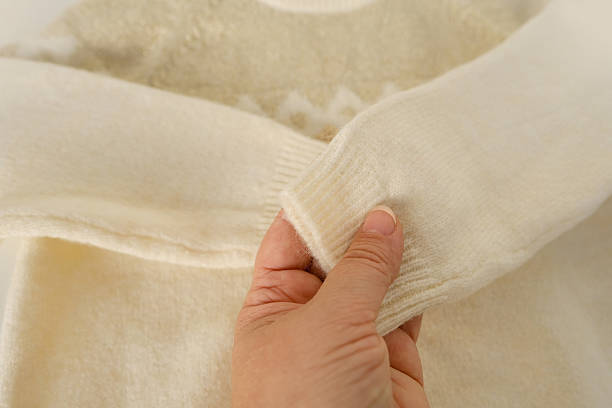
A simple practical check is to gently stretch the ribbed hem and release it.
Observe whether it:
- Returns close to its original dimensions
- Remains flat
- Keeps consistent rib structure
- Shows excessive looseness
- Develops permanent deformation
Repeated stretching provides additional information.
If the hem gradually becomes loose and fails to recover, the garment may lose its intended silhouette during normal use.
Why Hem Quality Matters for Bulk Buyers
For fashion brands and apparel distributors, poor hem recovery can result in customer complaints even when the overall fabric and design look good.
A strong custom knitwear quality control system should therefore treat hem recovery as a measurable construction characteristic rather than a subjective appearance issue.
A 5-Point Knitwear Quality Inspection Framework
For buyers evaluating samples or approving bulk production, the five areas can be summarized as follows:
| Area | What to Check | Potential Quality Issue |
|---|---|---|
| Collar | Flatness, stretch, recovery | Loose or deformed neckline |
| Shoulder seams | Alignment, smooth joining | Uneven shoulder line |
| Armholes | Curvature, seam smoothness, movement | Puckering or pulling |
| Side seams | Straightness, symmetry, wash stability | Twisting or distortion |
| Hem | Elasticity and recovery | Loss of shape |
This framework is useful because it turns a general question—“Is this knitwear good quality?”—into a series of observable checks.
How Buyers Can Apply This Framework to Custom Knitwear
For bulk orders, inspecting one sample is not enough.
The five-point framework can be integrated into several stages of a custom knitwear production process.
Stage 1: Approve the Development Sample
Before bulk production, check all five areas against the approved measurements and construction requirements.
Record important details such as:
- Collar dimensions
- Rib specifications
- Shoulder measurements
- Armhole measurements
- Side seam alignment
- Hem dimensions
- Washing requirements
Stage 2: Conduct a Pre-Production Check
The factory should confirm that the approved yarn, knitting parameters, linking method, measurements, and finishing process match the approved sample.
This is particularly important when the order involves multiple colors or sizes.
Stage 3: Perform In-Line Quality Control
During production, inspect representative pieces rather than waiting until the entire order is finished.
Early inspection can identify recurring problems such as inconsistent rib tension, seam displacement, or dimensional variation.
Stage 4: Conduct Final Inspection After Finishing
The finished garments should be checked for appearance, measurements, construction, and relevant post-wash performance.
For buyers, this stage provides an opportunity to identify issues before shipment.
How a Custom Knitwear Manufacturer Can Control These Five Areas
The buyer’s five-point inspection framework also reflects the manufacturer’s internal quality-control process.
For example:
Collar → control rib knitting, dimensions, joining, and elastic recovery.
Shoulder → control panel alignment and linking or seam construction.
Armhole → control sleeve and body dimensions, joining accuracy, and puckering.
Side seam → control panel dimensions, alignment, linking, and post-wash stability.
Hem → control rib structure, tension, dimensions, and recovery.
This makes quality control more systematic than simply performing a final visual inspection.
Why These Five Details Matter More Than Appearance Alone
A knitted garment can look attractive on a product page and still have construction problems that become visible after several wears or washes.
That is why professional buyers should evaluate both:
Appearance + Performance
Appearance includes:
- Clean construction
- Even stitches
- Symmetry
- Smooth seams
- Consistent shape
Performance includes:
- Elastic recovery
- Dimensional stability
- Resistance to twisting
- Comfort during movement
- Shape retention after washing
For bulk purchasing, the second category can be just as important as the first.
What Buyers Should Ask a Knitwear Supplier
Before placing a bulk custom knitwear order, buyers can ask the supplier:
- How is collar and hem elastic recovery controlled?
- How are shoulder seams or linking points inspected?
- How is armhole puckering checked?
- Does the factory perform post-wash dimensional testing?
- How is side-seam twisting controlled?
- What are the approved measurements and tolerances?
- How are defects recorded during in-line inspection?
- What inspection standard is used before shipment?
Clear answers to these questions help buyers understand whether a supplier has a structured knitwear quality control system rather than relying only on final visual inspection.
Conclusion: Five Areas Can Reveal a Lot About Knitwear Quality
Judging knitwear quality does not always require complicated laboratory equipment.
For buyers, starting with five practical areas—the collar, shoulder seams, armholes, side seams, and hem—can reveal important information about construction accuracy, elasticity, shape retention, and finishing quality.
For custom knitwear, these details are also closely connected to manufacturing control. Yarn selection, knitting tension, linking, measurements, washing, and finishing all influence how the final garment performs.
A reliable supplier should therefore be able to connect each visible quality requirement with a specific production and inspection process. For buyers placing bulk orders, that connection is often more valuable than simply judging how a sample looks when it is first taken out of the package.