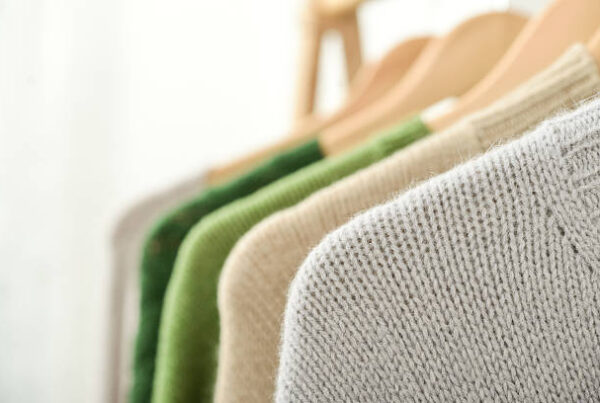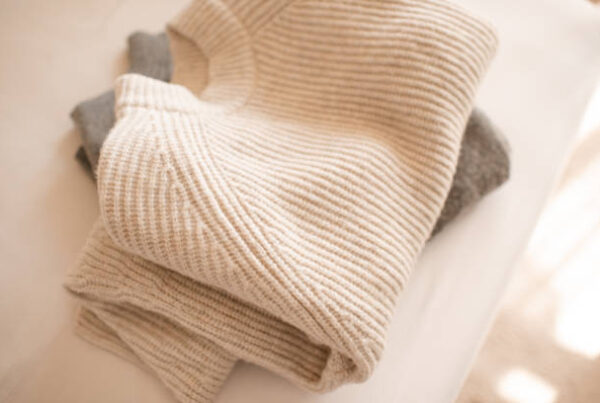
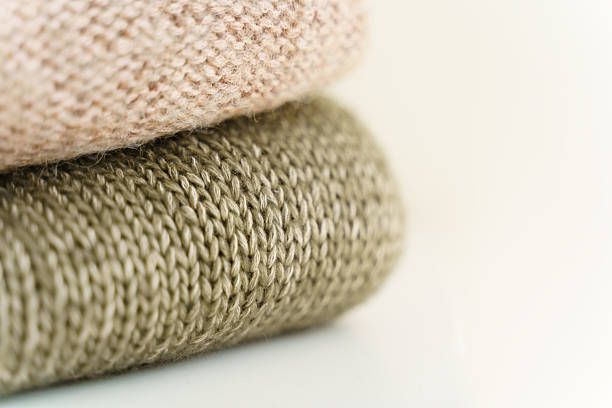
Knitwear pilling is one of the most common concerns for buyers of sweaters, cardigans, knit tops, and other knitted garments. But does pilling automatically mean poor quality?
Not necessarily.
Pilling occurs when loose or protruding fibers are brought to the fabric surface through repeated friction and become entangled into small balls. Fiber length, yarn structure, fabric density, garment construction, finishing processes, and actual wear conditions can all influence the result.
For brands sourcing custom knitwear, the more useful question is not simply “Will this fabric pill?” but rather “How can yarn selection and finishing be used to control pilling for the intended product?”
What Causes Knitwear to Pill?
To understand whether pilling is a quality problem, it is important to understand how it happens.
Pilling is primarily a surface-fiber phenomenon. During wear, friction pulls loose fibers toward the fabric surface. When these fibers become entangled with one another, they form visible pills.
The process can be simplified as:
Fiber loosening → fiber migration to surface → entanglement → visible pills
The more easily fibers can migrate out of the yarn or fabric structure, the greater the potential for pilling under repeated friction.
Fiber Length Matters
Fiber length is one of the important variables affecting pilling.
Short fibers have more fiber ends within a given yarn structure and are generally more likely to work their way toward the fabric surface. Longer fibers can provide better fiber cohesion within the yarn, although fiber length alone does not determine the final pilling performance.
This is why two sweaters with similar fiber composition can behave differently when their yarn quality and fiber characteristics are different.
For example, simply specifying “100% wool” or “100% cotton” does not tell a buyer enough about the garment’s pilling performance.
Other questions matter:
- What is the fiber length?
- How is the fiber processed?
- What yarn construction is used?
- How tightly is the yarn spun?
- What knitting structure is selected?
- What finishing process is applied?
Does Yarn Twist Affect Knitwear Pilling?
Yes. Yarn twist can influence how securely fibers are held inside the yarn.
A yarn with relatively low twist may have a looser structure, allowing fibers to protrude more easily. Under friction, these fibers can migrate toward the surface and contribute to pilling.
Increasing yarn cohesion can help reduce fiber movement, but excessive twist is not automatically better. Yarn twist must be balanced against softness, handle, appearance, elasticity, and the intended knitwear style.
Why Yarn Selection Matters for Custom Knitwear
This is particularly important for wholesale and private-label knitwear.
A buyer may specify:
“We want a soft sweater with a premium hand feel and low pilling.”
These requirements can create a technical trade-off.
Very soft yarns may require careful fiber and yarn selection to maintain surface performance. A supplier therefore needs to evaluate the complete yarn construction rather than simply selecting a material based on fiber name or price.
How Does Fabric Density Affect Pilling?
The knitted fabric structure also influences how easily fibers can move at the surface.
A relatively loose fabric structure may allow more fiber movement, making surface fibers more vulnerable to friction.
Fabric density, stitch structure, yarn count, loop geometry, and knitting tension can all contribute to the final fabric behavior.
This means that the same yarn can produce different pilling results when knitted into different structures.
For a custom knitwear project, fabric development should therefore consider both the yarn and the knitting construction.
A Simple Comparison
| Factor | Potential effect on pilling | Can a factory control it? |
|---|---|---|
| Fiber length | Shorter fibers generally increase risk | Yes, through fiber selection |
| Yarn twist | Low cohesion can increase fiber migration | Yes |
| Yarn quality | Inconsistent fibers can increase variability | Yes |
| Fabric density | Looser structures may allow more fiber movement | Yes |
| Knit structure | Changes surface exposure and friction behavior | Yes |
| Finishing | Can reduce loose surface fibers | Yes |
| Wear conditions | Friction determines actual pill formation | Partly |
This is why pilling should be treated as a multi-variable textile performance issue, rather than a simple pass/fail indicator of garment quality.
Fiber Composition vs Finishing: Which Matters More?
There is no universal answer.
If forced to choose a starting point, fiber and yarn selection usually establish the basic pilling potential, while finishing can further improve the surface condition of the fabric.
In other words:
Yarn determines much of the foundation → knitting determines the fabric structure → finishing helps optimize the surface.
A good finishing process cannot completely compensate for an unsuitable yarn.
Likewise, an excellent yarn can still produce unsatisfactory results if the fabric structure, knitting parameters, or finishing process are poorly controlled.
1. Fiber and Yarn Selection Set the Foundation
Choosing appropriate fibers and yarns can reduce the amount of loose material available to form pills.
For example, a knitwear manufacturer may evaluate:
- Fiber length
- Fiber strength
- Yarn count
- Yarn twist
- Spinning method
- Yarn consistency
- Blended-fiber characteristics
The correct combination depends on the target garment.
A luxury soft-touch sweater may require a different balance than a school uniform, promotional knit, workwear cardigan, or high-volume fashion basic.
2. Finishing Optimizes the Surface
Finishing treatments can help reduce loose surface fibers and improve the fabric’s resistance to visible pilling.
Depending on the fiber and product requirements, textile manufacturers may consider processes such as biopolishing or selected resin-based finishing systems.
Biopolishing, for example, uses enzymes to act on protruding cellulosic fibers, helping create a cleaner and smoother fabric surface. Its suitability depends on the fiber composition and desired fabric performance.
The exact finishing route should therefore be selected according to the material rather than applied as a universal anti-pilling solution.
What Is Anti-Pilling Finishing?
Anti-pilling finishing refers to processes designed to reduce the formation or visibility of pills on the fabric surface.
Different approaches work in different ways.
Some treatments reduce the amount of loose surface fiber. Others modify fiber-to-fiber interactions or improve the surface stability of the fabric.
For buyers, the important point is that finishing should be considered as part of a broader anti-pilling knitwear solution, not as an isolated chemical treatment.
Biopolishing
Biopolishing is particularly relevant to cellulosic fibers such as cotton and certain regenerated cellulose materials.
The process can remove or weaken protruding surface fibers, producing a smoother appearance and potentially improving resistance to surface fuzz and pilling.
However, the process must be controlled carefully because excessive treatment can affect fabric weight, appearance, strength, or hand feel.
Resin-Based Finishing
Certain resin-based finishing systems can also be used to improve surface stability.
The suitability depends on the fiber type, fabric construction, required handle, chemical requirements, and target performance.
For B2B buyers, it is therefore more useful to ask a supplier which finishing system is appropriate for the specified fabric rather than simply asking whether a garment is “anti-pilling.”
Is Pilling Always a Sign of Poor Quality?
No.
Pilling can occur even in well-made knitwear because garments experience different levels of mechanical friction during normal use.
High-friction areas may include:
- Underarms
- Side seams
- Sleeves
- Elbows
- Waist areas
- Areas contacting bags or seat belts
- Areas rubbing against other garments
A sweater designed for frequent everyday wear may therefore need a different pilling target from a decorative fashion piece that is worn occasionally.
Quality Means Controlling the Expected Performance
For manufacturers and buyers, the more meaningful question is whether the garment meets the specified pilling performance for its intended use.
A garment intended for intensive daily wear should generally receive more attention to abrasion and pilling performance than a garment designed primarily for occasional fashion use.
Therefore:
Pilling ≠ automatically poor quality.
Instead:
Uncontrolled or unexpectedly poor pilling performance can indicate an unsuitable material, construction, finishing process, or quality-control target.
How Can a Knitwear Factory Control Pilling?
A reliable anti-pilling strategy starts before knitting.
Step 1: Select the Right Yarn
The supplier evaluates fiber characteristics, yarn construction, twist, count, and quality consistency according to the target garment.
Step 2: Develop the Fabric Structure
Knitting parameters and fabric density are adjusted to achieve the required combination of appearance, hand feel, stretch, weight, and surface stability.
Step 3: Select Appropriate Finishing
The finishing process is chosen according to the fiber and fabric structure.
For example, a cotton knit may require a different treatment approach from a wool, acrylic, or blended-fiber product.
Step 4: Test the Fabric
Rather than relying on visual inspection alone, suppliers can evaluate pilling resistance using standardized textile testing methods.
The exact test method and rating system should be agreed upon before production because different standards and test conditions can produce different results.
Step 5: Confirm Before Bulk Production
For custom wholesale knitwear, pre-production samples are important.
A buyer can evaluate:
- Appearance
- Hand feel
- Pilling performance
- Dimensional stability
- Color fastness
- Shrinkage
- Washing performance
This reduces the risk of discovering a material-performance problem only after bulk production.
How Should Buyers Specify Anti-Pilling Knitwear?
Instead of simply telling a supplier:
“I need a no-pilling sweater.”
A more useful specification is:
“I need a sweater with defined pilling performance under an agreed test method and rating.”
This gives the manufacturer a measurable target.
A buyer should ideally provide information about:
- Fiber composition
- Target fabric weight
- Knit structure
- Expected usage
- Washing conditions
- Required pilling test standard
- Target pilling grade
- Desired hand feel
- Target price range
This approach allows the factory to balance performance with cost.
Can a Factory Offer Different Anti-Pilling Solutions for Different Products?
Yes. This is where customization becomes valuable.
A premium cashmere-blend sweater, a cotton cardigan, and a polyester fashion knit do not necessarily require the same anti-pilling strategy.
For example:
| Product Positioning | Priority | Possible Development Focus |
|---|---|---|
| Premium knitwear | Softness + appearance | High-quality yarn + controlled finishing |
| Everyday basics | Durability + cost | Balanced yarn and finishing |
| Workwear knitwear | Abrasion resistance | Durable yarn + fabric structure |
| Fashion knitwear | Appearance + hand feel | Surface optimization |
| Luxury knitwear | Hand feel + fiber quality | Premium yarn selection + gentle finishing |
The goal is not to make every garment follow the same formula.
The goal is to match yarn selection, knitting construction and finishing to the product’s actual performance requirements.
The Bottom Line: Control the Process, Not Just the Pilling
So, is knitwear pilling a quality problem?
Not necessarily.
Pilling is a complex interaction between fiber characteristics, yarn construction, fabric structure, finishing, and real-world friction. Fiber length, yarn twist, fabric density and surface finishing can all influence the final result.
For custom knitwear, the most effective approach is therefore not to rely on a single “anti-pilling” treatment.
Instead, manufacturers should control the process from yarn selection → knitting structure → finishing → testing.
For brands and wholesale buyers, this also creates more flexibility. Different products can be developed with different levels of softness, durability, appearance and anti-pilling performance.
A capable knitwear supplier should therefore be able to discuss which yarn, construction and finishing combination is appropriate for the product, rather than simply promising that a garment will never pill.