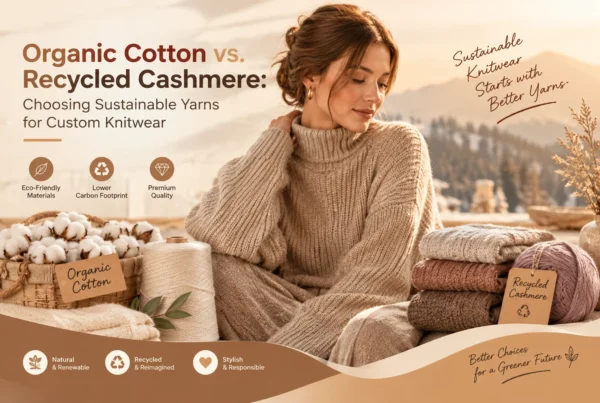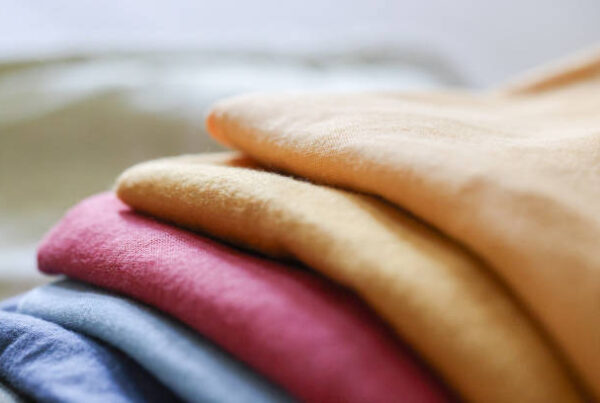
As sustainability becomes a growing priority in global fashion procurement, brands are actively exploring eco-friendly yarns for knitwear. Organic cotton, recycled wool, lyocell, and recycled polyester offer different ways to reduce reliance on conventional raw materials. However, sustainable sourcing alone does not guarantee a successful knitwear product.
Fashion buyers must also evaluate softness, durability, colorfastness, pilling resistance, and certification requirements. A recycled yarn may support material sustainability goals but still require careful blending and yarn engineering to achieve the desired fabric performance. Similarly, an organic fiber claim needs reliable documentation before a brand can communicate it confidently.
For clothing brands, wholesalers, and private-label buyers, the challenge is finding a balance between environmental responsibility, product quality, and commercial feasibility.
This guide explores the main types of sustainable yarns for knitwear, explains important textile certifications, and provides practical methods for evaluating material performance during OEM and ODM sourcing.
1. The Rise of Sustainable Knitwear in Global Fashion Procurement
Sustainable materials are becoming an increasingly important consideration in apparel product development. Fashion brands face growing expectations from consumers, retail partners, and business customers to improve supply chain transparency and support responsible material sourcing.
Knitwear is an important part of this transition. Sweaters, cardigans, knitted tops, scarves, and accessories can use various natural, regenerated, and recycled fibers.
1.1 Why Fashion Brands Are Choosing Sustainable Yarns
Traditional textile sourcing often relies heavily on virgin raw materials. Sustainable yarn alternatives give brands more options when developing products with documented material origins and environmental attributes.
Several factors are driving this demand.
Changing consumer expectations
Consumers increasingly pay attention to fabric composition, product durability, and environmental claims. Brands need materials that support credible product information rather than relying on vague sustainability messaging.
Retailer and procurement requirements
Large retailers and B2B customers may request material declarations, third-party certifications, and supply chain documentation. Suppliers that can provide traceable material information are better positioned to support these purchasing requirements.
Corporate sustainability strategies
Many apparel companies have established goals related to recycled content, preferred fibers, and supply chain transparency. Choosing suitable yarns can contribute to these goals.
Product differentiation
Organic cotton sweaters, recycled wool cardigans, and lyocell-blend knitwear provide brands with additional material stories and product positioning opportunities.
1.2 What Sustainable Yarn Selection Means for Knitwear Buyers
Sustainable yarn selection should consider more than the fiber name.
A useful evaluation framework includes four dimensions:
| Evaluation Area | What Buyers Should Check | Why It Matters |
|---|---|---|
| Material origin | Organic, recycled, regenerated, or conventional content | Supports accurate material claims |
| Processing | Dyeing, finishing, chemical management, and production practices | Influences environmental and product performance considerations |
| Certification | GOTS, GRS, OEKO-TEX, RWS, or other relevant evidence | Supports specific claims and buyer requirements |
| Product performance | Softness, strength, pilling, shrinkage, and colorfastness | Determines suitability for the finished garment |
For example, a recycled polyester yarn may support recycled-content targets, but it does not automatically provide a soft hand feel or premium sweater appearance.
Likewise, organic cotton can support an organic fiber claim, but the finished garment still needs appropriate knitting, dyeing, and finishing processes.
1.3 Sustainability Claims Need Verifiable Evidence
Terms such as “eco-friendly,” “green,” and “sustainable” can be too broad when used without supporting information.
Professional buyers should request specific evidence, including:
- Fiber composition and recycled or organic content percentages.
- Supplier declarations and material specifications.
- Valid certification documents.
- Scope Certificates covering relevant activities and product categories.
- Transaction Certificates where required by the certification system.
- Testing reports for relevant chemical and physical properties.
The goal is to connect each sustainability statement with evidence that matches the actual material and product.
2. Core Types of Sustainable Yarns for Knitwear
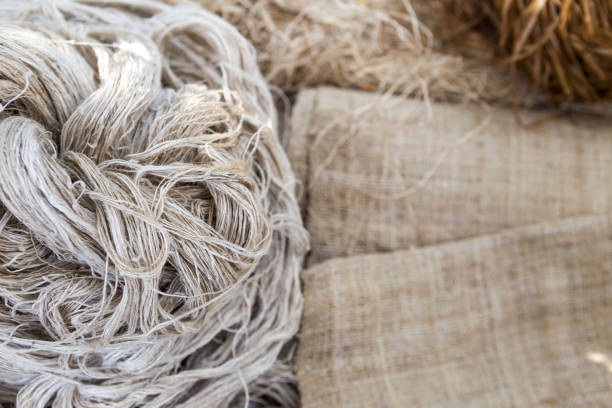
Different eco-friendly yarns have different physical characteristics. Organic cotton, recycled wool, lyocell, and recycled polyester can all support sustainable knitwear development, but they are not interchangeable.
The best choice depends on the garment’s intended use, target price, desired hand feel, knitting structure, and performance requirements.
2.1 Organic Cotton Yarn: Natural Softness and Everyday Comfort
Organic cotton yarn is made from cotton grown under an applicable organic agricultural certification system.
It is widely used in lightweight sweaters, knitted T-shirts, cardigans, children’s knitwear, and casual clothing.
Key characteristics:
- Natural cellulose fiber.
- Comfortable hand feel when properly spun and finished.
- Good moisture absorption.
- Suitable for many skin-contact applications.
- Compatible with different yarn counts and knitting structures.
Organic cotton is particularly suitable for brands developing everyday knitwear with natural fiber content.
However, buyers should understand that organic cultivation does not automatically guarantee better softness or durability. These properties also depend on cotton quality, fiber length, spinning method, yarn construction, and finishing.
Recommended applications:
- Lightweight summer knitwear.
- Cotton cardigans.
- Casual knitted tops.
- Children’s sweaters.
- Basic fashion knitwear.
For B2B sourcing, buyers should confirm the organic content percentage and the certification scope covering the relevant supply chain.
2.2 Recycled Wool Yarn: Warmth and Circular Material Use
Recycled wool yarn is produced using recovered wool fibers from pre-consumer or post-consumer textile waste.
The material may come from manufacturing offcuts, unused wool products, or discarded wool garments. Processing methods vary according to the source and quality of the recovered fibers.
Key characteristics:
- Warmth and natural insulation.
- Moisture management properties associated with wool.
- Potentially reduced demand for virgin wool.
- Distinctive natural texture.
- Suitable for blended yarn constructions.
Recycled wool is commonly considered for sweaters, winter cardigans, scarves, and textured knitwear.
However, mechanical recycling can shorten fibers. This may affect yarn strength, spinning performance, and surface appearance.
Manufacturers may blend recycled wool with virgin wool, polyamide, or other fibers to improve yarn consistency and durability.
Buyers should confirm the recycled content percentage and evaluate the actual yarn sample rather than assuming all recycled wool performs identically.
2.3 Lyocell Yarn: Smooth Hand Feel and Moisture Management
Lyocell is a regenerated cellulose fiber made from cellulose-based raw materials. It is commonly used in soft, lightweight, and drapable textiles.
TENCEL™ is a trademark associated with Lenzing products. Buyers should distinguish branded TENCEL™ fibers from lyocell fibers supplied by other manufacturers.
Key characteristics:
- Smooth surface and soft hand feel.
- Good moisture absorption.
- Fluid drape.
- Suitable for lightweight knitted fabrics.
- Can be blended with cotton, wool, or other fibers.
Lyocell blends are useful for brands seeking a softer appearance and a more fluid silhouette.
For example, a cotton-lyocell blend may combine cotton’s familiar structure with lyocell’s smoothness and drape.
However, buyers should assess wet strength, dimensional stability, fabric recovery, and care requirements during product development.
The sustainability profile of lyocell also depends on the raw material source, manufacturing process, chemical recovery system, and supporting documentation. Fiber type alone does not establish the environmental performance of the entire garment.
2.4 Recycled Polyester Yarn: Durability and Functional Blending
Recycled polyester yarn is generally produced from recycled PET materials or other qualified polyester waste streams.
It is frequently used in functional apparel, sportswear, and blended knitwear.
Key characteristics:
- Good tensile strength.
- Relatively low moisture absorption.
- Quick-drying characteristics.
- Dimensional stability in suitable constructions.
- Compatibility with wool, cotton, and other fiber blends.
Recycled polyester can improve the durability and structural stability of some knitwear constructions.
For example, a wool-recycled polyester blend may be considered for sweaters that require improved abrasion resistance or shape retention.
However, recycled polyester remains a synthetic fiber. It can release microfibers during textile use and washing, depending on fabric construction and care conditions.
Brands should avoid describing recycled polyester as biodegradable unless the specific material has been tested and the claim is properly substantiated.
2.5 Comparing Four Common Sustainable Knitwear Yarns
| Yarn Type | Main Strengths | Potential Limitations | Typical Applications |
|---|---|---|---|
| Organic cotton | Natural comfort, moisture absorption | Can shrink or lose shape without suitable construction | Cotton sweaters, casual tops |
| Recycled wool | Warmth, recycled material content | Fiber length and yarn consistency may vary | Winter sweaters, scarves |
| Lyocell | Smoothness, drape, moisture absorption | Requires careful construction and finishing | Lightweight tops, soft cardigans |
| Recycled polyester | Strength, durability, quick drying | Synthetic fiber characteristics and microfiber concerns | Blended sweaters, functional knitwear |
The table provides general material characteristics. Actual performance depends on fiber grade, yarn structure, blend ratio, knitting parameters, dyeing, and finishing.
3. Verifiable Eco-Certifications Every Buyer Must Check
Material claims need reliable documentation. For B2B buyers, certifications help establish whether a yarn or finished garment meets defined requirements.
However, different certifications verify different aspects of textile production. A certificate for organic fiber content is not equivalent to a chemical safety test, and a recycled-content certificate does not automatically prove every environmental claim about a garment.
3.1 GOTS: Global Organic Textile Standard
The Global Organic Textile Standard (GOTS) is a widely used certification system for organic textiles.
It addresses organic fiber content and relevant environmental and social criteria across covered textile processing and trading activities.
What buyers should check:
- Whether the supplier holds a valid GOTS Scope Certificate.
- Whether the relevant product category is included.
- Whether the certified processing activities match the supplier’s actual role.
- Whether subcontractors are appropriately covered.
- Whether the specific order can be supported by required transaction documentation.
GOTS certification is not simply a statement that a garment contains cotton. It involves requirements for eligible organic fibers and covered supply chain operations.
The current GOTS Version 8.0 was published in 2026. Buyers should check the applicable version and transition requirements when evaluating suppliers.
Official resource: Global Organic Textile Standard
3.2 GRS: Global Recycled Standard
The Global Recycled Standard (GRS), managed by Textile Exchange, verifies recycled material content and includes additional requirements related to processing, chemicals, and social and environmental practices.
It is particularly relevant when sourcing recycled polyester, recycled wool, and other recycled textile materials.
What buyers should check:
- Verified recycled material content.
- Pre-consumer or post-consumer material information.
- Supplier certification scope.
- Chain-of-custody documentation.
- Transaction Certificates for applicable shipments.
- Correct product labeling and recycled-content claims.
GRS has specific content thresholds. Under the current requirements, the 20% recycled input threshold applies to certification and B2B use, while consumer-facing GRS product claims generally require at least 50% recycled content.
Buyers should verify the applicable standard version and claims policy before approving labels or marketing statements.
Official resources:
3.3 OEKO-TEX STANDARD 100: Testing for Harmful Substances
OEKO-TEX STANDARD 100 focuses on testing textile products for harmful substances.
It can apply to products ranging from yarn and fabric to finished garments and accessories.
The standard uses different product classes according to the intended use and level of skin contact.
For example:
- Class I: Products for babies and young children.
- Class II: Products with direct skin contact.
- Class III: Products without direct skin contact.
- Class IV: Decorative materials and home textiles.
For knitwear brands, the appropriate product class should reflect the garment’s intended use.
A baby sweater and an outer jacket do not necessarily require the same testing class.
Importantly, OEKO-TEX STANDARD 100 is not an organic or recycled-content certification. It does not independently prove that a yarn is organic, recycled, or environmentally preferable.
Official resource: OEKO-TEX STANDARD 100
3.4 RWS: Responsible Wool Standard
The Responsible Wool Standard (RWS) is relevant to brands sourcing wool from farms that meet defined animal welfare and land management requirements.
It covers several important areas:
- Animal welfare.
- Land management.
- Social welfare.
- Chain-of-custody requirements.
- Product labeling requirements.
RWS is particularly relevant to virgin wool sourcing. It should not be confused with a recycled wool certification.
A garment made from recycled wool does not automatically qualify for an RWS claim simply because its original fiber may once have come from a certified farm.
Buyers should verify the actual material source and the certification pathway.
Official resource: Responsible Wool Standard
3.5 Certification Comparison for Knitwear Procurement
| Certification | Main Focus | Suitable Procurement Questions |
|---|---|---|
| GOTS | Organic textile content and covered processing requirements | Is the organic fiber and supply chain covered? |
| GRS | Recycled content and additional processing requirements | Can the recycled content and chain of custody be verified? |
| OEKO-TEX STANDARD 100 | Testing for harmful substances | Does the tested product match the intended garment and product class? |
| RWS | Responsible wool sourcing and animal welfare | Is the wool traceable to certified sources? |
A single garment may require more than one type of evidence.
For example, a knitwear product made with certified organic cotton may use GOTS documentation for its organic textile claim and OEKO-TEX testing for a separate harmful-substance claim.
These certifications serve different purposes and should not be treated as interchangeable.
3.6 How to Verify Certificates Before Placing an Order
A certificate image or logo on a supplier’s website is not sufficient evidence for every purchase.
Professional buyers should follow a structured verification process:
- Request the supplier’s current Scope Certificate.
- Check the legal company name and certification body.
- Review the product categories and processing activities covered.
- Confirm whether subcontractors are included where required.
- Request relevant Transaction Certificates for certified orders.
- Match the certificate information with the actual yarn or finished product.
- Confirm permitted labeling and marketing claims.
Textile Exchange explains that certified supply chain participants and transaction documentation are important for maintaining chain-of-custody integrity. Buyers should confirm the applicable documentation requirements for their specific purchasing arrangement.
For more information, visit Textile Exchange Supply Chain Certification.
4. Performance Trade-Offs: Softness, Durability, and Pilling Resistance
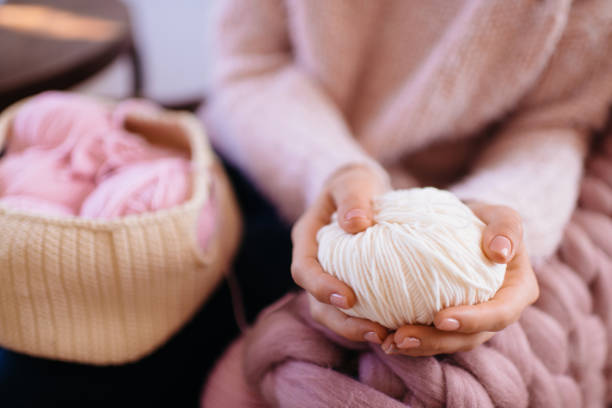
Choosing eco-friendly yarns for knitwear involves more than comparing fiber compositions.
A sustainable yarn must also deliver the performance expected by the target customer. If a sweater feels uncomfortable, loses its shape, fades quickly, or develops excessive pilling, it may not meet the brand’s quality standards.
Manufacturers can improve performance through fiber selection, yarn engineering, blending, knitting structures, and finishing.
4.1 Softness: Fiber Quality and Yarn Construction Matter
Softness is one of the most important purchasing factors for sweaters and cardigans.
However, it cannot be determined by the fiber name alone.
Several factors influence the final hand feel:
- Fiber fineness and length.
- Yarn count and spinning method.
- Twist level.
- Fiber blending ratio.
- Knitting structure.
- Washing and finishing treatments.
For example, a fine organic cotton yarn may produce a smooth fabric, while a lower-grade cotton yarn may feel rougher.
Similarly, recycled wool quality can vary according to the recovered fiber source and processing method.
Practical improvement strategies:
Select suitable fiber grades
Ask suppliers for fiber specifications and representative yarn samples. Compare softness and surface consistency before bulk production.
Optimize yarn construction
Spinning methods and twist levels influence yarn bulk, smoothness, and strength. The best construction depends on the intended knitwear style.
Use balanced fiber blends
Blending organic cotton with lyocell, or recycled wool with selected supporting fibers, may help achieve a more suitable hand feel.
Validate finishing treatments
Washing, softening, and mechanical finishing can improve fabric touch. However, buyers should also evaluate whether these treatments affect durability, color, or environmental claims.
4.2 Durability: Strength and Shape Retention
Durability determines how well knitwear performs during repeated wear, washing, and handling.
Some sustainable fibers require additional engineering to meet specific product requirements.
For example, recycled wool may contain shorter fibers than selected virgin wool. A suitable blend or yarn construction can help improve spinning consistency and fabric strength.
Organic cotton knitwear may also require careful construction to manage shrinkage and dimensional changes.
Important factors to evaluate:
- Yarn tensile strength.
- Fabric bursting strength.
- Seam and garment construction.
- Dimensional stability after washing.
- Stretch and recovery.
- Abrasion resistance.
For cardigans, sweaters, and knitted tops, shape retention is especially important around cuffs, necklines, hems, and shoulder areas.
A manufacturer should test the actual finished fabric or garment rather than relying only on the raw yarn specification.
4.3 Pilling Resistance: A Critical Quality Indicator
Pilling occurs when loose fibers migrate to the fabric surface and form small balls through friction.
It is a common concern in knitwear, particularly in garments made from wool, synthetic blends, and some soft or loosely constructed yarns.
Pilling depends on several interacting factors:
- Fiber length and strength.
- Yarn twist and structure.
- Fabric density.
- Knitting pattern.
- Finishing processes.
- Wear and washing conditions.
A softer yarn does not always have better pilling resistance. Some very soft constructions may release surface fibers more easily.
Practical methods to improve pilling performance:
Choose suitable fiber lengths
Longer and more consistent fibers can help reduce loose fiber migration in suitable yarn constructions.
Optimize yarn twist
Adjusting twist can improve fiber cohesion, although excessive twist may change fabric softness and drape.
Select appropriate knitting density
Fabric structure and stitch density influence friction, surface stability, and garment appearance.
Use controlled finishing
Appropriate finishing may reduce loose surface fibers. Buyers should confirm that the treatment does not create unwanted changes in hand feel or dimensional stability.
4.4 Test Methods Buyers Can Include in Quality Specifications
Instead of using subjective descriptions such as “soft,” “durable,” or “anti-pilling,” buyers should establish measurable quality requirements.
Common textile testing methods include:
| Performance Indicator | Example Test Method | What It Evaluates |
|---|---|---|
| Pilling resistance | ISO 12945 series | Fabric surface pilling and fuzzing |
| Colorfastness to washing | ISO 105-C06 | Color change and staining after washing |
| Colorfastness to rubbing | ISO 105-X12 | Color transfer through rubbing |
| Dimensional stability | ISO 5077 with relevant washing procedures | Fabric or garment dimensional changes |
| Bursting strength | ISO 13938 series | Resistance to pressure-induced rupture |
The exact test method, test conditions, sample preparation, and acceptance criteria should be agreed upon before production.
For example, pilling results can vary according to the testing method and exposure conditions. Buyers should not compare ratings from different test methods as if they were directly equivalent.
4.5 Balancing Performance and Sustainability Through Blending
Blending is one of the most practical ways to develop knitwear with balanced material properties.
| Fiber Blend | Potential Product Benefits | Suitable Applications |
|---|---|---|
| Organic cotton + lyocell | Softness, moisture absorption, fluid drape | Lightweight cardigans and tops |
| Recycled wool + virgin wool | Recycled content with selected wool performance characteristics | Winter sweaters |
| Recycled polyester + wool | Potential improvements in durability and structural stability | Functional knitwear |
| Organic cotton + recycled polyester | Natural fiber content with added synthetic durability | Casual sweaters and knitted basics |
These are development directions, not guaranteed performance outcomes. Actual results depend on fiber grades, blend ratios, yarn construction, and fabric finishing.
For OEM and ODM projects, the best approach is to compare several sample constructions before approving the final material.
5. A Practical Sourcing Checklist for Sustainable Knitwear Buyers
Once a brand has selected its target material, the next step is to translate sustainability goals into clear purchasing specifications.
A complete sourcing brief helps manufacturers evaluate yarn availability, certification requirements, fabric performance, and production feasibility.
5.1 Define the Material Requirements
Specify the intended fiber composition rather than simply requesting “eco-friendly yarn.”
For example:
- 100% certified organic cotton.
- Recycled wool blended with virgin wool.
- Lyocell and cotton blended yarn.
- Recycled polyester with a specified recycled-content percentage.
Also confirm whether the percentage refers to the yarn, fabric, or finished garment.
These distinctions matter when preparing product labels and sustainability claims.
5.2 Confirm Certification and Documentation
Ask the supplier to provide relevant certification information before sample approval.
The documentation should match the requested material and product.
For example, a buyer sourcing GRS recycled polyester should verify the certified supply chain and applicable transaction documentation rather than accepting an unrelated factory certificate.
5.3 Establish Physical Performance Requirements
Create a testing plan for the target product.
Consider:
- Softness and hand feel.
- Pilling resistance.
- Colorfastness.
- Shrinkage and dimensional stability.
- Fabric strength.
- Stretch and recovery.
- Washing and care performance.
Set acceptance criteria according to the product category and target market.
5.4 Approve Samples Before Bulk Production
Sample development allows brands to evaluate the actual material and finished garment.
A practical process includes:
- Review yarn specifications and certification documents.
- Develop initial yarn or fabric samples.
- Produce a prototype garment.
- Conduct relevant physical and chemical tests.
- Evaluate fit, hand feel, and appearance.
- Approve the final material and construction.
- Confirm bulk production specifications.
This process helps prevent differences between the approved sample and bulk production.
5.5 Evaluate the Manufacturer’s Sustainable Knitwear Capabilities
When selecting a custom knitwear manufacturer, buyers should assess more than the supplier’s product catalog.
Important questions include:
- Can the manufacturer source the requested yarn composition?
- Can it provide relevant material documentation?
- Does it understand the certification requirements?
- Can it develop different yarn counts and knitting structures?
- Can it provide physical test reports where required?
- Can it maintain consistency between samples and bulk orders?
- Can it support custom colors, garment construction, and finishing?
A supplier that understands both textile performance and documentation requirements can help brands reduce sourcing risks.
6. Frequently Asked Questions About Eco-Friendly Yarns for Knitwear
Q1: What are the most common eco-friendly yarns for knitwear?
Common options include organic cotton, recycled wool, lyocell, and recycled polyester. Each material has different properties, so buyers should select according to garment design, performance requirements, and sourcing goals.
Q2: Is organic cotton always softer than conventional cotton?
No. Softness depends on fiber quality, yarn construction, spinning, and finishing. Organic certification relates to production requirements, not an automatic softness guarantee.
Q3: Is recycled wool suitable for premium sweaters?
Yes, depending on fiber quality, yarn construction, and blending. Buyers should evaluate hand feel, strength, pilling resistance, and appearance through sample testing.
Q4: What is the difference between GOTS and GRS?
GOTS focuses on organic textile content and covered processing requirements. GRS verifies recycled material content and includes additional environmental, chemical, and social requirements for covered processing operations.
Q5: Does OEKO-TEX STANDARD 100 prove that a yarn is sustainable?
No. It focuses on testing textile products for harmful substances. It does not independently verify organic fiber content or recycled material content.
Q6: Does recycled polyester make knitwear biodegradable?
No. Recycled polyester remains a polyester-based synthetic fiber. Recycled content and biodegradability are separate properties and require different evidence.
Q7: How can buyers reduce pilling in sustainable knitwear?
Buyers can evaluate fiber quality, yarn twist, fabric density, knitting structure, and finishing. Pilling resistance should be confirmed through a suitable test method on the actual fabric.
Q8: What documents should buyers request from a sustainable knitwear supplier?
Depending on the material and claim, buyers may request Scope Certificates, Transaction Certificates, fiber composition declarations, test reports, and relevant product documentation.
Conclusion: Choose Sustainable Yarns Through Evidence and Performance
Eco-friendly yarns for knitwear give fashion brands more options for developing products with organic, recycled, and regenerated fibers. Organic cotton, recycled wool, lyocell, and recycled polyester each offer different material characteristics and sourcing opportunities.
However, sustainable material selection should never rely on fiber names or marketing claims alone. Buyers need to evaluate material origin, certification scope, chain-of-custody documentation, and finished garment performance.
Softness, durability, pilling resistance, and colorfastness remain essential quality indicators. A well-developed sustainable knitwear product must satisfy both environmental sourcing objectives and the expectations of its end users.
For brands planning custom knitwear collections, the most effective approach is to define material specifications early, verify certification documents, and approve samples through measurable quality testing.
HDL provides custom knitwear sourcing and development solutions for brands seeking to align material selection, garment design, and production requirements. Discuss your preferred yarn composition, certification needs, and knitwear specifications with the HDL team to develop a suitable product solution.