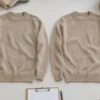

A custom ultralight merino sweater offers apparel brands an opportunity to combine refined softness, lightweight comfort, and a premium appearance in one versatile knitwear product. For brands developing elevated everyday wear, travel apparel, transitional-season collections, or luxury layering pieces, ultralight merino knitwear can provide a distinctive alternative to heavier wool sweaters.
However, a successful lightweight sweater requires more than selecting fine merino wool. Yarn count, fiber characteristics, knitting gauge, stitch structure, finishing, and garment construction all influence the final result. A sweater that feels soft in a yarn sample may still lack the desired drape, shape retention, or durability after production.
For premium apparel brands and B2B buyers, understanding these variables makes product development more predictable. This guide explains how to evaluate merino wool, select yarn and gauge, and work with a custom knitwear supplier to develop a sweater that meets the collection’s design and quality requirements.
1. Why Merino Wool Suits Premium Lightweight Knitwear
Merino wool is valued for its softness, natural temperature regulation, and versatility across different knitwear weights. Its suitability for ultralight sweaters depends on the fiber specification, yarn construction, knitting method, and intended use.
Fine Fiber Diameter Creates a Softer Handfeel
Merino wool comes in different fiber diameters, commonly measured in microns. Finer fibers generally bend more easily against the skin, which can reduce the prickly sensation some people experience with coarser wool.
For premium knitwear development, fiber diameter is an important specification, but it should not be the only selection criterion. Yarn construction, fiber length, spinning quality, finishing, and individual skin sensitivity can also influence perceived softness.
Brands should evaluate actual yarn and garment samples rather than relying on the term “merino” alone.
Lightweight Comfort Supports Versatile Styling
An ultralight merino sweater can suit multiple wearing situations, including:
- Layering under tailored jackets and coats.
- Transitional-season dressing when a bulky sweater feels excessive.
- Travel collections that prioritize packability and comfortable wear.
- Minimalist premium basics designed for repeated styling.
- Fine-gauge knitwear for business-casual and smart-casual wardrobes.
The actual warmth of a sweater depends on its yarn, fabric density, construction, fit, and surrounding conditions. Lightweight construction does not automatically mean that a garment provides more warmth than every heavier alternative.
Natural Moisture Management and Temperature Comfort
Wool can absorb moisture vapor within its fiber structure while helping manage the microclimate near the skin. This property contributes to merino wool’s appeal in garments worn across changing indoor and outdoor conditions.
Nevertheless, comfort depends on more than fiber composition. Fabric density, ventilation, garment fit, activity level, and environmental conditions all affect the wearing experience.
For brands, these characteristics make merino wool worth considering for premium layering products, particularly when the collection requires a balance between softness and functional comfort.
2. How to Choose Yarn for a Custom Ultralight Merino Sweater
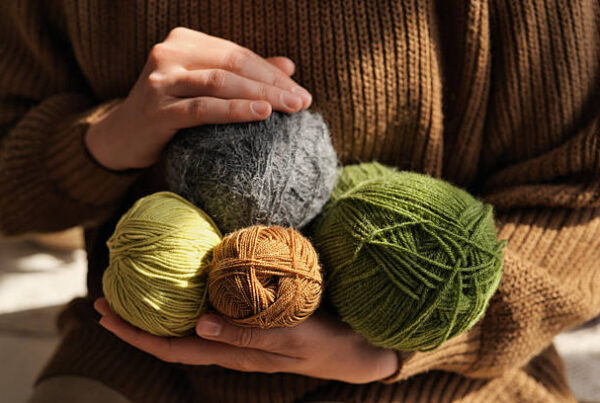
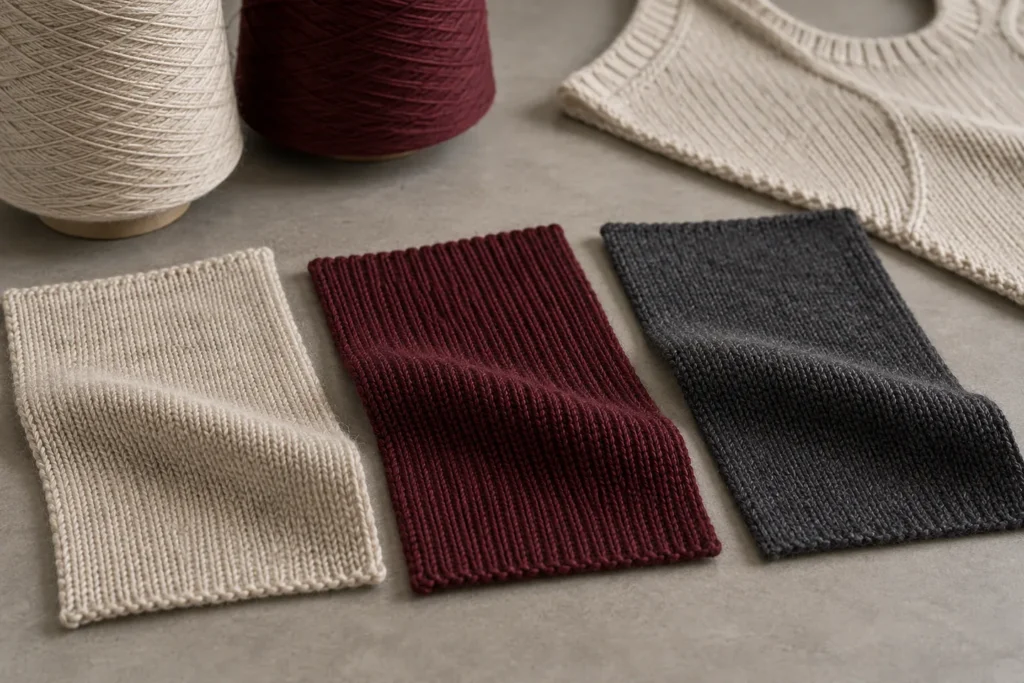
Yarn selection determines much of a lightweight sweater’s texture, surface appearance, drape, and production behavior. Buyers should evaluate yarn specifications against the intended garment design instead of choosing solely by price or softness.
Compare Merino Wool Fiber and Yarn Specifications
When reviewing a proposed yarn, consider the following factors.
| Yarn Specification | Effect on the Finished Sweater | What Buyers Should Confirm |
|---|---|---|
| Fiber diameter | Influences softness and skin feel | Micron range and consistency |
| Yarn count | Helps determine yarn fineness and suitability for a target fabric | Count system, yarn structure, and knitting compatibility |
| Spinning method | Affects surface character, strength, and handfeel | Whether the yarn meets the desired appearance and performance |
| Ply construction | Influences thickness, definition, and fabric behavior | Single-ply or multi-ply construction and sample results |
| Twist level | Can affect yarn stability, surface feel, and stitch definition | Whether the selected twist suits the design |
| Fiber composition | Influences handfeel, care, performance, and labeling | Verified fiber percentages and supplier documentation |
| Color and dyeing | Affects shade consistency and surface appearance | Lab dips, color standards, and bulk shade tolerances |
A fine yarn can support a lightweight fabric, but yarn count alone does not define the finished garment’s weight. Stitch structure, gauge, dimensions, and finishing also matter.
Choose Yarn Construction for the Desired Aesthetic
Different yarn constructions can create distinct visual and tactile results.
Smooth, fine yarns often suit clean silhouettes, refined ribbing, and minimalist designs. They can help create a polished surface when paired with an appropriate knitting structure.
More textured yarns may add visual depth but can produce a less uniform appearance. Their suitability depends on the collection’s design direction and the required fabric weight.
Multi-ply yarns can offer useful stability and stitch definition, although the outcome depends on yarn count, twist, and construction. They should be assessed through sample knitting rather than assumed to be superior in every application.
For a custom ultralight merino sweater, brands should request a yarn specification sheet and a knitted swatch before approving the final material.
Consider Pure Merino and Blended Yarns
Pure merino wool may be suitable when the product concept emphasizes natural fiber content and a wool-focused handfeel. Selected blends may offer different benefits, such as cost control, added elasticity, or modified durability.
However, a blend is not automatically more durable or less expensive in every case. Performance depends on the specific fibers, proportions, yarn construction, and manufacturing process.
Before selecting a blend, buyers should confirm:
- The exact fiber composition and labeling requirements.
- The desired softness and surface appearance.
- Expected pilling and abrasion performance.
- Dimensional stability after the recommended care process.
- Whether the material supports the brand’s target price and positioning.
The best yarn is the one that meets the garment’s requirements consistently, not necessarily the finest or most expensive option.
3. Why Knitting Gauge Matters in Ultralight Merino Sweater Design
Knitting gauge is a key variable in lightweight sweater development because it influences stitch size, fabric density, surface definition, and the overall feel of the garment.
In machine knitting, gauge generally describes the number of needles per inch on the knitting machine. A higher-gauge machine typically has more needles per inch and is often used for finer fabrics. However, the finished fabric also depends on yarn size, machine settings, stitch structure, and knitting tension.
Fine Gauge for a Refined, Lightweight Appearance
Fine-gauge knitting is often suitable for premium merino sweaters with a smooth surface and a relatively slim profile.
Potential applications include:
- Fine crew-neck sweaters.
- Lightweight V-neck knitwear.
- Thin layering pieces for tailored outfits.
- Minimalist cardigans.
- Fine-gauge turtlenecks.
A fine-gauge fabric can create a refined appearance, but it may require careful yarn selection and tension control. If the fabric becomes too open or unstable for the design, the garment may lose shape or reveal more transparency than intended.
Gauge and Stitch Structure Work Together
Gauge alone cannot determine whether a sweater feels dense, fluid, or lightweight. The stitch structure must also be considered.
| Knit Structure | Typical Visual or Physical Character | Development Considerations |
|---|---|---|
| Plain jersey | Smooth face with a relatively clean appearance | Check curling, transparency, and dimensional stability |
| Rib knit | Stretch and recovery from the rib structure | Evaluate recovery and the fit around cuffs, necklines, and hems |
| Fine textured knit | More surface detail and visual depth | Check whether the texture increases fabric weight |
| Fully fashioned shaping | Garment panels are shaped during knitting | Review shaping accuracy, seam construction, and fit |
| Seamless or reduced-seam construction | Can reduce some seam bulk | Confirm machine capability, pattern limitations, and sample fit |
For premium ultralight knitwear, the goal is not to select the highest possible gauge. It is to identify the combination of yarn, stitch structure, and machine gauge that produces the desired handfeel, appearance, and wear performance.
How to Validate Gauge Before Bulk Production
Brands should request swatches or prototype garments using the proposed yarn and gauge.
Evaluate the following:
- Fabric weight: Measure the swatch or garment using a consistent method.
- Handfeel: Assess softness, flexibility, and surface smoothness.
- Opacity: Check whether the fabric provides sufficient coverage under intended lighting.
- Drape: Observe how the fabric falls on the body or a dress form.
- Stretch and recovery: Test whether the fabric returns toward its original dimensions.
- Dimensional stability: Measure shrinkage or growth after the recommended care process.
- Surface durability: Check for pilling, snagging, and abrasion-related changes.
Record the approved yarn, gauge, stitch structure, swatch dimensions, and finishing method. These details help the supplier reproduce the approved fabric more consistently.
4. How Lightweight Construction Affects Fit, Drape, and Durability
Reducing garment weight can improve layering comfort, but it also changes how the sweater behaves during wear. Premium brands should evaluate the relationship between lightweight construction and the garment’s expected service life.
Balance Lightness with Shape Retention
Very lightweight knit fabrics may respond more noticeably to gravity, body movement, and repeated wear. The degree of change depends on fiber properties, yarn structure, stitch density, garment dimensions, and finishing.
To support shape retention, the development team can assess:
- Rib recovery at cuffs and hems.
- Neckline stability after repeated wear.
- Shoulder construction and seam strength.
- Garment length and width after washing.
- The effect of hanging versus folded storage.
- Fit consistency across the intended size range.
The appropriate construction depends on the silhouette. A relaxed draped sweater may intentionally behave differently from a fitted fine-gauge pullover.
Reduce Unwanted Pilling and Snagging Risks
Pilling can occur when fibers migrate to the fabric surface and form small balls through friction. Merino wool products can vary in pilling behavior depending on fiber characteristics, yarn construction, knitting structure, and finishing.
Ultralight fabrics may also be more vulnerable to snagging if their structure contains exposed loops or delicate yarns.
Buyers should test representative samples under conditions that reflect the garment’s expected use. If pilling performance is important, agree on an appropriate test method and acceptance criteria before production.
Consider Care Requirements Early
Care instructions can affect customer satisfaction and the perceived value of premium knitwear. Although some merino garments can be machine washed, care suitability depends on the yarn treatment, garment construction, and manufacturer’s instructions.
Before finalizing the product, verify:
- Whether hand washing or machine washing is recommended.
- The appropriate water temperature and wash cycle.
- Whether tumble drying is permitted.
- Whether the garment requires flat drying to maintain shape.
- Whether care labels match the tested garment.
Do not assume all merino sweaters are machine washable simply because they use merino wool.
5. Design Details That Elevate Premium Merino Knitwear
The yarn and fabric form the foundation of the product, but design details influence how the sweater fits into a premium apparel collection.
Refined Necklines and Finishing
A fine-gauge sweater may use a crew neck, V-neck, mock neck, or turtleneck. Each neckline affects styling, layering, and the visual proportions of the garment.
The neckline should be evaluated for stretch recovery, comfort, symmetry, and compatibility with the selected yarn. Cuffs and hems should also provide the intended balance between a clean finish and comfortable movement.
Fit and Silhouette
Premium collections may include slim, regular, relaxed, or cropped silhouettes. Lightweight merino knitwear can work across these shapes, but the pattern must account for fabric drape and recovery.
For example, a relaxed silhouette may require additional attention to shoulder drop and garment length. A fitted design may need closer evaluation of stretch, recovery, and transparency.
A size-set sample helps brands confirm that the chosen construction works across the full size range, not just on one fit model.
Color, Branding, and Private-Label Details
Custom development may include color selection, branded labels, embroidery, buttons, and packaging. These details should complement the fine fabric rather than overwhelm it.
For lightweight knitwear, heavy trims or dense embroidery may create localized weight or distortion. Placement and attachment methods should therefore be checked during sampling.
Brands should approve color standards and branding samples before bulk production, particularly when matching merino sweaters with other products in a coordinated collection.
6. How to Develop a Custom Ultralight Merino Sweater with an OEM Knitwear Supplier
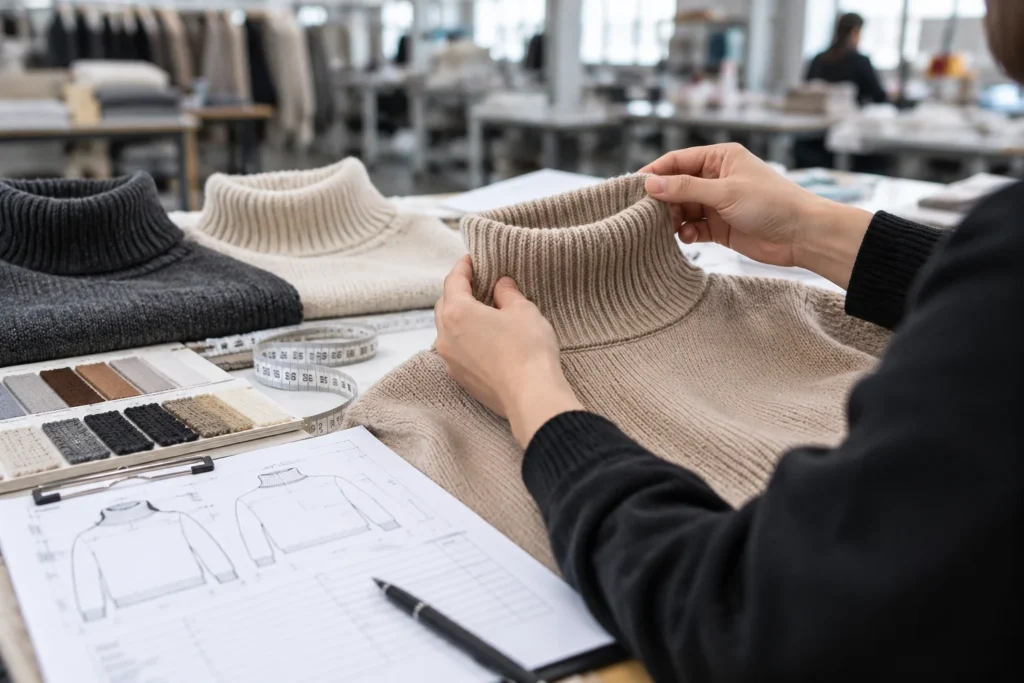
A structured development process helps brands align design expectations, material selection, and bulk production requirements.
Step 1: Define the Product Brief
Prepare a specification covering the intended customer, target retail positioning, season, silhouette, size range, color palette, and target garment weight.
Reference images are useful, but a technical sketch or measurement specification provides clearer production guidance.
Step 2: Approve the Yarn and Fabric Direction
Ask the supplier to propose suitable yarn options based on the required softness, appearance, and performance. Review fiber composition, yarn count, available colors, and any relevant material documentation.
Where possible, compare multiple swatches rather than making a decision from a yarn description alone.
Step 3: Confirm Gauge and Construction
Discuss the target gauge, stitch structure, neckline, cuffs, hems, and shaping method. The supplier should assess whether the proposed combination supports the intended design and machine capabilities.
Step 4: Review the Prototype
Check fit, drape, handfeel, garment weight, finishing, and branding. Document required revisions and establish a clear sample approval process.
Step 5: Test Performance and Care
Conduct suitable checks for dimensional stability, pilling, seam strength, and colorfastness according to the product’s intended use and brand requirements.
Step 6: Confirm Bulk Specifications
Before production, approve the yarn, color standard, measurement tolerances, construction details, labeling, and quality inspection criteria. Agree on how deviations will be handled.
This process gives the brand and supplier a shared reference for evaluating the finished product and reducing avoidable inconsistencies.
7. What Premium Apparel Buyers Should Ask Before Placing an Order
For B2B buyers, a supplier’s ability to discuss technical trade-offs is often more useful than a broad claim that a sweater is “premium.”
Use this checklist when evaluating a custom knitwear partner.
| Evaluation Area | Questions to Ask |
|---|---|
| Yarn sourcing | Can the supplier provide the fiber composition and relevant yarn specifications? |
| Fabric development | Can the team develop and compare swatches using different yarns or gauges? |
| Design capability | Can the supplier accommodate the requested silhouette, stitch structure, and finishing? |
| Sample approval | Is there a documented process for revisions and final approval? |
| Quality control | Are garment measurements, workmanship, and appearance checked against agreed standards? |
| Performance testing | Can the supplier coordinate suitable tests for pilling, shrinkage, and colorfastness? |
| Custom branding | Can labels, trims, and packaging be incorporated without compromising the lightweight fabric? |
| Bulk consistency | How are yarn lots, colors, measurements, and approved samples controlled during production? |
A clear specification and documented sample approval process help align expectations. The exact services available depend on the supplier’s equipment, material sourcing, and production capabilities.
Frequently Asked Questions
1. What makes an ultralight merino sweater different from a regular wool sweater?
An ultralight merino sweater is developed around a lower fabric or garment weight while retaining the desired handfeel, fit, and performance. The result depends on yarn fineness, stitch structure, gauge, garment dimensions, and finishing rather than fiber type alone.
2. Is finer merino wool always better for premium knitwear?
Not necessarily. Finer fibers can improve perceived softness, but they may not be the best choice for every design or use case. Brands should balance softness with durability, budget, yarn availability, and the intended garment structure.
3. Does a higher knitting gauge always create a lighter sweater?
No. A higher gauge typically supports finer knitting, but garment weight also depends on yarn size, stitch structure, fabric density, and garment dimensions. Swatch testing is necessary to confirm the final result.
4. How can brands improve the durability of ultralight merino sweaters?
Start with a suitable yarn and fabric construction, then evaluate pilling, snagging, dimensional stability, seam strength, and care performance. The appropriate solution depends on the garment’s design and expected use.
5. Can an OEM knitwear supplier customize color, fit, and branding?
Customization depends on the supplier’s development and production capabilities. Buyers should confirm available yarns and colors, sample procedures, construction options, branding methods, and minimum order requirements before placing an order.
Conclusion
A successful custom ultralight merino sweater combines carefully selected fiber, suitable yarn construction, an appropriate knitting gauge, and a well-developed garment pattern. Merino wool can provide a refined handfeel and versatile comfort, while lightweight construction supports layering and a premium visual profile.
However, finer yarn and higher gauge do not automatically guarantee a better sweater. Brands should evaluate fabric weight, drape, opacity, recovery, pilling, and care performance through actual samples. Clear technical specifications and documented approval criteria also help maintain consistency during bulk production.
For apparel brands developing premium merino knitwear, HDL can discuss custom sweater design, yarn selection, and knitting requirements to help define a suitable product direction. Contact HDL to discuss your collection concept and OEM knitwear development needs.