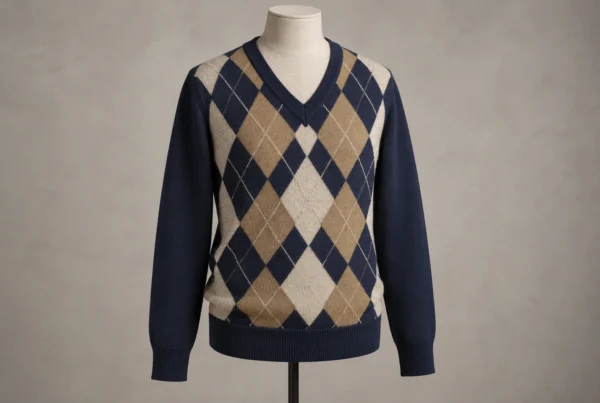
You may already own the yarn. Some brands buy from a spinner they have used for years, some are working through deadstock, and some are told by their own customer which material to use. Labels work the same way: the brand prints hangtags and woven labels at home and sends them to the factory. What none of that settles is the practical question. If the material is yours, what happens to the minimum order and the price, and who pays when the yarn runs short or knits unevenly?
Buyer supplied yarn takes the yarn cost out of the price and leaves knitting, making and finishing. It does not remove the minimum order, which still depends on knitting time and the number of colors. It also moves much of the yarn risk to you: a shortfall, an uneven lot or a shade that knits differently becomes yours to resolve. Labels you supply change packing steps, not the garment.
What Changes When the Yarn Belongs to You?
Three things change, and each carries a cost when it is left open.
The first is the price basis. The quotation covers making instead of material, which the trade calls cut-make-trim, or CMT. Not every factory quotes this way; a mill that buys its own yarn in bulk may not want to knit material it did not buy, because its costing and yarn stock assume full-package orders. Ask which basis a factory quotes on before you book freight, then compare it against what normally sits inside a sweater price.
The second is substitution. When the factory owns the yarn, a shortage at the end of a run can be covered from stock. When the yarn is yours, nobody can swap it without your approval, and a substitute usually shows: a slightly different count knits to a slightly different weight and drape.
The third is where a fault is traced. A slub, a thick place or a barre line comes from the yarn. A dropped stitch, a needle line or a tight course comes from the machine. That decides who pays for pieces that have to be re-knitted, so agree how the two will be told apart before the first cone is wound.
What Has to Travel With the Yarn?
The yarn arrives as cones in cartons. What the knitting floor needs is the information behind them, and a gap is usually found at the creel once the machine is threaded.
| What to send | Why the knitting floor needs it | What to write on the document |
|---|---|---|
| Composition, count and ply | Sets needle, tension and whether the yarn knits at your approved gauge | State the count system (Nm, Ne or denier); a mix-up knits the wrong weight |
| Lot and dye lot per color | Two lots knit visibly different even when the recipe matches | One line per color with kilos per lot; keep lots separate in the cartons |
| Approved color reference | A cone under factory light cannot be judged against a screen | Quote the dip or swatch number you signed off, not a color code alone |
| Net weight per cone and per carton | Winding, creel space and what is left on a part-used cone | Kilos per color plus cone weight; the factory counts what it issues |
| Test reports and fiber claims | Care label wording and market entry both depend on them | Say which claims are approved and which are not |
| Shipping and customs papers | Decides who clears the yarn and carries the duty | Name the importer on the paperwork and send the packing list by carton number |
Keep one sealed cone per color out of production. A shade question mid-run can then be answered against that cone instead of stock already committed to the machine. Shade approval follows the same route whether the lot is yours or the factory’s.
Who Carries the Loss When the Yarn Runs Short?
Yarn is used up in three places: winding and the start of each cone, test pieces knitted before bulk, and pieces that fail and are re-knitted. All three reduce what is left for finished garments, and none is a defect.
Two ways of accounting for it are common. One weighs the cones issued against the net weight of the garments that come off the line. The other applies an agreed percentage to the issued weight and treats the difference as normal loss. The methods produce different numbers on the same order, so name the one that applies before knitting starts.
Shortfall needs its own rule. If the yarn runs out before the last size is knitted, the choice is to ship more, which costs freight and time, or to accept fewer pieces. That call usually sits with the buyer. A second shipment also comes from a different dye lot, so the joint can show in the finished order.
Leftover cones need a decision too: returned, scrapped, or held at the factory for a repeat, which is often cheaper. Treat the leftover as part of repeat order planning rather than as waste. Yarn you send stays your property while it sits on a shelf, so agree how long it may stay and what happens if the order is cancelled.
Telling a yarn fault from a knitting fault is worth one question in advance. Knit a small panel from the same cone and look for the fault in it. If it repeats in the panel it is in the yarn. If it appears only in pieces from one machine, it is in the machine.
Does Supplying Your Own Yarn Reduce the Minimum Order?
Not by itself. The minimum exists because setting up a knitting programme, threading colors and running a style through finishing takes time. Yarn purchase is one part of that calculation. The difference between a yarn minimum and a garment minimum explains why one style runs at 100 pieces while a three-color jacquard does not.
Our regular minimum is around 100 pieces per design, and it moves with the yarn, the craftsmanship and the number of colors. Complex designs and special yarns can push it higher.
What supplying your own yarn does change is that your stock becomes a hard limit. If you hold enough navy for 60 pieces and enough oatmeal for 200, the split follows the yarn rather than the sales plan. Send the kilos per color with the inquiry so the split across colors and sizes can be checked against them.
A lot cannot be topped up invisibly either. Once it is finished, another 40 pieces in that color means a new lot, and the difference shows across a rail. That arrives sooner when the yarn is yours, because you place the dye order.
What Changes for Labels, Hangtags and Polybags You Supply?
Labels are a different kind of supply. Yarn affects the garment; labels affect the steps around it.
The brand label is a sewing decision. A wider woven label needs more seam allowance at the neck, and on a fine gauge it can show through to the outside. Send the physical label rather than a PDF, and have it sewn on a test piece before bulk. Position matters too, because the same label sits differently on a crew neck and on a V-neck placket.
The care and content label carries a legal statement about fiber content, origin and care. You own the wording; the factory applies it. If the wording changes after bulk has started, the labels already sewn have to come out, and removing one from a knitted seam leaves a mark. Confirm what each market requires on the care label before the labels ship.
Hangtags, stickers and polybags are applied at packing. What matters is that they arrive before packing begins and that any barcode matches the carton list. A hangtag that turns up after the cartons are closed means opening them again, and carton packing is hard to redo once the line has moved on.
Order spares in all three groups. Labels get damaged in the sewing room, and a replacement print run mid-bulk holds up packing far more than the labels cost. Confirm the date they must be at the factory and work back through your print lead time.
One point is easy to miss. A factory cannot verify a claim printed on a label it did not write. If a care label or hangtag makes a fiber, origin or performance statement, put it in writing that the wording is yours and has been checked.
What Should Be Written Down Before the Yarn Ships?
Seven points settle the arrangement. Each is small on its own and awkward to fix later.
- The quote basis. Making only, or material included. This decides what the two prices you are comparing actually contain.
- Kilos per color and per lot. Plus any buffer you are willing to send, and whether that buffer comes back.
- The loss method. Weighed against garment net weight, or a percentage of issued weight, with the figure that applies to this order.
- The shortfall rule. Who decides between shipping more yarn and accepting fewer pieces, and by when.
- The label arrival date. One date per label type, with the spare quantity included.
- Customs and freight. Who clears the yarn, who pays the inbound freight, and whose name is on the paperwork.
- Leftover cones. Returned, scrapped or held, and how long the yarn may stay at the factory.
You do not need all seven answered to start. A packing list, a photo of a cone label and the label artwork are enough for a first review; the rest of a quote request can be filled in later.
Buyer Supplied Yarn and Labels FAQs
Can a sweater factory knit with yarn I already own?
Some factories will, on a cut-make-trim basis, and some will not. A factory that does normally asks for the count, composition, lot quantities and a color reference before quoting, because the yarn sets the machine and tension. Ask before anything ships which basis the price is on, since a making-only quote and a full-package quote are not comparable.
Will supplying my own yarn lower the minimum order?
Not automatically. The minimum comes from knitting time, machine set-up and the number of colors, and those do not shrink because the yarn arrived from somewhere else. What changes is that the spinner’s minimum drops out of your calculation and your own stock per color takes its place as the limit.
What happens if my yarn runs short before the order is finished?
You either send more or accept fewer pieces, and the order should name who decides. A second shipment is rarely from the same dye lot, so plan the buffer per color rather than as one total figure. Yarn sent in one lot and topped up later is a common way to end up with a visible shade break.
Can I send my own labels and hangtags?
Usually yes, and the limits are timing and quantity rather than permission. Send physical samples early enough to be sewn on a test piece, include spares, and confirm the date they have to reach the factory. The wording on a label you supply stays your responsibility, including any fiber or origin claim.
Does buyer supplied yarn change how the sample is made?
The sample is knitted from the same yarn as bulk, so it uses your stock too. If you send a small quantity for sampling only, keep enough for a second round; revising a sample in a different lot defeats the point of the first one. List the sample allowance separately on the packing list so it is not counted against bulk.
If you are building an order around yarn or labels you already own, send the composition, count, lot quantities and label artwork you have. A packing list and a photo of the cone label are enough to begin; the open points can be closed before sampling. Send your yarn and label details for review.