
Infant apparel buyers, fashion brand sourcing managers, and childrenswear quality control specialists know that manufacturing baby knitwear requires far higher standards than adult garments. Infant skin is exceptionally sensitive, and small garments endure frequent high-temperature laundering, stretching during dressing, and mechanical friction from crawling. Consequently, retail buyers and consumers frequently ask apparel engineers a critical quality question: “What specific knit construction techniques determine infant sweater durability, and why do some knitted garments lose shape after two washes while others remain smooth and resilient over time?”
Selecting inferior knit structures or traditional rigid sewing seams introduces serious comfort and safety hazards for infants. Poorly constructed garments suffer from seam abrasion, premature sagging, and loose thread loops that snag tiny fingers. To address these quality challenges, professional garment manufacturers utilize advanced baby knit construction methodologies, including fine-gauge knitting, seamless linking, resilient ribbing, and tagless finishing. This technical guide breaks down how specialized knitting techniques optimize tactile comfort, enhance mechanical strength, and elevate garment lifespan for infant apparel lines.
1. Why Does Gauge and Loop Density Matter for Infant Safety and Durability?
The fundamental structural element of any knitted garment is its stitch density, determined by machine gauge (the number of needles per inch) and loop structure.
Fine-Gauge Density and Snag Prevention
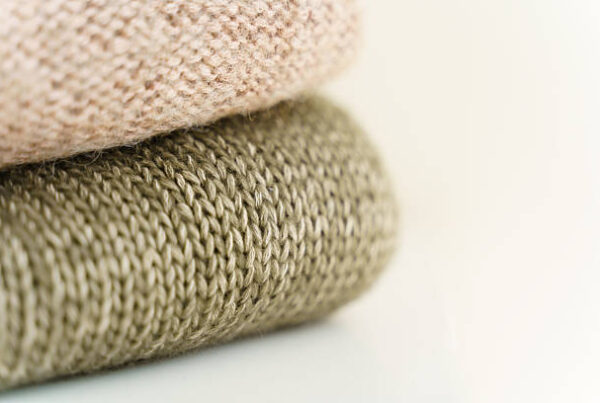
Using fine-gauge knitting machinery (such as 12-gauge, 14-gauge, or higher) creates tighter, smaller yarn loops across the fabric surface. Loose, open-knit structures present a severe safety hazard because infants can easily entangle their tiny fingers or toes in exposed yarn loops. Fine-gauge baby knit construction minimizes loop size, reducing entanglement risks while delivering a smooth, snag-resistant surface.
Dimensional Stability and Loss of Shape
Loose stitches shift easily when subjected to wet processing and tumble drying, leading to rapid fabric distortion, twisting side seams, and surface pilling. Conversely, dense stitch architecture locks yarn fibers into a stable grid, preventing structural sagging and ensuring high infant sweater durability through repeated domestic laundry cycles.
2. How Seamless Construction Eliminates Skin Friction and Pressure Points
Traditional garment assembly relies on cut-and-sew methods, where fabric panels are stitched together using bulky overlock seams. On delicate infant skin, these raised internal ridges cause severe friction, redness, and discomfort.
| Construction Method | Structure | Comfort Benefits |
|---|---|---|
| Cut-and-Sew | Panels joined with overlock seams | Raised seams may rub sensitive skin |
| Fully Fashioned | Panels shaped during knitting and flat-linked | Reduces seam bulk and improves comfort |
| WholeGarment® Seamless | Knitted as one complete piece | Eliminates internal seams and pressure points |
Flat-Linking and Seamless Technology
To manufacture truly comfortable, seamless baby clothing, advanced mills employ flat-linking assembly or complete 3D seamless knitting (Wholegarment technology). Flat-linking connects knitted panels loop-by-loop using specialized linking machines, producing a virtually flat internal joint that lays smoothly against the skin without digging into sensitive areas.
Dressing Ergonomics
Infants require frequent outfit changes. Fully fashioned or seamless shoulder seams allow the garment neck opening to expand smoothly during dressing without tearing structural threads or irritating the baby’s head and neck.
3. Structural Comparison: Key Construction Parameters in Infant Knitwear
The technical evaluation table below contrasts low-grade infant knitwear against high-performance, professionally engineered garments:
| Structural Parameter | Low-Grade / Basic Knitwear | High-Performance Infant Knitwear | Operational Impact on Comfort & Durability |
| Knitting Machine Gauge | Coarse gauge (3G – 7G) with loose loops | Fine gauge (12G – 16G) with dense loops | Prevents finger entrapment; dramatically increases wash durability |
| Seam Construction | Standard 4-thread raised overlock seam | Flat-linked or 3D seamless WHOLEGARMENT® | Eliminates skin chafing, pressure marks, and seam tearing |
| Cuff & Hem Trim | Basic single-ply knit or weak elastane | Double-layer elasticated 1×1 or 2×2 ribbing | Maintains elastic recovery; blocks cold wind without pinching skin |
| Neckline Engineering | Narrow, rigid neck opening | Wide-ratio stretch ribbing or envelope shoulder | Ensures easy dressing over the head without tearing neck seams |
| Care Labeling Method | Thick woven scratchy label sewn into side seam | Tagless heat-transfer print or detachable thread | Prevents direct mechanical skin irritation and itching |
4. How Engineered Ribbing and Care Labeling Enhance Longevity
A well-constructed infant sweater must maintain structural elasticity at key stress points while eliminating secondary sources of skin irritation.
Elasticated Ribbed Openings
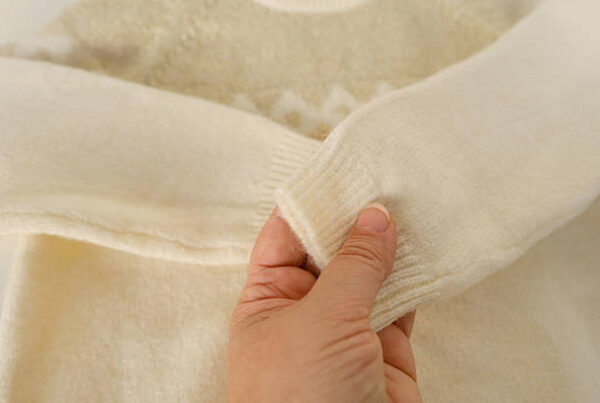
Necklines, wrist cuffs, and bottom hems endure continuous stretching. Incorporating high-recovery 1×1 or 2×2 elasticated ribbing at these openings ensures that cuffs spring back to their original shape after being pulled over hands and feet. Wide-format ribbing around the neckline distributes tension evenly, preventing premature neck stretch and sagging.
Tagless Finishing and Label Positioning
Thick, stiff care labels sewn into internal side seams represent one of the primary causes of infant skin chafing. High-quality infant knitwear manufacturers print care instructions directly onto the interior fabric using non-toxic, eco-friendly heat transfers (tagless design) or place structural care tags in non-contact exterior locations with easy-tear threads for quick removal.
5. Sourcing Guidelines for Apparel Buyers and Brands
Brand managers, fashion buyers, and OEM procurement team members can ensure exceptional product quality by applying three technical sourcing criteria:
- Mandate Fine-Gauge Technical Specs: Specify 12-gauge to 14-gauge knitting machine parameters for core infant sweater lines to guarantee high loop density, low snagging risk, and optimal fabric hand-feel.
- Verify Seamless or Flat-Linked Factory Capabilities: Audit production partners to ensure they utilize loop-by-loop flat linking machines or complete 3D seamless knitting technology for all interior joining seams.
- Conduct Standardized Wash-Recovery Testing: Require factories to provide dimensional stability test reports showing less than 3% vertical or horizontal fabric shrinkage/distortion after 10 continuous warm washing and drying cycles.
Technical Summary
Achieving superior comfort, safety, and longevity in infant knitwear depends directly on structural manufacturing choices. By prioritizing fine-gauge loop density, flat-linked or seamless seam joining, resilient elasticated ribbing, and tagless finishing, apparel brands deliver garments that withstand daily wear and frequent laundering while protecting delicate skin. HDL supplies fully certified, custom-engineered infant knitwear and specialized seamless garments manufactured to strict international quality standards.