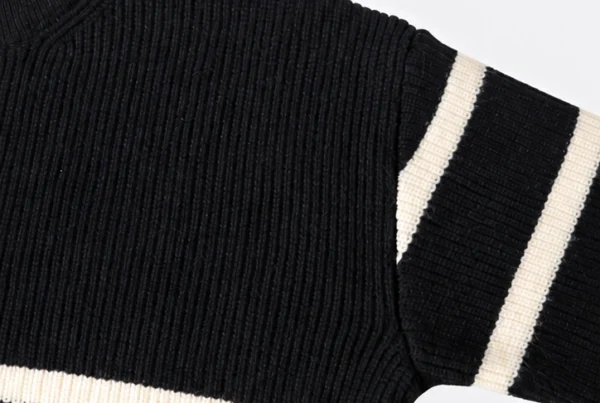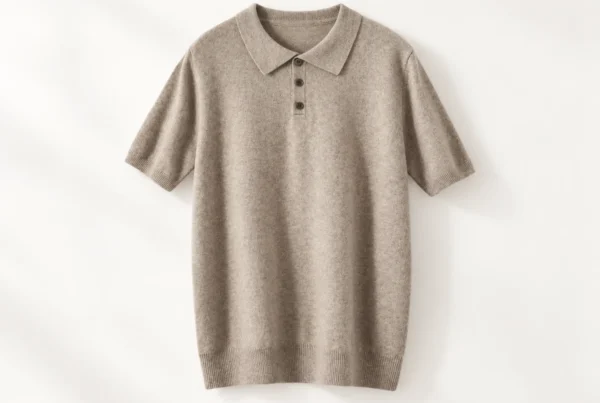

When comparing raglan vs drop shoulder sweater styles, start with the look and fit you want rather than the construction name. A reference photo, a sketch or a physical sample is enough to begin. Raglan creates a diagonal seam toward the neckline, drop shoulder moves the shoulder seam lower on the arm, and set-in keeps the sleeve closer to a defined shoulder line. The final construction can be confirmed on the sample together with the shoulder position, armhole, sleeve shape and overall fit.
Can You Choose the Sleeve Construction From a Reference Photo?
Yes, a reference photo is enough to start the discussion. From an image, we can usually see the overall silhouette, shoulder position, sleeve shape, whether the fit looks more fitted or oversized, and whether the seam runs diagonally toward the neckline or sits closer to the shoulder.
Send the clearest image you have. A front view is the most useful, and a close-up of the shoulder area helps. If the reference is not the exact style you want, say what you like about it — the shoulder, the fit, the sleeve — so the direction is clear.
A photo does not confirm everything. Exact measurements, the final construction details, yarn and gauge, the fit on a real body and the final price need more information. That is normal, and it is why the sample stage exists.
If you do not know whether the style is raglan, drop shoulder or set-in yet, that is fine. Send the reference and the direction you want, and the construction can be reviewed with you before sampling.
 Raglan vs Drop Shoulder vs Set-In: What Is the Visual Difference?
 Raglan vs Drop Shoulder vs Set-In: What Is the Visual Difference?
To tell raglan, drop shoulder and set-in styles apart, look at where the shoulder seam sits and how the sleeve joins the body.
Raglan. A raglan sleeve extends toward the neckline and joins the body along diagonal seams from the underarm toward the neck. The diagonal seam is often visible from the front and can become part of the design.
Drop shoulder. The body extends past the natural shoulder area, so the shoulder seam sits lower on the upper arm. This construction is commonly used for relaxed and boxy styles.
Set-in. The sleeve joins the body around a shaped armhole, with the shoulder seam typically sitting closer to the intended shoulder line. Set-in styles usually show a clearer shoulder position.
| Style | Typical Look | May Be a Good Fit When | What the Buyer Should Confirm |
|---|---|---|---|
| Raglan | Diagonal shoulder line running toward the neckline | You want the raglan seam to be part of the design, or prefer a less defined shoulder seam | Where the diagonal seam lands, plus the fit and sleeve shape |
| Drop Shoulder | Shoulder seam sits lower on the upper arm | You want a relaxed, boxy or oversized shoulder look | How far the shoulder drops, body width and sleeve length |
| Set-In | More defined shoulder with a shaped armhole | You want a clearer shoulder position or a more structured silhouette | Shoulder position, armhole fit and sleeve shape |
Which Sleeve Construction Works for a Defined, Relaxed or Oversized Shoulder?
Start from the shoulder you want, then choose a construction that supports it.
- Defined shoulder: a set-in sleeve may be a useful starting direction.
- Relaxed or oversized shoulder: a drop shoulder is commonly used.
- Diagonal shoulder line as a design feature: raglan.
Construction alone does not determine fit. A drop shoulder does not automatically mean an oversized body, and a set-in sleeve does not automatically mean a fitted sweater. Body width, armhole depth and sleeve volume all affect how the finished piece sits, and each can be adjusted within the same construction.
How Does Sleeve Construction Affect Fit and Movement?
Where the sleeve joins the body affects the shoulder position, armhole depth and sleeve volume. Together, these factors influence the room under the arm and how the sweater feels when the wearer moves.
A flat sample on the table only shows part of this, so the garment should be tried on before it is approved. When it is worn, check for pulling under the arm, restricted movement, sleeve twisting, the position of the shoulder seam and the sleeve length.
If you cannot try it on yourself, ask for photos of the sample at a few angles on a form or a model, and note anything you want changed before the next sample.
Does Sleeve Construction Affect Sweater Price?
Sleeve construction can affect the price, but it is only one part of the quote. Yarn and fiber, garment weight, gauge, stitch and pattern, size range, number of colors, trims, order quantity, finishing and packaging can all affect the final price.
The same sleeve construction can therefore result in very different prices depending on the yarn, garment specification and order quantity. If you already know the yarn or fiber you want, include it when requesting a quote. How yarn count and ply change garment weight explains that side of the cost.
What Can Be Customized on the Sweater?
Most parts of the sweater can be customized:
- Sleeve construction
- Shoulder position
- Body fit
- Sleeve length and sleeve volume
- Armhole depth
- Yarn and fiber blend
- Gauge
- Color
- Stitch and pattern
- Logo
- Labels and trims
- Packaging
Size range belongs to the same conversation. If you are planning several sizes, grade rules are worth agreeing early; how grade rules are written for a size range covers what to settle.
What Is the MOQ?
Our starting MOQ is 100 pieces per style for suitable projects. Size and color allocation depend on the yarn, color plan and production requirements.
The actual MOQ can also be affected by yarn minimums, the number of colors, custom dyeing, trims and production requirements. The final quantity should therefore be confirmed for each style.
What Should You Check on the Sample Before Bulk?
When the sample arrives, check it against the reference and the approved specification:
- Does the shoulder line match the reference?
- Does the silhouette look right?
- Is the shoulder too wide or too narrow?
- Does the armhole feel comfortable?
- Is there pulling under the arm?
- Does the sleeve twist?
- Is the sleeve length correct?
- Are the measurements correct?
- Do stripes, patterns or logos line up as approved?
- Does the sweater still look right after the agreed wash?
Two references are useful here: what to check when approving a sample and how measurement tolerance is applied at inspection. Measurement points and methods should be agreed between the buyer and factory before production. The same garment can measure differently depending on where the tape is placed.
How Do You Keep Bulk Production Close to the Approved Sample?
The approved sample should be the reference for bulk production. Record the sleeve construction, shoulder position, armhole and fit, sleeve length, measurements, yarn or fiber, gauge and stitch where relevant, color, logo and trims, and labels and packaging, so the production team works from the same document.
How a custom sweater moves from design approval to bulk shows the stages those records travel through. Keep the confirmed sample available as the reference rather than working from the description alone. If the construction changes after approval, confirm the revised construction before bulk production. Depending on the change, a new sample may be needed.
 What Should You Send for a Quote?
 What Should You Send for a Quote?
Send what you already have for an initial quote:
- Reference photo or physical sample
- Target quantity
- Size range
- Colors
- Sleeve and shoulder look
- Preferred yarn or fiber, if known
- Logo
- Labels and trims
- Packaging
- Target budget, if available
If you already have a tech pack, include the shoulder position, armhole, sleeve length and construction details. If not, a reference image is enough to start; what a tech pack needs to contain explains the format if you want to prepare one.
Send Us Your Sweater Design
If you have a sweater reference, send us the image together with your target quantity, size range, colors, desired fit, preferred yarn or fiber if known, and any logo, label or packaging requirements. If you are not sure whether the sleeve should be raglan, drop shoulder or set-in, that is fine. We can review the construction with you before sampling and quoting through our sweater manufacturing service.