
 What Happens After Design Approval? A Stage-by-Stage Overview
 What Happens After Design Approval? A Stage-by-Stage Overview
After the buyer approves the final sample and places a bulk order, bulk production begins. The process usually includes yarn sourcing, knitting, linking, washing and finishing, quality inspection, and packing. Each stage has a checkpoint where a problem can be caught before it reaches the next one. This guide walks through the sequence so buyers understand what happens on the factory floor and what to confirm at each step.
| Stage | What happens | Main checkpoint |
|---|---|---|
| 1. Yarn sourcing and inspection | Yarn is purchased to the approved count, ply, fiber and color, then checked on arrival | Color matches the lab dip; dye lots are segregated |
| 2. Knitting | Front, back, sleeves and collar are knitted as separate panels | Gauge, tension and pattern match the approved sample |
| 3. Linking | Panels are joined at the shoulders, neckline and sleeves | Seams sit flat and the rib trim stretches evenly |
| 4. Washing and finishing | The garment is washed, dried, trimmed, pressed and labeled | Final dimensions and hand feel meet the agreed post-finishing requirements |
| 5. Quality inspection | Measurements, workmanship, color and labels are checked | Goods meet the spec sheet and the approved sample |
| 6. Packing and shipment | Garments are folded, bagged and packed into cartons | Size and color ratios and carton marking are correct |
The exact sequence can vary with the garment construction and finishing requirements, but these functions are commonly part of bulk sweater production. The time each stage takes depends on the yarn, the gauge, the stitch structure and the order size. Buyers who understand this sequence can ask sharper questions and catch issues earlier.
How Yarn Is Sourced and Checked Before Knitting
Production starts with yarn that matches what was approved at the sample stage. The factory orders yarn to the confirmed fiber content, yarn count, ply, twist and color. For patterned sweaters, yarn-dyed colors are commonly used because the color is set in the yarn before knitting. Some solid-color styles may instead use piece dyeing or garment dyeing, depending on the product and production method. The choice affects how color is controlled later, which is why the color approval process happens before bulk yarn is ordered.
When the yarn arrives, the factory performs an incoming inspection. The team checks color against the approved lab dip and reviews yarn count, twist and general evenness. Batches are recorded by dye lot number and kept separate. Mixing dye lots within one production run is a common cause of visible shade differences between panels, so a factory that tracks lot numbers helps reduce the risk of visible shade variation across the order. Where required by the buyer or target market, yarn or garment materials may also need additional restricted-substance testing or supporting documentation, which should be confirmed for the specific product and market. For a breakdown of fiber options, see our sweater yarn materials guide.
How the Panels Are Knitted
Many sweater styles are produced using fully fashioned construction, where shaped panels such as the front, back and sleeves are knitted to form before being joined. Other knitwear may use different construction methods, including cut-and-sew, depending on the design, fabric structure and production setup. Each panel is knitted on machinery suitable for the approved gauge. Gauge influences stitch size and fabric appearance, while the final weight, density and drape also depend on yarn, stitch structure and knitting setup.
The first panel off the machine is checked against the approved sample before full knitting begins. The operator confirms the stitch density, the tension, the panel dimensions and the placement of any pattern such as a cable, jacquard or intarsia design. If the tension is too loose or too tight, the panel will knit to the wrong size and the finished garment will not match the measurement spec. Common knitting defects include dropped stitches, holes, uneven tension lines and misplaced patterns, and these are easiest to correct at this early checkpoint rather than after the panels are joined.
How the Sweater Is Linked, Washed and Finished
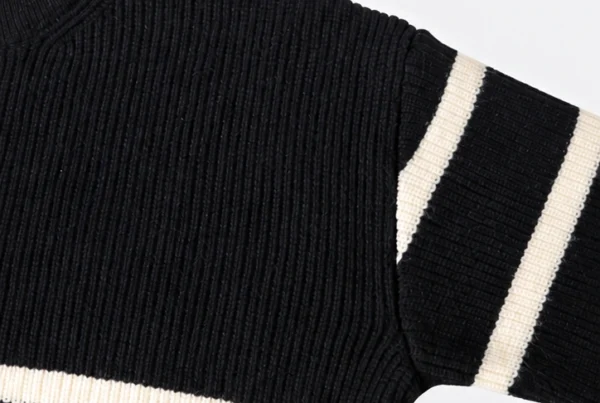
Once the panels are knitted, they are joined at the shoulders, neckline and sleeves. Linking is commonly used to join knitted panels along corresponding stitch courses. Overlock or other seaming methods may be used for different knit constructions. The appropriate method depends on the garment structure, gauge, seam appearance and production requirements. Depending on the construction, rib sections at the neckline, cuffs and hem may be knitted as part of the panel or produced separately and joined during assembly.
The assembled garment is washed to remove knitting oils, soften the fabric and settle the dimensions. The wash cycle is matched to the fiber, with wool and cashmere handled more gently than cotton. After washing the garment is dried, steamed and pressed to set its final shape, loose threads are trimmed, and buttons, zippers, care labels and brand labels are attached. Washing and finishing can significantly affect the garment’s final dimensions and hand feel, so dimensional change should be checked against the project’s agreed requirements after the relevant finishing process. We cover the test method in our sweater shrinkage testing guide and label requirements in the care labels guide.
How Quality Is Inspected and Measured
Quality control runs through production rather than only at the end. Inline checks catch problems during knitting and assembly, while a final inspection reviews the finished garment against the approved sample and the measurement spec. A pre-shipment inspection then samples the packed lot to confirm measurements, workmanship, color and labeling before the goods leave the factory. When random lot inspection is required, buyers and inspectors may use an acceptance-sampling procedure such as ISO 2859-1. The applicable sample size and acceptance criteria depend on the agreed inspection setup, including lot size, inspection level and AQL parameters.
Buyers should agree on the measurement points, the tolerance for each point and the defect classification before production starts. A defect that affects fit or safety is treated differently from a minor cosmetic issue, and that classification should be written down so the inspector and the buyer are judging against the same standard. Our sweater quality control guide explains the inspection stages in more detail.
How the Sweater Is Packed and Shipped
Approved garments are folded and packed according to the agreed packing specification. Depending on the order, this may include individual polybags, size or color assortments, hang tags, stickers and carton markings. The cartons are marked with the purchase order number, the size and color breakdown and the quantity, so the buyer can check the shipment against the packing list on arrival. Fold instructions and any hang tag or sticker placement are usually agreed during sample approval to avoid creasing or rework.
Packing looks simple but mistakes here are easy to make and hard to unwind after shipping. A buyer should confirm the folding method, the polybag and carton specifications, and how mixed size and color orders will be distributed across cartons before the goods are packed.
A Buyer’s Checklist for Each Production Stage
 A Buyer’s Checklist for Each Production Stage
| Stage | What to confirm with the factory |
|---|---|
| Yarn | Fiber content, yarn count, ply, color match to the lab dip, and dye lot segregation |
| Knitting | Gauge, first-panel approval against the sample, and pattern placement |
| Linking | Seam type (linking vs overlock), seam tension, and rib stretch and recovery |
| Washing and finishing | Dimensional change against the agreed post-finishing requirements, hand feel, and clean trimming of loose threads |
| Inspection | Measurement points and tolerances, defect classification, and the sampling plan |
| Packing | Fold method, polybag and carton spec, and size and color ratio per carton |
Production issues that may appear at these stages include shade variation from mixed dye lots, size inconsistency from uneven tension, bulky or twisted seams, shrinkage beyond tolerance, and pilling on the finished surface. Each maps to a stage in the list above, which is why confirming the checkpoint at each stage is more reliable than waiting for a single end-of-line inspection.
Frequently Asked Questions
How long does bulk sweater production take after design approval?
Production time depends on yarn availability, order quantity, gauge and pattern complexity, so there is no single answer that fits every project. The factory should provide a schedule once the order details are confirmed, and the timeline can be revisited if a yarn or detail changes.
Can a design detail be changed after production has started?
Changes are easiest before yarn is ordered and knitting begins. Once panels are knitted or yarn is dyed, a change to the color, gauge or pattern usually means rework or new yarn, which adds cost and time. Finalize fit and construction details at the sample or pre-production stage.
How do factories keep color consistent across a large order?
By ordering yarn in a single dye lot where possible, segregating dye lots when a single lot is not available, and checking the color against an approved lab dip or shade band during incoming inspection. This helps prevent panels from different lots being mixed within one garment.
What is the difference between linking and overlocking?
Linking joins knitted components by aligning stitches or courses at the seam and is commonly used in many fully fashioned constructions. Overlocking trims and secures fabric edges during seaming and may suit cut-and-sew or other constructions. Neither method alone determines garment quality; the appropriate choice depends on the construction and required seam finish.
How do buyers know the bulk goods will match the approved sample?
Ask the factory to confirm the gauge, tension and measurements at the first-panel stage, run inline and final inspections against the spec sheet and approved sample, and conduct a pre-shipment inspection before shipment. Agreeing the measurement points and tolerances in advance keeps both sides on the same standard.
If you are planning a custom sweater order, send us your approved design or tech pack, yarn preference, target quantity, size range and delivery date. Our production team will confirm how each stage applies to your specific design and prepare a production proposal.