Product managers, textile buyers, and boutique apparel brand owners constantly evaluate subtle finishing details that can elevate standard home textiles into high-margin luxury items. While simple flat-hemmed throws fulfill basic functional needs, intricate edge finishes dramatically alter a product’s shelf appeal and perceived quality. Consequently, wholesale buyers frequently approach custom knitting specialists with a straightforward financial inquiry, asking: “Why do knit blankets featuring a scallop edge finish command significantly higher wholesale and retail price points compared to basic flat-hemmed blankets, and does this specific design detail truly justify the added manufacturing cost?”
Treating edge finishes as an afterthought often leads to product commoditization, forcing brands into price wars with mass-market suppliers. Incorporating an engineered scalloped trim transforms a standard throw into a high-value boutique item that captures consumer attention on retail displays. This comprehensive B2B textile manufacturing guide explores the production complexity of scalloped structures, analyzes consumer psychology surrounding perceived craftsmanship, and outlines strategic sourcing insights for premium home and baby brands.
1. Production Complexity: Why Scallop Edging Increases Craftsmanship Value
Understanding why a specialized edge treatment commands a higher price requires examining the technical knitting procedures and material requirements involved in production.
| Manufacturing Stage | Process Description | Key Technical Focus |
|---|---|---|
| 1. Machine Programming | Technicians set knitting patterns, tension levels, and loop structures through advanced machine programming. | Precise pattern control and consistent scallop design |
| 2. Precision Knitting | Specialized knitting needles create curved scallop motifs by controlling yarn placement and stitch density. | Accurate edge shaping and stable fabric structure |
| 3. Edge Linking and Finishing | Skilled workers connect knitted sections and refine scalloped edges through careful trimming and finishing. | Smooth edges and improved product appearance |
| 4. Quality Inspection | Quality teams inspect scallop symmetry, stitch consistency, and overall blanket quality before shipment. | Reliable production standards and uniform results |
Step 1: Intricate Knitting Program Configuration
Unlike straight lockstitch hem trimming, creating a seamless scallop edge blanket requires advanced computerized flat-knitting programming. Technicians must precisely code needle bed movements to adjust stitch density and yarn tension dynamically along every curved shell motif.
Step 2: Precision Knitting with Increased Material Consumption
Forming dimensional, wavy shell contours consumes substantially more yarn per square inch than binding a flat edge. The specialized needle loops create dense, structural curves that prevent the fabric from curling or fraying over time.
Step 3: Artisan Hand-Linking and Finishing
Achieving a flawless, non-wavy scalloped border often requires manual hand-linking or specialized post-knitting finishing steps. Skilled textile artisans carefully inspect each curved loop, adding significant production time compared to automated high-speed flat trimming.
Step 4: Strict Quality Assurance and Material Scrap Rates
Because scalloped borders leave zero margin for stitch tension errors, manufacturers enforce strict quality checks. Any tension imbalance distorts the delicate curved symmetry, resulting in higher material scrap rates that contribute directly to the total production cost.
Edge Finish Manufacturing & Economic Comparison Matrix
The table below highlights the operational and commercial differences between basic flat-hemmed blankets and intricate scalloped finishes:
| Manufacturing & Commercial Metric | Standard Flat-Hemmed Blanket | Premium Scallop Edge Blanket |
| Knitting & Assembly Time | Fast automated stitch & cut cycle | Extended machine runtime + manual linking |
| Material Consumption & Yield | Baseline yarn usage: minimal cutting waste | 10% – 18% higher yarn consumption |
| Visual Texture & Depth | Flat, two-dimensional border | Multi-dimensional, organic shell curves |
| Consumer Quality Perception | Mass-market utility product | High-end artisanal boutique presentation |
| Retail Margin Potential | Standard retail markup (2x – 3x) | Premium boutique markup (4x – 6x) |
2. The Psychology of Premium Margins: Transforming Details into Perceived Quality
Visual storytelling heavily drives purchasing decisions in modern retail, particularly within the luxury home décor and nursery sectors.
Communicating Craftsmanship Through Delicate Curves
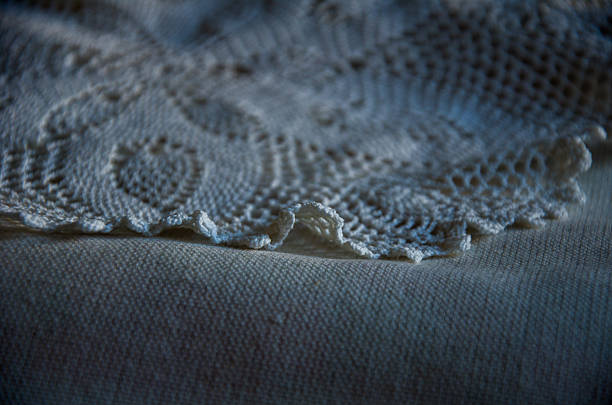
Consumers naturally equate intricate geometric details with superior product craftsmanship. While a straight hem signals basic mass production, the soft, flowing curves of a scalloped border convey heirloom quality, encouraging shoppers to pay a higher retail price point.
Creating Visual Brand Distinction in the Nursery Sector
For boutique mother-and-baby brands, establishing a distinct visual identity is essential for market success. Featuring a refined knit blanket edge finish across nursery collections elevates a brand’s aesthetic above generic competitors, establishing an iconic design element that resonates with gift-buyers and expectant parents alike.

3. Strategic Sourcing Guidelines for Textile Buyers and Brand Managers
Commercial buyers can maximize product margins and maintain consistent quality by applying three essential sourcing rules:
- Specify High-Gauge Yarns for Shape Retention: Select durable, long-staple combed cotton, organic bamboo, or soft acrylic yarn blends. High-quality fibers ensure that scalloped borders maintain their structural shape through repeated washing cycles without curling or buckling.
- Match Edge Designs to Target Brand Positioning: Reserve complex scalloped trims for premium, mid-to-high-end product lines where consumers readily accept higher price tags for superior design details.
- Request Pre-Production Physical Samples: Inspect physical sample swatches before placing bulk orders. Verify that the scalloped curves lie completely flat without gathering, puckering, or stretching out of shape.
Conclusion: Leverage Decorative Finishing to Capture Premium Retail Margins
In conclusion, understanding the true value of a baby blanket boutique design allows brand managers to transform simple knit goods into highly profitable retail collections.
Stop competing in low-margin price wars with generic, flat-trimmed textiles when custom edge finishes can elevate your brand’s market standing. Specifying intricate scalloped borders allows home and nursery brands to showcase exceptional craftsmanship, build strong visual brand recognition, and capture higher profit margins across every sales channel. We engineer every knit pattern, program every machine tension, and inspect every finished edge to satisfy strict international quality standards. Contact our HDL today to request custom knit samples and secure competitive factory-direct pricing for your upcoming seasonal line.