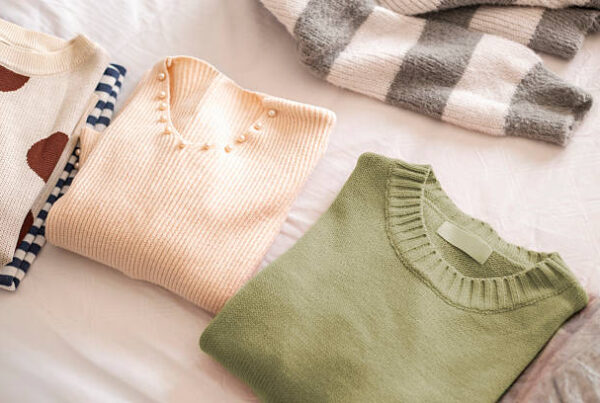
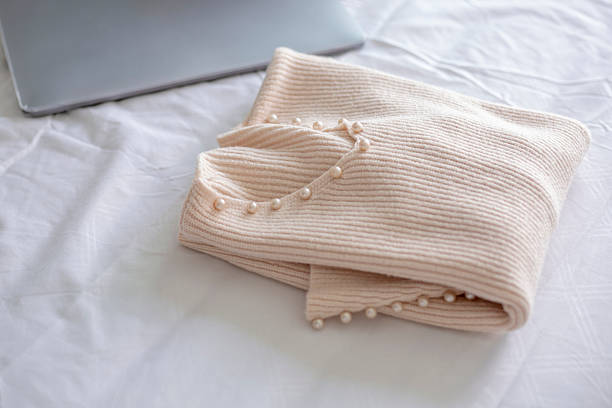
Global market demand for British-style knitwear—such as classic Aran cable knits, Fair Isle jacquards, and refined fine-gauge sweaters—continues to surge. For fashion brands, e-commerce retailers, and boutique buyers, turning design concepts into commercially successful apparel requires aligning brand positioning with the technical capabilities of a custom knitwear factory.
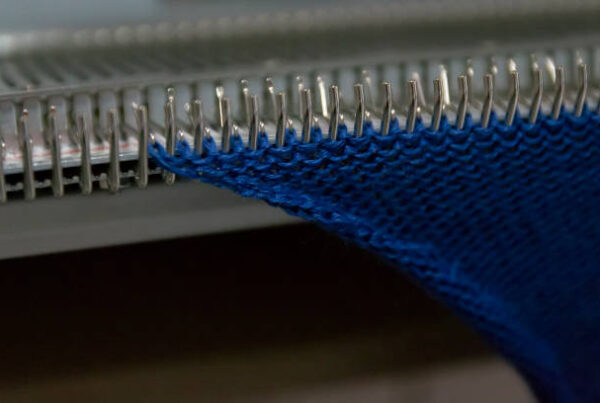
Manufacturing intricate knit structures requires advanced flat knitting technology, precise yarn sourcing, and meticulous linking techniques. Production hubs equipped with computerised flat knitting machinery, such as Shima Seiki equipment, can execute complex jacquard patterns and structural cables with high precision. However, a luxury brand requiring hand-linking and certified organic yarns needs a vastly different manufacturing setup than a high-volume brand prioritizing speed-to-market and unit cost efficiency.
Understanding how to match brand requirements with factory technical specs is essential for optimizing custom knit sweater manufacturing and building profitable B2B supply chains.
1. Technical Matching: Brand Positioning vs. Factory Production Specifications
| Manufacturing Metric | Premium / Heritage Brand Level | High-Volume Commercial Brand |
|---|---|---|
| Primary Styles | Intricate Aran cables, Fair Isle, multi-color Jacquard, Intarsia | Basic ribbing, solid knits, simple 2-tone Jacquard |
| Machinery Technology | 3G / 5G / 7G heavy-gauge and 12G / 14G multi-gauge Shima Seiki machines | 7G / 12G standard computerized flat knitting machines |
| Linking Method | Hand-linking with loop-by-loop finishing | Machine-linking / overlock |
| Yarn Sourcing | Merino wool, cashmere, OEKO-TEX certified yarn, custom dye matching | Cotton-acrylic blends, recycled polyester blends |
| Minimum Order | Flexible MOQ by colorway | High-volume batch production |
Consequently, brands should not evaluate a knitwear supplier based on price alone. Instead, production technology, yarn sourcing, linking capability, finishing control, and MOQ flexibility should all be considered together.
For premium fashion collections, for example, a factory with advanced multi-gauge machinery and skilled hand-linking technicians can provide greater control over complex knit structures and finishing details.
2. Engineering Key Knitwear Styles: Aran Cables and Fair Isle Jacquards
Complex knitwear designs require more than standard flat knitting equipment. They also require specialized machine programming, yarn selection, tension management, and post-knitting finishing.
Therefore, understanding how different knit structures are manufactured can help fashion buyers select an appropriate custom knitwear manufacturing partner.
2.1 Heavy-Gauge Aran Cable Knits: 3G–7G
Aran cable sweaters typically use thick, multi-ply yarns and heavy-gauge knitting machinery.
Because these sweaters contain substantial yarn volume, one of the main production challenges is controlling panel weight and knitting tension. If tension is not properly controlled, the finished garment can develop torque, uneven dimensions, or distortion during wear.
For this reason, capable sweater manufacturers use computerized flat knitting machines with appropriate gauge configurations to maintain dimensional stability.
These machines can produce complex structures such as:
- Multi-strand cable crossings
- Diamond lattice patterns
- Rope cables
- Ribbed structures
- Textured Aran motifs
Furthermore, accurate programming helps maintain consistency between front and back panels, which is particularly important for bulk custom sweater manufacturing.
2.2 Multi-Color Fair Isle and Intarsia Jacquards: 7G–14G
Unlike basic solid-color sweaters, Fair Isle and geometric Jacquard designs require precise color management and careful control of the backing structure.
In addition, different knitting techniques can produce significantly different interior finishes.
Floating vs. Full-Jacquard Backing
Premium Jacquard knitwear can use full-bed Jacquard techniques to control the placement of yarns on the reverse side.
As a result, excessive floats can be covered or controlled, creating a smoother interior surface and reducing the possibility of threads catching during wear.
Intarsia Precision
Intarsia is particularly suitable for designs requiring clearly defined color blocks without continuous rear floats.
Specialized Intarsia carriers allow different yarn colors to be introduced into specific areas of the knitted panel. Consequently, manufacturers can create clean color transitions across the front of the garment.
For brands developing premium patterned sweaters, the choice between Jacquard and Intarsia should therefore be based on the artwork, desired appearance, interior construction, and production requirements.
3. Quality Control Metrics for Custom Sweater Manufacturing
Once the knitting technology has been selected, quality control becomes the next critical consideration.
For B2B apparel buyers, even small inconsistencies in yarn color, panel dimensions, or seam construction can become significant problems during bulk production. Therefore, manufacturers should establish clear quality checkpoints before mass production begins.
Three areas are particularly important: yarn certification and color accuracy, panel linking, and post-knitting finishing.
3.1 Yarn Certification and Pantone Color Accuracy
Yarn quality has a direct influence on the final garment’s hand feel, appearance, durability, pilling resistance, and skin-contact performance.
Therefore, premium knitwear projects should begin with controlled yarn sourcing and color development.
Pantone Color Matching
Industrial yarn dyeing should follow an accurate color-matching process.
For the stated premium production requirement, the target is Pantone matching with Delta E < 0.8, helping maintain color consistency between production batches.
This is particularly important for fashion brands with established seasonal color palettes or strict brand guidelines.
Eco-Certified Yarn
In addition, sustainability and chemical safety requirements are becoming increasingly important in international apparel sourcing.
Premium markets may require yarns certified under standards such as:
- OEKO-TEX Standard 100
- Global Recycled Standard (GRS)
These certifications help verify relevant material and chemical requirements and can support brands that have specific compliance expectations.
3.2 Panel Linking and Seam Construction
The way knitted panels are joined has a direct impact on garment comfort, elasticity, appearance, and durability.
Therefore, buyers should evaluate linking methods as carefully as they evaluate knitting machinery.
Hand-Linking: Loop-by-Loop Construction
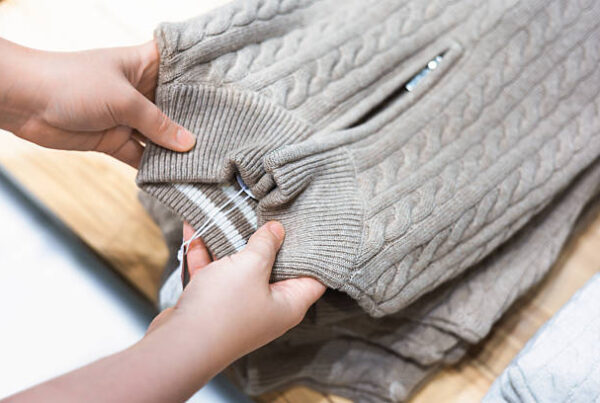
For premium knitwear, skilled technicians can match individual needle loops manually along areas such as:
- Collar openings
- Armholes
- Shoulder seams
- Side seams
This hand-linking approach can create flatter and cleaner joins. Consequently, it is particularly suitable for high-end knitwear where comfort and refined finishing are important.
Machine Overlocking
For high-volume commercial production, machine overlocking provides a faster assembly solution.
It offers efficient edge construction and can support large production volumes while maintaining consistent assembly quality.
Therefore, the appropriate joining method should depend on the garment’s positioning, construction requirements, target price, and expected production volume.
3.3 Post-Knitting Washing and Finishing Control
Knitted panels are not necessarily ready for final assembly immediately after knitting.
Instead, wool and other yarn systems often require carefully controlled washing, milling, steaming, and finishing processes to achieve the intended hand feel and dimensional stability.
For example, controlled washing can help develop softness and allow wool fibers to bloom. However, excessive treatment can cause felting, shrinkage, or dimensional distortion.
Therefore, the washing formula and finishing conditions must be carefully controlled.
For the stated production specification, the target shrinkage is ≤ ±3%.
Proper finishing control can consequently help ensure that finished sweaters maintain consistent measurements throughout bulk production.
Technical Summary
Successful custom knit sweater manufacturing depends on matching a brand’s design complexity, target price, quality expectations, and production volume with the appropriate factory infrastructure.
For example, heavy Aran cable sweaters may require 3G–7G computerized knitting equipment, while fine Fair Isle and multi-color Jacquard designs can require 7G–14G machinery. At the same time, yarn certification, Pantone color matching, precise panel linking, and controlled post-knitting washing all contribute to consistent finished-garment quality.
For premium knitwear, hand-linking and certified yarns can provide refined finishing and stronger product positioning. In contrast, machine-linking and overlocking can improve efficiency for high-volume commercial production.
Therefore, fashion brands should evaluate the complete manufacturing system rather than focusing only on unit price. Machinery capability, yarn sourcing, knitting expertise, finishing control, sampling support, MOQ flexibility, and quality inspection all play an important role in successful B2B knitwear sourcing.
HDL provides custom knitwear manufacturing, OEM sweater production, and ODM apparel solutions for fashion brands and wholesale distributors worldwide, supporting projects from yarn development and sample production through quality-controlled bulk delivery.