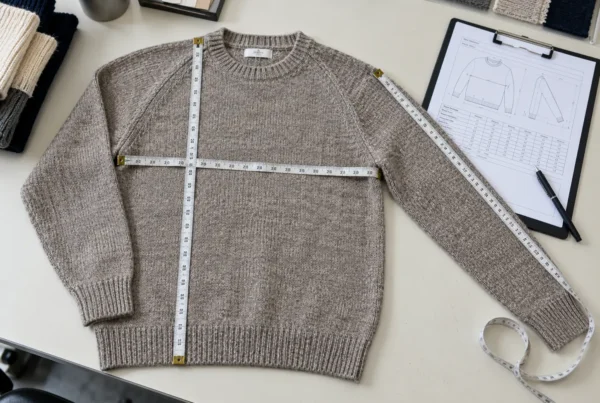

Brands adding half-zip and quarter-zip knitwear often meet the same surprises. The first sample looks right, the bulk order does not: the zip sits higher or lower, the collar behaves differently on a body, and the front edge ripples after wash. Differences between a half-zip sample and bulk production can come from open specifications, component choices, construction details or production conditions. Defining the zip end position, zipper reference, placket construction, collar shape and wash and measurement method before sampling keeps both sides on the same approval basis.
A custom half-zip sweater is only as good as five decisions taken before sampling: how far the zip runs down the front, which zipper type and tape you use, how the placket is built, how the collar is shaped, and how the garment is washed and measured afterwards. Confirm all five with your sweater manufacturer before you approve the sample.
Half-Zip vs. Quarter-Zip: Specify the Finished Zip, Not Just the Name
The two names are used loosely across brands and markets, and buyers see both on the same product family. The label is not what changes the product. What matters is the finished zip length, where the zip stops on the front, and how the collar is built above it. A plain quarter-zip knit pullover shows the same three decisions as any other partial-zip style.
A short zip that stops mid-chest gives a pullover look with a working opening. A zip that runs closer to the base of the neck changes the whole front panel, the neckline and the collar. A “half-zip” specified without a defined zip end position may need additional clarification or sample revision. Write the end position into the specification instead of relying on the name.
Five Points to Fix Before Your Half-Zip Sample Is Made
These five points decide whether the sample and the bulk order describe the same garment. Each one is cheap to settle on paper and expensive to settle after the goods are knitted.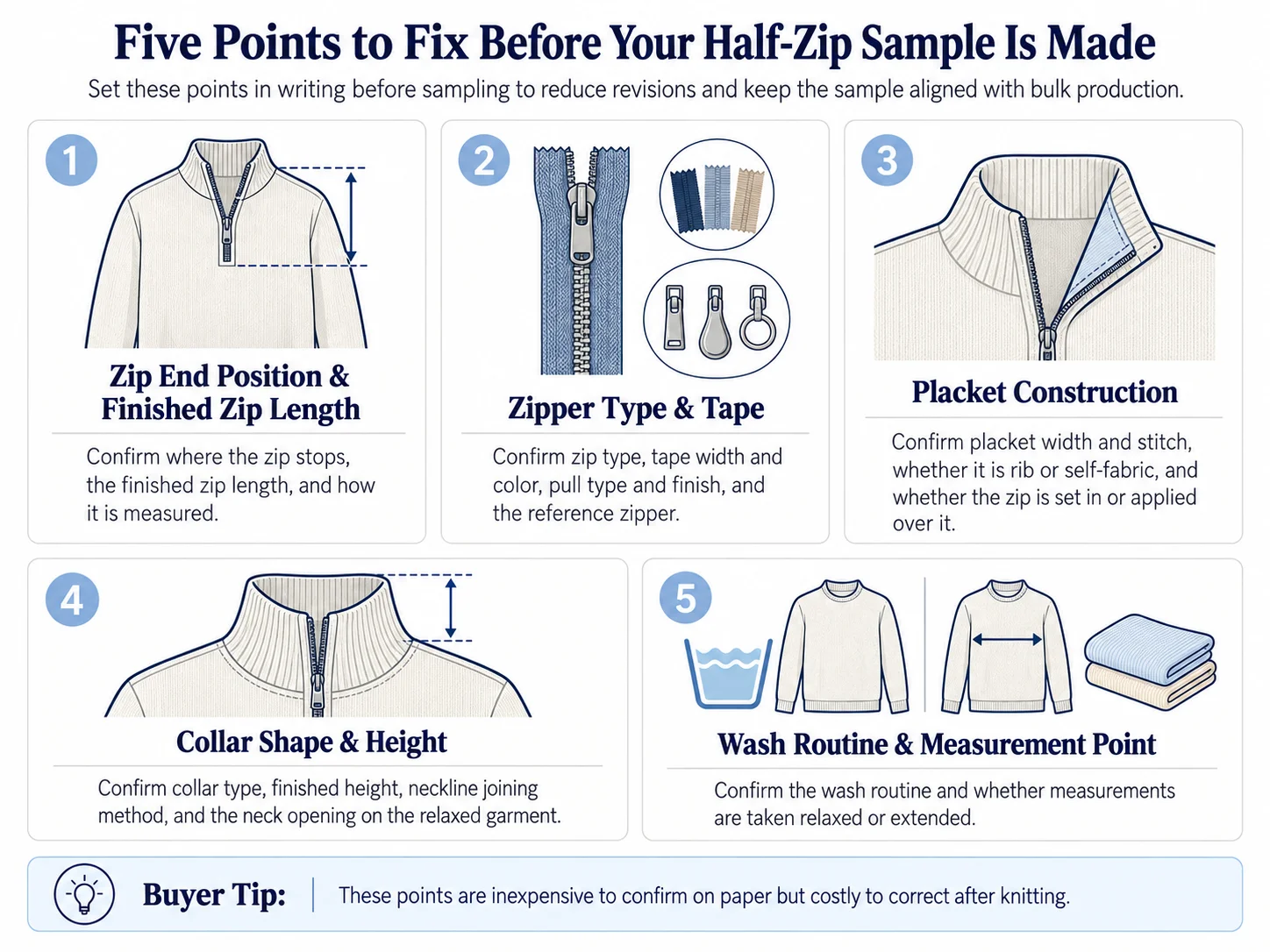
| Specification point | Why it changes the result | What to confirm in writing |
|---|---|---|
| Zip end position and finished zip length | It decides how the garment opens, how the front panel is patterned and how the collar sits when the zip is closed. | The exact point where the zip stops, the finished zip length, and whether it is measured on the flat or on the wearer. |
| Zipper type and tape | Zipper size, tape, weight and flexibility differ between references, and how a zipper sits against the knit depends on the gauge and the placket. | Zip type, tape width and color, pull type and finish, and the zipper reference the factory will order. |
| Placket construction | The placket has to carry the zip and stay flat against the front edge through wear and washing. | Placket width and stitch, whether it is rib or self-fabric, and whether the zip is set into the placket or applied over it. |
| Collar shape and height | A stand collar and a rib collar are built differently and behave differently when the zip is open. | Collar type, finished height, how it is joined to the neckline, and the neck opening on the relaxed garment. |
| Wash routine and measurement point | Fabric dimensional change, zipper insertion and placket construction can all affect how flat the front edge stays after washing. | The wash routine the sample will go through, and whether measurements are taken relaxed or extended. |
How the Zipper Choice Changes the Placket
A zipper is a functional component whose weight, tape and construction can affect the knitted front edge. Metal zippers are often heavier and more rigid than comparable coil zippers, while nylon coil zippers can provide more flexibility. The practical choice also depends on zipper size, tape, garment gauge, placket construction and the intended appearance. A heavier zipper may require a firmer or more stabilized placket, so the choice is worth reading together with how gauge affects weight and hand feel.
Whatever you choose, two details decide how the front looks. The first is tape width against the stitch of the placket: a narrow tape on a coarse-gauge placket reads thin, and a wide tape overwhelms a fine one. The second is how the tape is finished on the inside. A facing or zip guard hides the tape edges. Leaving the tape exposed should be a deliberate decision rather than a default, because it changes how the garment feels when worn open.
Note the zip length, zip end position, zipper type, tape and puller in the component section of the spec, so the same reference is used from development through to bulk. Where a brand wants the zipper judged against a published method rather than a visual check, ASTM D2061 covers zipper strength tests and ASTM D2062 covers zipper operability. The component and construction section of how to prepare a sweater tech pack shows where that callout normally sits.
Collar Construction on a Partial Zip
On a partial zip, the collar has two jobs at once. It has to sit correctly when the zip is closed, and it has to let the garment pass over the head when the zip is open. That second job is easy to overlook.
A rib collar is often chosen because it stretches and recovers. A stand collar holds a firmer shape, which often means a different stitch or yarn than the body so the collar does not collapse. If the collar is linked on separately, the join is a place where the neckline can stretch, and it is worth checking on the sample rather than assuming.
Ask for the neck opening to be measured on the relaxed garment and again after wash. Recording the neck-opening measurement gives both sides a clearer reference when reviewing collar fit and head opening at the relevant sample stage. If the collar height or construction changes after the first sample, treat it as a construction change. A significant collar or neckline construction change may require resampling or renewed approval before bulk production.
Shrinkage, Rib Recovery and the Front Edge
Differential dimensional change between the knit and the zipper is one reason the front edge may ripple after washing. Zipper insertion tension, placket construction, stabilization and finishing can also affect whether the edge remains flat. A sample that hangs flat can therefore come back from laundry with a wave along the front edge or a slight pull at the bottom stop.
Two habits prevent it. First, wash the sample using the routine the bulk order will follow, and measure it after that wash rather than before. Second, agree whether ribbed and edge areas are measured relaxed or extended, because the two readings can differ enough to look like two different garments. Sweater measurement tolerances explains how those readings are normally agreed and judged, and shrinkage testing before bulk production covers the wash-and-measure step in more detail. A heavy zip on a soft yarn often needs a firmer placket or a facing to stay straight, which is a construction question rather than a finishing one.
What to Check on the Half-Zip Sample Before You Approve It
A practical half-zip sample review combines visual, functional and measurement checks. Work down this list before you sign the sample off.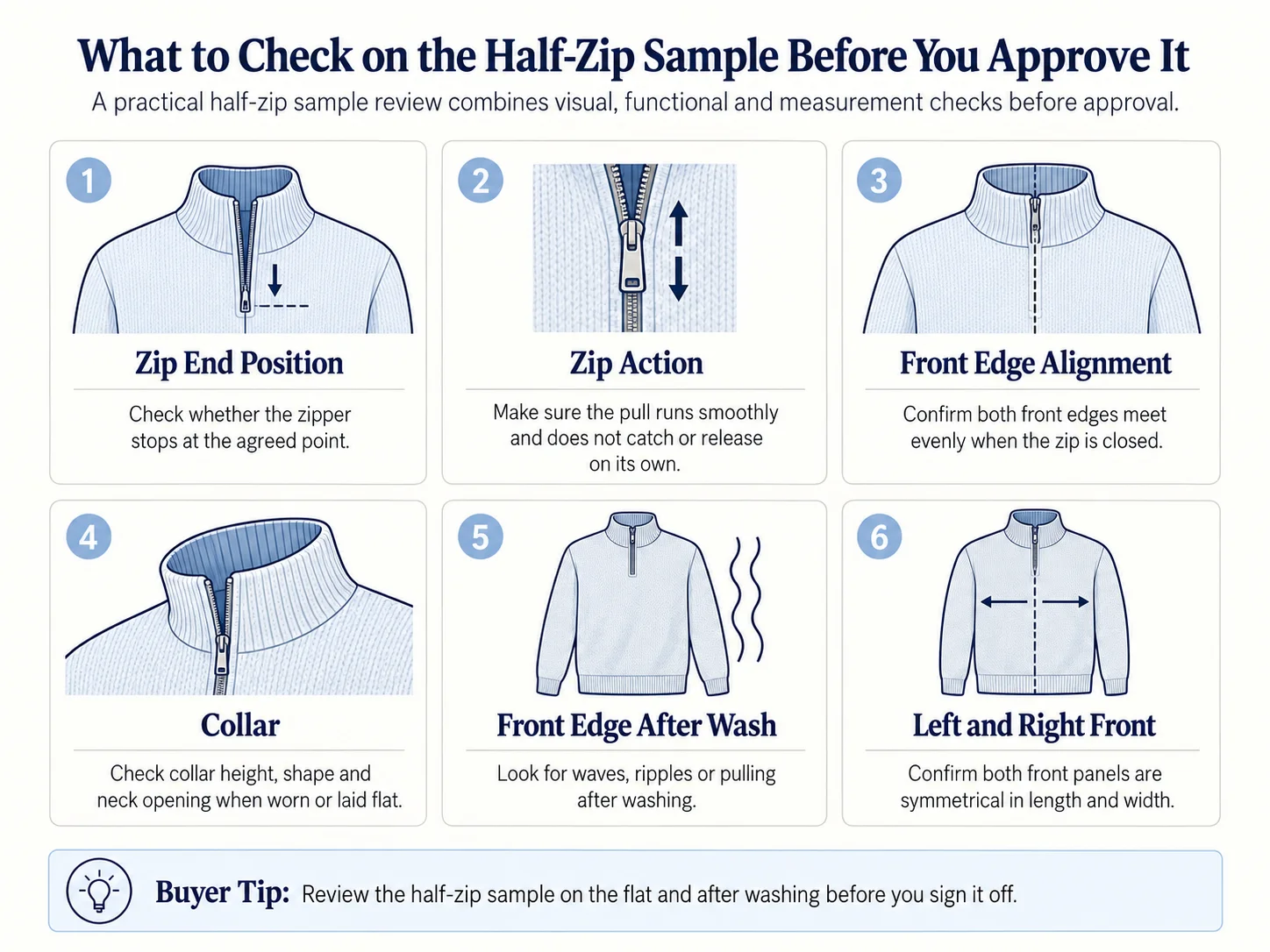
| Check | What a problem looks like | What to do before approving |
|---|---|---|
| Zip end position | The zip stops higher or lower than the agreed point. | Re-measure on the flat against the agreed point and confirm the corrected position before approval. |
| Zip action | The pull sticks, catches, or the slider releases on its own. | Ask which zipper and tape were used and compare them with the agreed reference. |
| Front edge alignment | The two front edges do not meet evenly when the zip is closed. | Compare placket width and stitch on both sides, and confirm whether the zip was set in or applied. |
| Collar | The collar sits unevenly when closed, or the opening over the head is tight when open. | Measure the neck opening on the relaxed garment and confirm collar height and construction. |
| Front edge after wash | A wave, ripple or pull appears along the zip. | Confirm the wash routine used and compare relaxed and extended readings before and after. |
| Left and right front | One front panel is longer or wider than the other. | Confirm the pattern and how both fronts were knitted or cut, rather than adjusting one panel on its own. |
From Reference to Bulk: How a Half-Zip Program Runs
- Send the reference. A reference sample, tech pack or measurement chart tells the factory more than a description does. Add the zip end position you want if you already have a view on it.
- Record the component callout. Record the intended zipper specification before development. If a substitute component is used during early sampling, document it clearly and confirm the final approved zipper before bulk production.
- Review the development sample against the specification. Check the collar, the placket and the zip end position against what was agreed for those points. Why a sample and bulk can differ explains what else can move between the two.
- Wash and measure. The sample goes through the agreed wash routine, then measurements are taken on the relaxed garment and repeated if a reading sits close to the agreed limit.
- Complete the required pre-bulk approval. Where a PP sample is part of the agreed process, confirm the approved zipper, collar, placket and measurements before bulk production begins. If the style sits in a multi-color plan, the yarn and color quantities also affect what is realistic per order, and how yarn quantity drives knitwear minimums covers that separately.
Frequently Asked Questions
Is a quarter-zip the same as a half-zip?
Not always, and the naming is not consistent between brands. Some brands use quarter-zip for a short zip that stops around mid-chest, and half-zip for one that runs closer to the base of the neck. Others use both names for the same garment. What matters is the finished zip length and the zip end position, which belong in the specification.
Which zipper type is better for knitwear?
It depends on the gauge, the weight of the yarn and how the garment will be worn. Metal zippers are often heavier and more rigid than comparable coil zippers, while nylon coil zippers can provide more flexibility on a curved front edge. Confirm the choice against zipper size, tape, gauge and placket construction rather than the look alone.
Does a zipper change the MOQ?
A zipper can affect the practical MOQ when the selected component has supplier minimums or custom requirements such as tape color, pullers or finishes. Yarn and color allocation can also affect the garment MOQ, so both the knit materials and zipper sourcing should be checked for the specific order.
Can a zip be added to an existing sweater style?
It is usually a pattern change rather than an add-on. The front panel is re-patterned for the opening, a placket is added, and the neckline and collar are re-specified. The change will usually need to be re-evaluated through sampling, with the exact approval step depending on the project.
Why does the front edge ripple after washing?
Differential dimensional change between the knit and the zipper is one reason the front edge may ripple after washing. Zipper insertion tension, placket construction, stabilization and finishing can also affect whether the edge stays flat. Washing the sample with the intended bulk routine, then measuring relaxed and extended, is a practical way to see the issue before bulk instead of after.
Send the Reference for a Half-Zip or Quarter-Zip Review
Send us a reference sample, tech pack or measurement chart for your half-zip or quarter-zip style. Tell us the zip end position and the collar you have in mind. Our team at HDL Fashion reviews the construction and confirms the component callout. The style is then quoted from the same specification, so the sample and the bulk order are built on one set of numbers. More than 20 years of knitwear manufacturing sits behind that review, for brands, private labels and wholesalers working on OEM and ODM terms. Our knitwear manufacturing service page shows how a program runs end to end.