
Before sampling a knit dress, define the target style, base size, key finished measurements and material direction. These details give the first sample a clear purpose. Review fit, garment weight, coverage and care behavior together. A change to one can affect the others.
Each sample answers the questions that you and the factory set for it. It does not settle every production question. Leave room to refine some specifications after the first fitting, when you can assess the garment itself.
Choose Yarn and Knit Structure for the Finished Dress
Start material selection with the silhouette. A fitted dress, a straight dress and a relaxed dress place different demands on the yarn. Describe the fit, thickness, hand feel and target garment weight. Then compare yarns and knit structures against those requirements.
A yarn name alone does not tell you how the dress will behave. Stitch structure, ply and finishing also affect thickness, surface and drape. Compare finished swatches or sample panels alongside yarn cards. The swatches show the fabric after knitting and finishing.
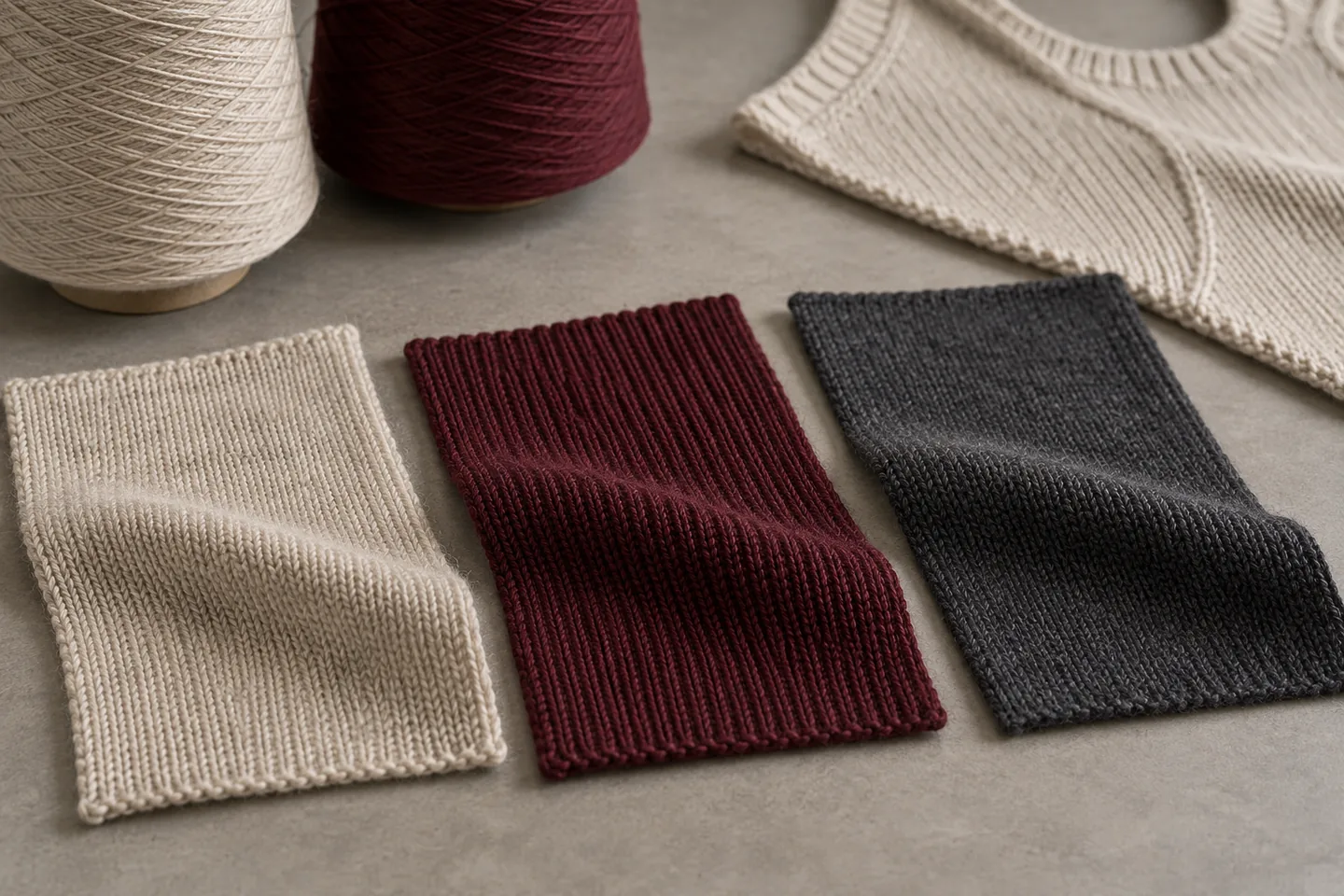
For a fitted dress, check coverage while the fabric stretches as it would during wear. Also assess stretch and recovery. Use swatches to compare materials, then check total weight and drape on the full-length garment sample. Yarn count, ply, gauge, stitch structure and finishing can all affect the result and quotation.
Improving coverage may change garment weight, hand feel and cost, so compare these results together. Agree which production colors need coverage checks. Use the actual material under the intended wearing and lighting conditions. One color approval does not confirm coverage across the range.
The material plan should meet four requirements: appearance, fit, coverage and budget. If an option cannot meet all four, identify the trade-off before sampling.
Confirm Finished Length, Fit and Size Grading
Give the factory a base size and its key finished measurements. Include chest, waist, hip and length from a stated point. Also specify positions that define the style, such as a waist seam, pocket or side slit. Record garment measurements separately from the wearer’s body measurements. This keeps fit allowances clear and prevents confusion.
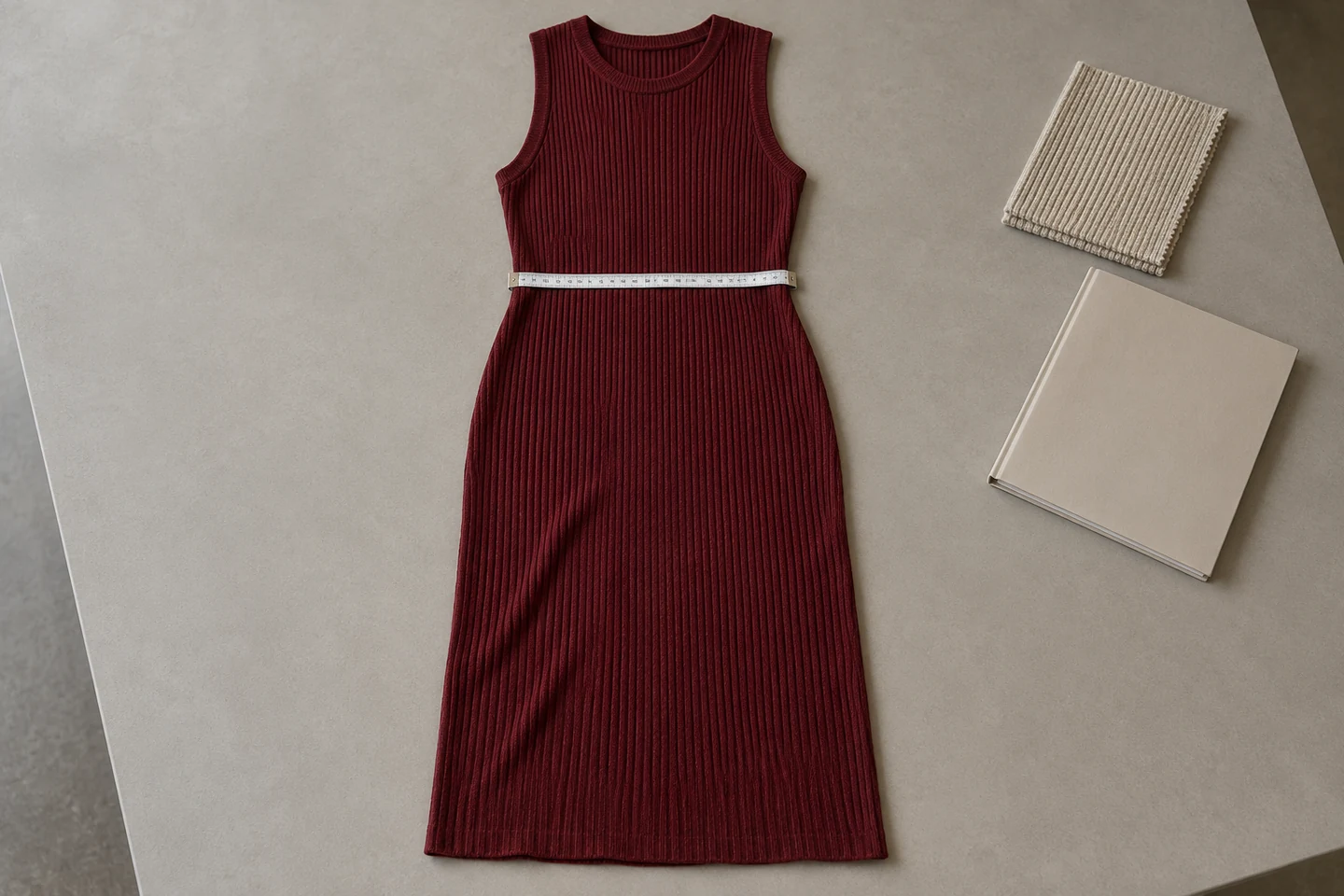
Review fit against your target silhouette and the knit’s behavior during wear. Different materials and structures need different fit allowances, so avoid a universal rule for adding or subtracting ease. Confirm the actual allowance on the base-size sample.
Agree Measurement Conditions and Size Grading
Record two measurement conditions separately. First, specify the washing, drying and finishing processes the garment undergoes before measurement. Second, define its state during measurement, such as flat and relaxed. If you use another position, describe it clearly. Apply the same method before and after the care process. This allows repeat checks across samples and bulk production. If the length changes, check the measurement method before assessing the result against your requirement. Rib knit dress elasticity explains factors behind stretch and wash-related deformation.
Set grading rules for the chest, waist, hip, length and related positions. Follow your size plan when deciding whether length changes between sizes. You do not need a different length for every size. See sweater size grading for grading increments and sweater measurement tolerance for the acceptable variation around each measurement.
Check fit and silhouette on the body, or use another method that lets both sides judge the shape. Flat measurements alone do not show how the dress fits.
Specify Neckline, Armhole and Hem Results
Describe the result you need at the neckline, armhole and hem. Specify where an edge should fit closely, fall freely or hold its shape. The factory can then propose a knit structure, edge treatment and joining method. Rib describes a knit structure; linking joins knitted parts. A garment can use both.
Record these choices separately, since a change to one can affect the others. Identify which parts of the sample need another check. Where relevant, review the finished result after the care process you and the factory specify.
Compare Garment Cost and Order Quantities
Compare cost using the actual garment dimensions, size breakdown, finished weight and yarn consumption. Length alone does not determine yarn use. A long dress in a light structure can use less yarn than a shorter, wider dress in a dense structure.
Construction also affects cost. Waist and hip shaping, pattern work and additional edge treatments can add development and production steps. When comparing material options, keep each specification beside its price. This helps you see whether the quotations cover the same requirements.
Send quantities per style, per color and per size within each color. The factory can then review yarn purchasing and production requirements together. Yarn purchasing depends on color and quantity, as well as the style. Knitwear MOQ and yarn quantity explains the connection.
HDL’s regular MOQ is around 100 pieces per design. The applicable minimum depends on yarn, craftsmanship, colors and customization. Ask the factory to check your quantity plan before treating that figure as the minimum for your project.
Define What the Sample Approves for Bulk Production
Sample approvals can cover construction, base-size fit, materials, colors and production requirements at different stages. You and the factory can combine or separate these checks to suit the project. Record what each approval covers and what remains open before bulk production.
Use the table to record each approval and any additional checks that still need attention.
| Approval item | What to agree | Additional checks, where needed |
|---|---|---|
| Base size fit and key measurements | Measurement points, garment state during measurement and fit on the body | Confirm dimensions after any finishing or care process outside the scope of the fit approval. |
| Material, hand feel and finished garment weight | Yarn, knit structure and garment weight at the approved length | Effects of a substitute yarn or color on these results |
| Coverage in the relevant colors, as worn | The colors, lighting and wearing conditions you checked | Coverage in the remaining production colors |
| Dimensions and appearance after the agreed care | Washing and drying methods, plus any changes you observed | Behavior across the rest of the color and size range |
| Size grading and later checks | The grading chart and measurement points for repeat checks | Sizes to check on later samples or during bulk production |
If a result misses the requirement, review the pattern, material, structure, construction and finishing together. The same symptom can have several causes. Identify the change and any follow-up checks before correcting the sample. This helps avoid creating another problem. See the sweater sample approval checklist for the approval sequence.
Custom Knit Dress Manufacturing FAQs
Can I change the yarn after the fit sample is approved?
Yes, but a yarn change can affect garment weight, drape, stretch, opacity and measurements. The earlier sample remains a design reference; it does not confirm those results in the replacement yarn. Agree what needs a new swatch, sample or check, and confirm any price or schedule changes before proceeding.
Does one approved sample cover every size and color?
Use the base-size sample as a reference for the fit and construction you reviewed. It does not automatically approve every size or color. Agree separate size and color checks, including coverage in relevant production colors. Record the yarn, finished measurements and finishing conditions alongside the sample.
What is the MOQ per design and color for a custom knit dress?
HDL’s regular MOQ is around 100 pieces per design. The applicable minimum depends on yarn, craftsmanship, colors and customization. Confirm quantities by color for your project. Send each color’s quantity and size breakdown so HDL can check the minimums before you finalize the order.
Send your design or reference sample, base-size measurements, material requirements and quantity plan for an initial review. HDL develops samples and manufactures knit dresses to customers’ designs and agreed specifications. You can also view examples in our dress and skirt range.