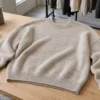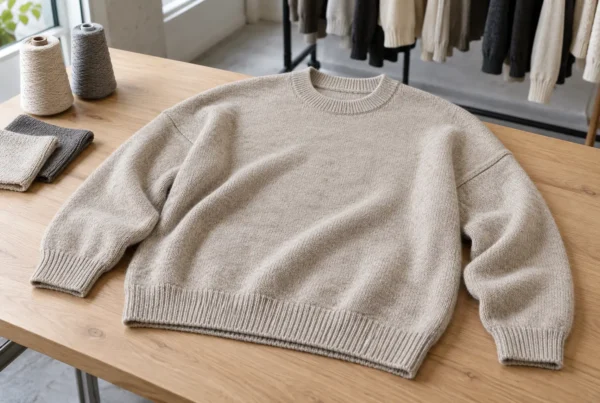
For custom cardigan manufacturing, confirm the MOQ and color allocation, quotation scope, sampling costs and timing, and bulk delivery and quality requirements before placing an order.
What Is the MOQ for a Custom Cardigan Order?
Our starting MOQ is 100 pieces per style for suitable projects. Size and color allocation depend on the yarn, color plan and production requirements.
That is a starting point, not a fixed rule for every cardigan. Special yarns, custom trims or complex designs can sit above it, because the quantity needed to run those materials and processes is different from a plain knit. Send the design, the size range and your estimated quantity, and the MOQ is confirmed from those three.
Two parts of the order decide where you land:
- Colors. The number of colors and the quantity you plan in each one are part of the calculation. A multi-color design is planned differently from a solid, so bring the color split with the quantity.
- Size split. Sizes are planned inside the style quantity, and the allocation is confirmed when the order is structured. If your range is wide, say so at enquiry stage so the split can be checked against the total.
If your plan sits below that point, say so rather than adjusting the drawing to fit. Whether a smaller run works depends on the yarn and the design. How styles, colors and sizes are spread across one order is covered in custom sweater MOQ order planning.
What Does a Custom Cardigan Quote Include?
A quotation for custom cardigan manufacturing is prepared from your design details, so the first answer depends on what you send. The information used to build the estimate is the reference sample, CAD, image or drawing, the fabric or yarn information if you have it, the size chart, the quantity, and any packing or delivery requirement that affects the plan.
An estimate is not the final price. The bulk price is confirmed after the sample is completed and approved, because sampling is where yarn, stitch and construction details stop being assumptions.
When the quotation arrives, read it as a supply scope rather than a single number. Ask which of these sit inside the unit price, and which are quoted separately:
- Yarn, knitting and making
- Trims and closures
- Logo, woven label and hangtag work
- Packing, and any custom bag or box
- Development work, samples and freight
Our published FAQ states that custom logo labels and hangtags are produced for bulk orders and that sample labels are not made. For custom packaging bags, you can provide your logo for a mock-up. Confirm packaging and repeat-order arrangements when requesting a quotation.
If the quotation sits above your budget, ask what can change without losing the look. Yarn, pattern complexity, trim choice, packing and quantity each move the number, and each also changes the garment or the delivery plan. The cost structure behind a knitwear quotation is set out in sweater manufacturing cost breakdown.
Sampling Costs, Timing and Approval
Sampling starts once the design for the sample is confirmed. At that point the sample charge is confirmed too, and it is paid before the sample is made. The charge is quoted per design rather than published as one figure, because it follows the yarn, the pattern and the trims.
After payment, the published sample time is about 3–7 working days to receive the sample. Two conditions sit behind that number: the design has to be settled first, and any change made during sampling restarts part of the work.
Changes during sampling are possible. Some of them carry an additional fee, a yarn change being the usual example, and any change extends the sample time. Ask what a change costs before it is made, so the decision is yours rather than a surprise on the invoice.
Settle one point in writing before the sample starts: whether the sample will use the yarn you plan for bulk. If a substitute yarn is used, both sides should know the sample is showing construction rather than the final surface.
Before bulk is scheduled, these should be agreed: the approved sample, the measurements, the yarn and color, the trims, and the label and packing details. The full approval sequence, including measurements and workmanship, is in the sweater sample approval checklist, and the sampling steps themselves are described in the custom sweater sampling process.
Bulk Production, Delivery and Quality Control
Bulk production is scheduled after the sample is approved and the specification is fixed in writing. Production time is counted from the start point both sides agree on, and that start point belongs on the order rather than in an email.
If you have a launch date, share it at enquiry stage together with your packing and delivery requirements. Those requirements can affect both the plan and the price, and a date that is mentioned after production starts is much harder to hold than one that shaped the schedule from the beginning.
Three dates are worth keeping separate:
| Date | What it means | What to confirm |
|---|---|---|
| Production completed | The order has been made and is ready for inspection and packing | Whether inspection happens before or after packing |
| Goods shipped | The order has left the factory and the documents are issued | The shipping terms and who books the freight |
| Goods arrive | The order reaches your warehouse or your customer | Transit time, customs and the delivery address |
Once bulk starts, the approved sample and the written specification are the reference. Changes to yarn, color, trim or any other specified detail should be agreed in writing before they are applied, so both sides are working from the same version.
On quality, the checks we describe in our published terms cover samples, fabrics and completed goods. If your brand or your retailer requires a third-party inspection, raise it before production starts so the timing, the access and the cost can be agreed in advance.
If something does not match the agreed specification, report it with photographs and quantities as soon as the goods arrive. Our published FAQ states that defects usually need to be reported within 7 days of receipt. The remedy is described as a refund for the affected pieces, or a percentage of the payment, depending on the condition of the defect. The inspection system behind those checks is explained in sweater quality control and inspection standards.
How to Get a Quote for Your Cardigan
First contact does not need a complete technical file. These five items are enough to start, and anything you have not decided can be worked out in the conversation.
- A reference photo, a sketch, or an existing cardigan
- Target quantity, colors and size range
- Any material, surface or budget requirement you already have
- Logo, label and packing needs
- Target launch or delivery date, if one is set
If you already have a tech pack, send it; it shortens the review and is described in how to prepare a custom sweater tech pack. If you do not, the reference and the points above are enough for a first assessment, and the full picture can be built from there.
Send your reference, quantity plan and date through the contact page, and the design, MOQ and quotation basis can be reviewed together. Our published business terms sit alongside this guide.