For fashion brands, boutique labels, corporate buyers, and private-label retailers, choosing the right custom sweater logo technique can directly affect appearance, production cost, MOQ, and lead time.
When developing a custom knitwear collection, buyers often compare logo embroidery with jacquard knitting. Although both techniques can create professional branding effects, they use fundamentally different manufacturing processes.
Embroidery adds a stitched logo to an existing knitted garment, while jacquard knitting integrates the logo into the sweater during the knitting process.
Therefore, the best option depends on your logo size, placement, order quantity, desired appearance, and overall production budget.
1. Custom Sweater Logo Production: Embroidery vs. Jacquard
Understanding how each technique works makes it easier to select the right solution for your sweater collection.
Logo Embroidery: Flexible Surface Branding
Embroidery applies a pre-designed logo directly to a knitted panel or finished sweater using specialized stitching equipment.
This method is particularly suitable for brands that need flexible logo placement without changing the sweater’s basic knitting structure.
Typical applications include:
- Small and medium chest logos up to 5 cm
- Sleeve and cuff branding
- Back-neck logos
- Brand badges and crests
- 3D puff or raised embroidery
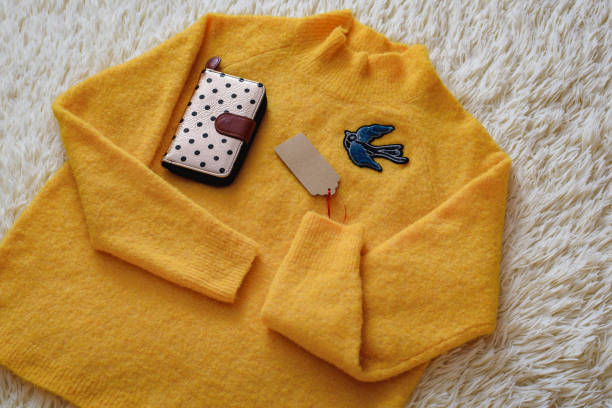
Embroidery creates a tactile, raised appearance. It can also use metallic, glossy, or specialty threads to create a more distinctive brand effect.
Another advantage is placement flexibility. Buyers can position the logo on the chest, sleeve, cuff, collar, or lower hem without redesigning the entire knitted panel.
Jacquard Knitting: Logo Integrated Into the Sweater
Jacquard knitting creates the pattern directly during the knitting process. Computerized flat knitting machines control multiple yarn feeds to build the logo into the sweater structure.
This makes jacquard particularly suitable for larger graphics and repeating brand patterns.
Common applications include:
- Oversized back graphics
- Full-panel logos
- Repeating monograms
- Geometric brand patterns
- Multi-color sweater designs
Unlike embroidery, jacquard produces a flat and integrated finish. There is no additional embroidery backing, which helps preserve the natural softness and drape of the knitted fabric.
However, very small text can become difficult to reproduce accurately. Text below approximately 1 cm may lose definition depending on the yarn gauge and knitting structure.
2. Custom Sweater Logo Cost and MOQ Comparison
For B2B buyers, the right logo technique should balance visual quality with setup costs and production volume.
| Procurement Factor | Custom Logo Embroidery | Custom Jacquard Knitting |
|---|---|---|
| Primary Process | Stitched onto a finished knitted surface | Integrated into the sweater during knitting |
| Best Pattern Size | Small to medium logos up to 5 cm | Large, full-panel, or repeating patterns |
| Setup / Digitizing Fee | Approximately $15–$30 per logo file | Approximately $30–$80 for machine programming |
| Unit Cost | Approximately $0.50–$2.00 per piece | Included in the base knitting cost |
| Typical MOQ | Flexible, starting from 30–50 pieces | Usually 100–300 pieces, depending on yarn dye lots |
| Visual Effect | Raised and tactile | Flat and integrated |
| Fabric Hand Feel | May add slight stiffness to lightweight knits | Maintains a more seamless hand feel |
| Placement Flexibility | High | Mainly determined during garment knitting |
| Ideal Application | Small logos, badges, chest branding | Large graphics, monograms, all-over patterns |
This comparison shows why custom sweater logo embroidery is generally more practical for small branding projects, while jacquard becomes more efficient when the artwork covers a larger area or forms part of the garment structure.
3. How to Choose the Right Custom Knitwear Logo Technique
Choosing between embroidery and jacquard should start with three factors: logo size, order quantity, and desired fabric feel.
Choose Embroidery for Small Logos
For a small chest or sleeve logo, embroidery is usually the more efficient option.
A 3–5 cm logo can be reproduced with clear stitching and strong visual definition. In addition, embroidery supports lower MOQs, making it suitable for emerging fashion brands and small promotional collections.
The relatively low digitizing cost also reduces the initial investment during sampling.
Choose Jacquard for Large Graphics
Jacquard knitting becomes more suitable when the logo occupies a large section of the sweater.
For example, an oversized back graphic or repeating monogram may require extensive embroidery. Heavy stitching could make the knitted area stiff and affect garment comfort.
Jacquard avoids this issue by integrating the artwork directly into the knitted structure.
Consider Order Volume Before Finalizing the Process
MOQ is another important consideration for B2B buyers.
Embroidery can typically support smaller production quantities, with options starting around 30–50 pieces. Jacquard generally requires larger quantities because yarn preparation and machine programming become more economical at higher volumes.
For orders of 100 pieces or more, jacquard may become increasingly attractive for large or repeating designs.
4. Common Custom Sweater Logo Mistakes to Avoid
Choosing a logo technique based only on appearance can lead to unnecessary production costs or poor garment performance.
Mistake 1: Using Jacquard for Tiny Logos
A small 3 cm chest logo does not necessarily require jacquard knitting.
Creating a dedicated jacquard program for a tiny logo can increase machine setup time and yarn consumption. For subtle branding, embroidery can provide sharper definition with a lower setup cost.
Mistake 2: Using Heavy Embroidery for Large Graphics
Large embroidered graphics can add considerable thread weight and stiffness to a knitted garment.
For a 30 cm chest graphic, heavy embroidery may reduce the natural drape and softness of the sweater. Jacquard knitting can integrate the artwork into the fabric while maintaining a more consistent hand feel.
Mistake 3: Ignoring Yarn Gauge and Logo Detail
Logo reproduction depends heavily on knitting gauge.
Fine text and detailed graphics require sufficient stitch resolution. Before approving a production sample, brands should evaluate the relationship between logo dimensions, yarn thickness, knitting gauge, and color contrast.
5. B2B Custom Knitwear Logo Development Process
A structured development process can help buyers reduce sampling problems and control production costs.
Step 1: Submit the Logo Artwork
Provide vector artwork or high-resolution files, including the required logo dimensions, colors, and placement.
Step 2: Confirm the Branding Technique
The manufacturer should evaluate whether embroidery or jacquard knitting better matches the logo design and sweater structure.
Step 3: Approve a Production Sample
Review logo definition, color accuracy, placement, stitch density, and overall fabric hand feel before bulk production.
Step 4: Confirm MOQ and Production Cost
Compare digitizing, programming, yarn, labor, and unit costs based on the final production quantity.
Step 5: Start Bulk Manufacturing
After sample approval, the factory can finalize production specifications and begin bulk custom knitwear manufacturing.
HDL Custom Sweater Logo & Knitwear Manufacturing
HDL provides integrated custom sweater logo and knitwear manufacturing services for fashion brands, private-label retailers, corporate buyers, and wholesale distributors.
The company supports both embroidery and computerized jacquard knitting, allowing buyers to select the branding method that best fits their garment design and target price.
Custom Logo Manufacturing Capabilities
- Logo Embroidery: High-precision embroidery, 3D puff embroidery, and multi-thread branding.
- Jacquard Knitting: Computerized jacquard production for large graphics, repeating patterns, and multi-color designs.
- Flexible MOQ: Sampling and small-batch production starting from approximately 30–50 pieces per style.
- Custom Yarn Sourcing: Merino wool, cashmere blends, organic cotton, and recycled fibers.
- OEM/ODM Manufacturing: Support from yarn selection and artwork development through sampling and bulk production.
- Quality Control: Production inspection and quality management for B2B apparel orders.
Technical Summary
Selecting the right custom sweater logo technique depends on logo size, garment structure, order quantity, and desired hand feel.
Embroidery is well suited to small chest logos, sleeve branding, and low-MOQ orders because it offers flexible placement and relatively low setup costs.
Jacquard knitting is better suited to large graphics, repeating monograms, and integrated sweater designs because the logo becomes part of the knitted structure.
By matching the branding method with the design and production requirements, fashion brands can achieve the desired visual effect while maintaining better control over custom knitwear manufacturing costs, MOQ, and garment quality.
HDL supports global brands and B2B buyers with custom sweaters, logo embroidery, jacquard knitwear, and complete OEM/ODM knitwear production services.