Cable knit development often starts with a reference image. The first sample may show a cable that looks smaller than expected or a panel that finishes narrower than the target measurement. The initial yarn estimate may also need revising once the construction is confirmed. These issues are easier to address when the cable width, crossing frequency and placement are agreed before sampling.
Three design choices matter: how many stitches are involved in each crossing, how many rows lie between crossings, and how much of the panel the cable covers. These choices can affect yarn use, knitting time and finished width. Their impact also depends on the yarn, gauge, construction and finishing, so review the cable alongside the target measurements before sampling.
What Makes a Cable Panel Different from Plain Knit
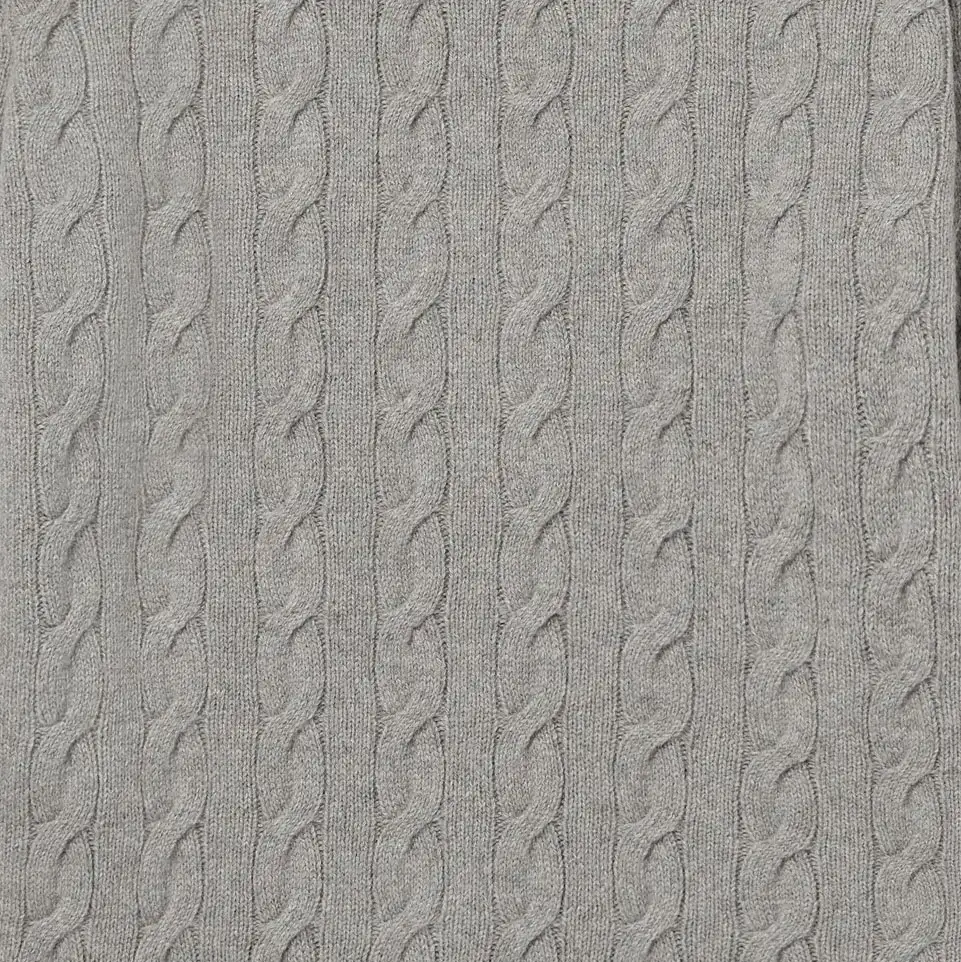
In plain knit, stitches form vertical columns, often referred to as wales, and horizontal rows, or courses. In a cable, groups of stitches are lifted out of sequence and crossed over one another, either by stitch transfer on a flat knitting machine or by hand on a hand-flat frame. The crossing produces the raised, twisted surface that reads as a cable.
Two things follow. Cable structures can change yarn consumption because the crossings alter the stitch path and create draw-in across the cable zone. And the panel draws in: as the stitches cross, the fabric contracts across its width and finishes narrower than the same number of stitches in plain knit. The size of that effect depends on the cable construction, yarn, gauge and finished dimensions.
Gauge changes the scale and appearance of the cable. A coarser gauge can produce a larger-looking structure, while a finer gauge can produce a smaller and tighter appearance. The final relief also depends on the yarn, stitch construction, density and finishing. The same artwork is not interchangeable across gauges, and the suitable gauge depends on the yarn, the cable width and the machine. This guide to how sweater gauge affects appearance, weight and cost covers that relationship in more detail.
 How Cable Scale Changes Yarn Use and Garment Weight
Changing the cable width, crossing frequency or coverage can affect how much yarn a sweater uses. When the yarn and finished dimensions are comparable, a change in yarn use may also affect garment weight and material cost. Check the proposed construction and knitted sample before treating the estimate as final.
| Design choice | Possible effect | What to check | Buyer’s decision |
|---|---|---|---|
| Wider cable | The cable may look more prominent and affect the finished panel width. | Yarn consumption, knitting time and transfer feasibility for the proposed yarn and gauge. | Approve the cable appearance and finished panel measurements on the sample. |
| More frequent crossings | Crossings occur after fewer rows and may require more transfer operations over a given garment length. | The number of rows between crossings and the appearance after finishing. | Confirm the crossing frequency on the artwork or sample. |
| All-over cable | Cable texture covers more of the garment and may change total yarn use and finished weight. | Estimated yarn consumption and the weight of the knitted sample. | Confirm whether the result meets the target look and weight. |
| Single cable area | Draw-in around the cable may affect panel width or motif placement. | Finished panel measurements and the cable’s position. | Approve the cable placement on the sample. |
| Cable combined with rib | The two structures may relax and respond to finishing differently. | Appearance and measurements after the agreed finishing process. | Agree on the reference sample and measurement conditions. |
Two sweaters that look similar in a photo can need different amounts of yarn once the cable width or coverage changes. Because yarn is a material cost, the factory should check consumption for the proposed construction. Yarn count and ply matter too, so review yarn count and ply alongside the cable design.
Why Cable Panels Pull In — and What It Means for Fit
Draw-in is one of the main points to review during cable sampling. A cable zone knitted with the same number of stitches as a plain zone finishes narrower, so a pattern that is not adjusted produces a body that measures smaller than the specification. Where the measurement difference appears depends on the cable placement, panel construction and garment shape.
Factories deal with it by adding wales to the cable panel, adjusting stitch density, or shaping the panel so the cable sits where the extra take-up can be absorbed. Which route is used depends on the cable layout and the style, so the width effect is planned before knitting rather than corrected by pressing or stretching a finished piece.
When cable direction is part of the design, specify it for each relevant panel. Mirrored left and right panels may require different cable directions, so the intended orientation should be recorded in the specification rather than assumed during knitting.
Because cable panels take up differently, they relax differently. A cabled piece can read wider or narrower after relaxation and washing than it did off the machine. That is why the measurement points are worth agreeing in writing: whether the cable area is measured relaxed or extended, and where the tape is placed. The conventions for those readings are set out in this article on sweater measurement tolerances.
Where Cable Scale Shows Up in Cost
Cable scale touches more cost lines than buyers expect at first, and each one is reviewed per style rather than as a blanket rule.
- Yarn quantity per piece, which can change with cable width, crossing frequency, coverage and construction.
- Knitting time. Cable structures that require more frequent stitch transfers may increase knitting time compared with a simpler structure.
- Machine selection. Cable construction, transfer requirements, gauge and total panel width can affect which machines are suitable for a style.
- Linking and seaming. If a cable reaches a seam or linking area, the added structure may affect how that area is assembled and finished.
- Sampling rounds. Cable scale is judged on a knitted piece, so scale and density corrections can take more than one sample when the artwork is new.
- Finishing. Pressing can change how prominent the cables look, so agree on the desired finish using the approved sample.
None of these can be quoted reliably from an image alone. Our sweater cost breakdown for B2B buyers explains how these factors can appear in a B2B quotation.
What a Wide Cable Needs from the Machine
A wide cable can place more demands on machine setup than a narrow cable, but the limit is not defined by cable width alone. The factory needs to consider the number of stitches involved in each crossing, the required transfer movement, the gauge and the total panel width.
At the development stage, confirm whether the selected machine can handle the required stitch transfers and whether the panel fits within the usable needle-bed capacity at the chosen gauge. Machine capability varies by equipment and construction, so the cable should be reviewed as part of the complete panel rather than as an isolated motif. Flat knitting machines differ in transfer capability, and circular machines work differently again, which is why the comparison in flat knit vs circular knit techniques matters before a cable program is planned.
What Buyers Should Confirm Before Sampling
A short list agreed in writing before the first sample can reduce avoidable back-and-forth during development.
- Cable width and repeat, marked on the drawing or reference at the scale the buyer wants.
- Gauge and yarn the cable will be knitted in, decided together rather than one after the other.
- Target measurements for the cable zone and for the plain areas, listed separately.
- Whether the cable area is measured relaxed or extended, and how the tape path is placed.
- Which panels carry the cable, and the direction on each panel.
- Pressing and finishing instructions, including how much relief should still be visible at the end.
- The size range, so the cable repeat can be checked against the smallest and largest sizes. Grading conventions are covered in sweater size grading standards.
- How the sample will be reviewed — panel width and measurements read together with relief, not separately.
How Cable Scale Gets Settled at Sampling
Review the cable appearance, panel width and measurements together at each sampling stage.
- The buyer sends the artwork or reference image, preferred yarn or yarn options, size range and target panel width.
- The factory checks whether the proposed cable works with the yarn and gauge, then provides a preliminary yarn consumption estimate. The estimate should be checked against the knitted sample.
- A first sample is knitted, and relief, panel width and measurements are reviewed together.
- Scale corrections are made as pattern changes, not by stretching the finished piece into place.
- Once the cable scale is approved, review how the repeat sits across the size range. Depending on the panel width and design, the repeat or its position may need adjustment for different sizes.
What can be changed after that first sample, and where a resample becomes necessary, is set out in this article on sweater sample revisions before bulk production.
Frequently Asked Questions
Does a cable knit sweater use more yarn than the same style in plain knit?
Often, yes, when the yarn, gauge and finished dimensions are otherwise comparable. Cable crossings and draw-in can increase yarn use, but the actual difference depends on cable width, repeat, coverage and construction.
Why does a cable panel measure narrower than a plain knit panel?
A stitch crossing pulls the fabric in across its width, so the cable zone contracts and a panel knitted to the plain-knit stitch count finishes narrower than the target. The pattern often needs extra wales in the cable area, or a density adjustment, to reach the specified width.
Can a wide cable be produced on any flat knitting machine?
Not every machine and setup will suit every cable design. Before confirming the artwork, the factory should check the required stitch transfers, the selected gauge and whether the full panel fits within the machine’s usable knitting width.
How close should bulk cable relief be to the approved sample?
Bulk cable appearance should be reviewed against the approved sample or other agreed reference under comparable finishing conditions. The buyer and supplier should agree in advance which visual and measurement points are used for comparison.
Does cable scale change the size grading of a style?
Cable repeats should be reviewed across the size range rather than assumed to transfer unchanged. As panel width changes, the cable may need to be repositioned or adjusted so the layout remains balanced. The grading method should follow the approved specification for the style.
What should be written down before a cable style is sampled?
Cable width and repeat, gauge, yarn, target measurements for the cable and plain areas, cable direction per panel, measurement conditions, pressing instructions and the size range. Recording these points in one document before sampling can reduce avoidable back-and-forth during development.
Send Your Cable Artwork for a Gauge and Yarn Review
If you are developing a cable knit sweater, send the artwork or a reference image with the panel width you are working to, the yarn you are considering and the sizes you need. The technical team at HDL Fashion can review the cable scale against the gauge and yarn, flag the points that will move yarn quantity or measurements, and set out what to confirm before the first sample. Our knitwear manufacturing service page shows how a program runs from brief through to bulk.