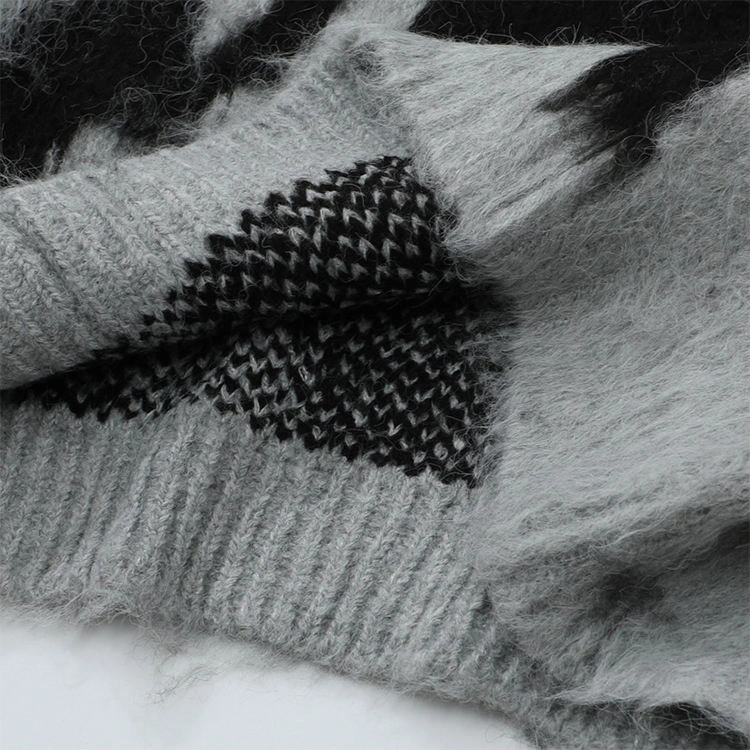
If you are looking for a mohair sweater manufacturer, you do not need to know every yarn specification before contacting the factory. Start with the result you want: real mohair or a mohair-like look, how soft and fuzzy you want the sweater to feel, your quantity, colors, size range and budget. A reference photo is enough to start the discussion. Before bulk production, check the fiber content, fuzzy look, shedding, measurements, color and finished feel on the sample.
Can You Make a Mohair Sweater From My Reference Photo?
Yes. A reference photo is enough to start the discussion. From the image, we can usually see the overall shape, fuzzy look, color direction, neckline, fit and pattern.
A photo cannot show the exact fiber content, yarn, measurements, order quantity or how the sweater feels in person. Those details can be confirmed during sampling, so you can start without a full tech pack. A final quote still depends on the yarn, quantity, measurements, colors and customization details. You can see the usual steps in our custom sweater sampling process.
Real Mohair, Mohair Blend or Mohair-Look Yarn: What Is the Difference?
Real mohair
The yarn contains hair from the Angora goat. It has a naturally fuzzy surface with a slight sheen, and the yarn generally costs more than a synthetic mohair-look yarn.
Mohair blend
Mohair is mixed with another fiber, often to balance the look, feel, durability and cost. There is no single best percentage; our guide to sweater yarn materials explains the main fiber options.
Mohair-look yarn
The yarn does not have to contain mohair. Acrylic, nylon or other fibers can also create a fuzzy mohair-like look when the appearance matters more than using real mohair.
| Buyer question | Genuine mohair | Mohair blend | Mohair-look yarn |
|---|---|---|---|
| Fiber | Real Angora goat hair | Mohair mixed with another fiber | Non-mohair fiber, often acrylic or nylon |
| Look | Naturally hairy, with a soft sheen | The fuzzy look depends on the blend and finishing | Fuzzy surface from the yarn or from brushing |
| Feel | Depends on the yarn and the finishing | Depends on the blend and finishing | Depends on the yarn and the brushing |
| Cost | Generally higher yarn cost | Depends on the blend | Usually easier to control than genuine mohair |
| Shedding | Check the level on the sample | Check the level on the sample | Check the level on the sample |
| Label | Must state the real fiber percentages | Must state the real fiber percentages | Must state the real fiber composition |
| May be a good fit when | You specifically want real mohair | You want a balance of mohair content, feel and budget | You mainly want the fuzzy mohair look |
Buyer note: the fiber label should match the yarn actually used. A synthetic mohair-look sweater should not be labeled as if it contains genuine mohair. For products sold in the United States, check the applicable FTC wool-labeling requirements.
Why Do Some Mohair Sweaters Feel Soft While Others Feel Itchy?
Two sweaters can both contain mohair and still feel very different. The yarn, the blend and the finishing matter as much as the fiber name.
How soft or itchy the sweater feels depends on the quality and fineness of the mohair, what it is blended with, how the sweater is knitted and finished, and the wearer’s own skin sensitivity. Do not judge softness from the word “mohair” alone. For high-neck or close-to-skin styles, check the neck, cuffs and body on the actual sample.
What Can You Do If a Mohair Sweater Sheds Too Much?
Some loose fiber can come off hairy or heavily brushed yarns. How much depends on the yarn, brushing level, knit structure, washing, finishing and how the sweater is worn and cared for.
You do not need to predict shedding from the yarn specification alone. Check it on the sample by rubbing it against a contrasting fabric, then check it again after the agreed care process. Use the same check during bulk inspection. If the sample sheds more than you can accept, ask the factory to review the yarn, brushing level, knit structure and finishing before bulk production.
Shedding and pilling are different problems. Pilling creates small fiber balls that stay on the surface; shedding is loose fiber leaving the garment. Surface wear in bulk is covered in our guide to sweater pilling prevention in bulk production.
How Much Mohair Should Be in the Sweater?
There is no single best mohair percentage. Start from the result you want and work back to the yarn:
- the look you are aiming for
- the hand feel
- how much shedding you can accept
- the budget
- how the sweater will be washed and cared for
A higher mohair percentage does not automatically mean the sweater will look better or feel softer. The quality of the mohair, the other fibers in the blend, the yarn, sweater weight and finishing all affect how the final sweater looks and feels.
Does Mohair Content Affect the Price?
Yes. Fiber composition affects the yarn cost, but it is only one part of the final price. The price also depends on the yarn quality, mohair grade, blend, sweater weight, gauge, stitch structure, brushing and finishing, number of colors, trims and order quantity.
Two sweaters can both be sold as “mohair sweaters” and still have very different prices because the yarn and construction are different. If you have a target budget, share it with the factory together with the look you want. This makes it easier to suggest suitable yarn options before sampling. Our guide to yarn count and ply explains how yarn structure affects weight and cost.
 What Can Be Customized on a Mohair Sweater?
 What Can Be Customized on a Mohair Sweater?
Most parts of the sweater can be customized:
- fiber and yarn blend
- color
- size range and fit
- neckline and sleeve shape
- gauge and stitch or pattern
- brushing level and the fuzzy surface
- logo, including embroidery or a knitted logo where suitable
- neck label, care label and hangtag
- packaging
If you only have a reference photo, we can use it as a starting point and confirm these details during sampling. Gauge affects both the look and weight of the sweater; our guide to how sweater gauge affects appearance, weight and cost explains this in more detail.
What Is the MOQ for a Custom Mohair Sweater?
Our starting MOQ is 100 pieces per style for suitable projects. Size and color allocation depend on the yarn, color plan and production requirements.
The actual MOQ can change depending on the yarn minimum, number of colors, custom dyeing, trims and production requirements. With some special yarns, the yarn minimum may matter more than the garment piece count. For more detail, see our guide on why yarn quantity affects knitwear MOQ.
What Should You Check on the Mohair Sweater Sample?
- Does the fuzzy surface look like the reference?
- Does the sweater feel too rough or too soft for the style?
- Is the shedding level acceptable?
- Are the color and the measurements correct?
- Do the neckline, the fit and the sleeve shape match the design?
- Does the surface still look acceptable after the agreed care test?
- Does the actual fiber composition match the draft label?
- Are the logos, labels and trims correct?
This sweater sample approval checklist covers the points that apply across styles.
How Do You Keep Bulk Production Close to the Approved Sample?
 How Do You Keep Bulk Production Close to the Approved Sample?
Once the sample is approved, keep a clear record of the key details for bulk production:
- the yarn supplier and the yarn code, if available
- the fiber composition
- the color reference
- the gauge and stitch
- the garment measurements
- the brushing or surface level
- the logo and trims
- the label and packaging
The approved sample is the reference for bulk production. If the yarn, construction or finishing needs to change before bulk production, confirm the change with the factory first. Different yarn lots or production conditions can create small variations, so the accepted sample is what bulk is checked against.
What Should You Send for a Mohair Sweater Quote?
Send what you already have:
- a reference photo or a physical sample
- the target quantity
- the size range
- the colors
- the preferred fiber content, if known
- how soft and fuzzy you want the sweater to feel and look
- the logo, label and packaging requirements
- the destination market
- the target price range, if available
If you do not know the yarn, gauge or mohair percentage yet, that is fine. We can discuss those details before sampling. A reference photo may be enough for an initial price range, but the final quote depends on the confirmed yarn, measurements, quantity, colors and customization details.
Send Your Mohair Sweater Design
If you have a mohair sweater reference, send us the image together with your target quantity, size range, colors, preferred fiber content if known, and any logo, label or packaging requirements. If you do not know the yarn or gauge yet, that is fine. We can review the missing details with you before sampling and quoting. Our knitwear manufacturing service page shows how a project moves from the first design to bulk production.