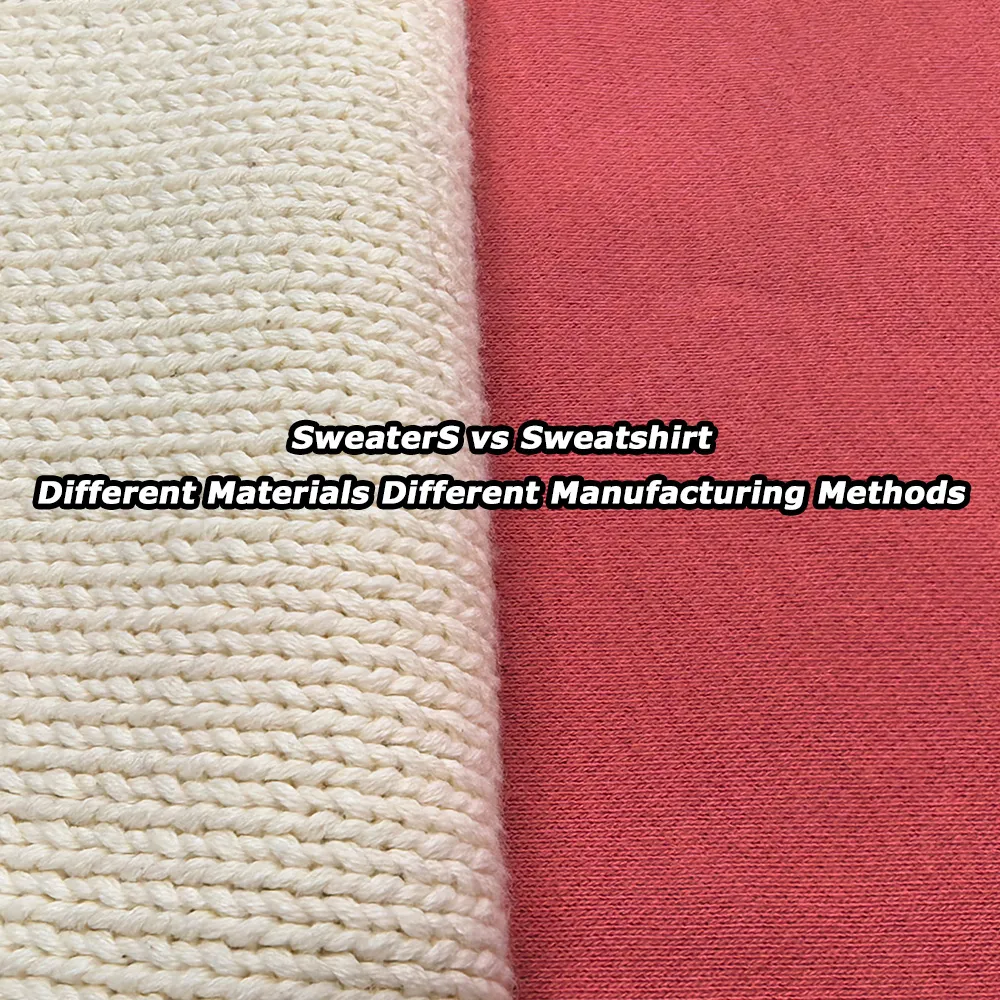
Sweatshirts and sweaters may look similar at first glance, but they are very different products from a manufacturing and sourcing perspective. For fashion brands and private-label buyers, the difference affects material selection, factory capability, customization methods, production cost and product positioning. This guide explains the key differences between a sweatshirt and a sweater so you can decide which construction is more suitable for your next collection.
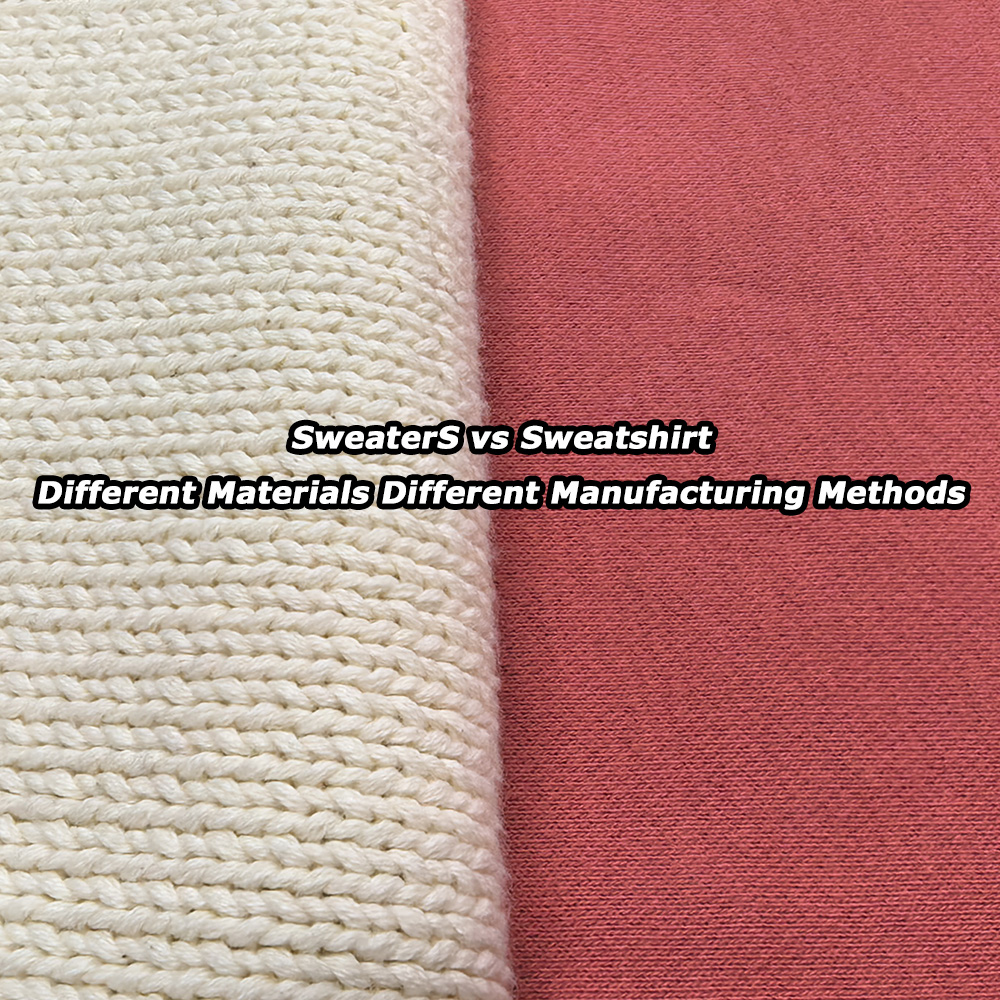
What Is a Sweatshirt?
A sweatshirt is typically a casual pullover made from knitted fabric that is cut into garment panels and sewn together. Common materials include cotton, polyester and cotton-polyester blends, and depending on the design and season, the fabric may have a brushed fleece interior, French terry construction or another knitted structure. Typical sweatshirt features include ribbed cuffs and hems, relaxed silhouettes and heavier fabric suitable for casualwear, streetwear, sportswear and promotional apparel.
From a manufacturing perspective, most sweatshirts follow a cut-and-sew process. The fabric is produced first, then cut according to garment patterns before the pieces are assembled by sewing. This construction also makes sweatshirts suitable for surface decoration such as screen printing, embroidery, appliqué and other graphic treatments.
What Is a Sweater?
A sweater is made primarily from yarn rather than from pre-produced fabric panels. Common sweater yarns include cotton, wool, cashmere, merino wool, acrylic, viscose and blended fibers. Instead of choosing only a finished fabric, sweater buyers also need to consider yarn composition, yarn count, knitting gauge, stitch structure and knitting technique.
Sweaters can be manufactured using several different methods. Fully fashioned knitting produces individual garment panels such as the front, back and sleeves close to their final shape. These panels are then joined during the linking or sewing process.
Some modern knitting systems can also produce whole garments directly on the machine with little or no panel assembly. This makes sweater development much more closely connected to the knitting program, yarn and stitch structure.
Sweatshirt vs Sweater: Quick Comparison
| Factor | Sweatshirt | Sweater |
|---|---|---|
| Main Raw Material | Knitted fabric | Yarn |
| Typical Construction | Cut and sew | Flat knitting / fully fashioned / whole garment |
| Common Materials | Cotton, polyester, blends | Cotton, wool, cashmere, acrylic, viscose, blends |
| Main Design Variables | Fabric weight, fit, print, embroidery | Yarn, gauge, stitch, jacquard, intarsia, shape |
| Common Applications | Streetwear, sportswear, casualwear | Fashion knitwear, premium collections, layering |
| Production Equipment | Cutting and sewing equipment | Flat knitting and linking equipment |
| Customization Focus | Graphics and garment details | Knit structure, yarn, pattern and garment shape |
The most important difference for buyers is not simply appearance, but how the garment is engineered and produced.
 How the Manufacturing Process Differs
 How the Manufacturing Process Differs
Sweatshirt Manufacturing
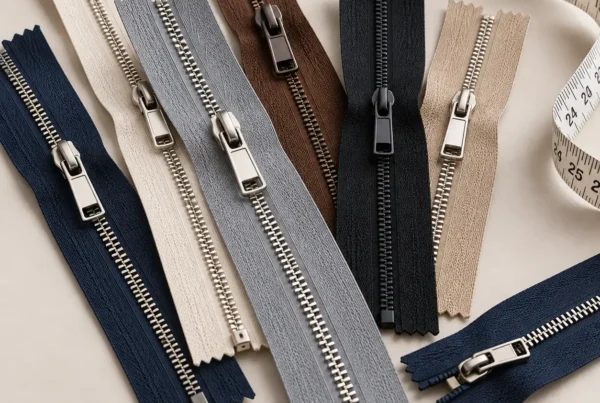
Sweatshirt production normally begins with finished knitted fabric. After the fabric is approved, garment patterns are placed and cut into components such as the front, back and sleeves. Sewing lines then assemble the garment and add details such as ribbing, pockets, hoods, zippers or labels.
Because the garment is cut from existing fabric, changes to graphics or trims can often be made without changing the fabric construction itself. This production model is well suited to large-volume casualwear programs.
Sweater Manufacturing
Sweater production begins with yarn and knitting specifications. Before production, the factory may need to confirm:
- yarn composition and yarn count
- knitting gauge
- stitch structure
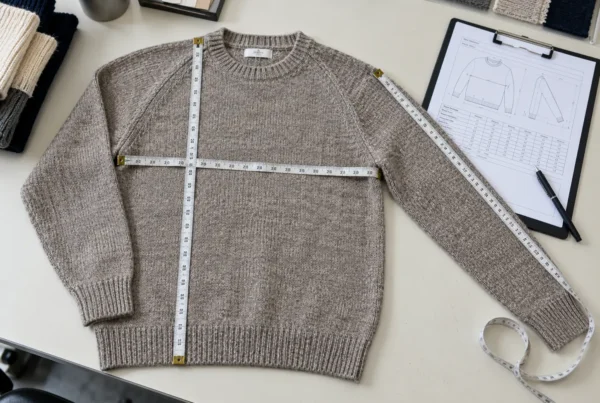
- measurements and fit
- color requirements
- jacquard or intarsia artwork
- neckline and rib construction
- finishing and washing requirements
For fully fashioned sweaters, the individual panels are knitted close to their required shape before being linked together. This can reduce cutting waste compared with conventional cut-and-sew construction, while also giving designers greater control over knit texture, structure and garment shaping.
For B2B buyers, this means sweater development usually requires closer communication between the design team and the factory during the sampling stage. From our experience developing custom knitwear for international brands, yarn choice, gauge, stitch structure and garment measurements often need to be evaluated together during sampling rather than treated as separate decisions.
Design and Customization Differences
The two product categories also offer different customization opportunities. For a sweatshirt, the base fabric and garment pattern are usually established first. Brands can then differentiate the product through printing, embroidery, patches, wash effects, labels, trims and fit.
With sweaters, the design can be created directly through the knitting structure itself. Jacquard and intarsia can knit graphics, repeating patterns and large color-blocked motifs directly into the garment. Cable, rib, pointelle and other stitch structures can change the texture and appearance without relying on additional printing. This is one reason sweaters are often used when a brand wants the garment construction itself to become part of the design.
MOQ, Lead Time and Cost: What B2B Buyers Should Know
There is no universal MOQ, lead time or unit price that applies to every sweatshirt or sweater factory. The actual requirement depends on factors such as material availability, yarn MOQ, color quantity, size range, design complexity, knitting gauge, decoration method and total order quantity.
For sweater projects, yarn selection can have a major effect on both price and MOQ. A basic cotton or acrylic sweater may be relatively straightforward to develop, while a cashmere blend, complex intarsia design or special yarn can require a different production setup.
Lead time should also be evaluated after the sample and specifications are confirmed rather than estimated only by product category. B2B buyers should therefore request quotations based on the actual design instead of relying on generic industry price ranges. For sweater-specific projects, sweater MOQ can also be influenced by yarn availability, color requirements and construction complexity.
Which Product Is Better for Your Brand?
Neither category is automatically better. The right choice depends on what you are trying to create.
A sweatshirt may be a stronger option when the collection focuses on casualwear, streetwear, sports-inspired styling or graphic decoration. A sweater may be more suitable when the design depends on yarn texture, knit patterns, gauge, jacquard artwork, intarsia, premium fibers or more structured knitwear development.
Some brands also use both categories within the same collection. For example, a streetwear brand may sell printed sweatshirts alongside jacquard knitted sweaters. A lifestyle brand may combine basic fleece products with premium wool or cotton knitwear for different price points. The important point is to choose the manufacturing method that matches the product rather than selecting a factory based only on the garment name.
What to Check Before Choosing a Manufacturer
Before placing an order, ask the supplier what type of equipment and production process will be used for your design. For sweater development, buyers should also confirm the factory’s experience with the required yarn, gauge and knitting technique. A supplier experienced with basic cut-and-sew garments may not have the programming and flat-knitting capabilities required for complicated knitwear. At the same time, a specialist sweater manufacturer may not be the right production partner for a conventional high-volume fleece sweatshirt program.
Providing a clear tech pack, reference sample or detailed design image can help the factory identify the correct construction method before sampling begins. Once sampling begins, a clear sweater sample approval checklist helps confirm measurements, yarn, gauge and finishing before committing to bulk production.
Sweatshirt vs Sweater: Final Takeaway
The main difference between a sweatshirt and a sweater goes far beyond styling. A sweatshirt is generally constructed from knitted fabric that is cut and sewn into a finished garment. A sweater is developed more directly from yarn, with the knitting structure playing a major role in the garment’s shape, texture and design. For B2B buyers, understanding this difference helps you communicate more accurately with suppliers, compare quotations more fairly and choose a factory with the right equipment for your product.
If your collection includes custom sweaters, cardigans, knitted hoodies or other knitwear, HDL Fashion supports OEM/ODM custom knitwear development from yarn selection and gauge recommendations through sampling and bulk production.
Our current custom sweater MOQ starts from 100 pieces per style, and sample development typically takes 3–7 working days, depending on design complexity and the completeness of your specifications. Send us your tech pack, reference image, design sketch or physical sample and our team can review the design and recommend a suitable production solution.