
The knitwear industry moves fast, and understanding the latest custom knitwear design trends helps B2B buyers secure the right products before competitors do. For the 2026-2027 season, clear design directions have emerged across textures, colors, silhouettes, and sustainability practices. Brands that act on these trends now position themselves for stronger retail performance and happier wholesale accounts.
Why B2B Buyers Should Track Custom Knitwear Design Trends Now
Sourcing decisions made in 2026 directly affect retail shelves in late 2027. Buyers who wait for trends to fully mature at the consumer level risk missing their production windows entirely. Successful knitwear brands plan collections 12 to 18 months ahead, translating emerging design directions into commercial products well before the season opens.
Custom knitwear design trends do not emerge in isolation. They reflect broader shifts in consumer behavior, material innovation, and manufacturing capability. A trend toward textured surfaces, for example, requires OEM factories with multi-gauge knitting machines and skilled technicians who can execute complex stitch patterns at scale. Buyers who understand this connection between design and production capability make smarter sourcing decisions.
Moreover, trend-responsive collections command higher wholesale margins. Retail buyers pay premium prices for products that feel current and differentiated. Generic, trend-agnostic knitwear, by contrast, competes almost entirely on price, a race that most B2B importers cannot and should not try to win.
The Rise of Textured Knits and 3D Surface Effects
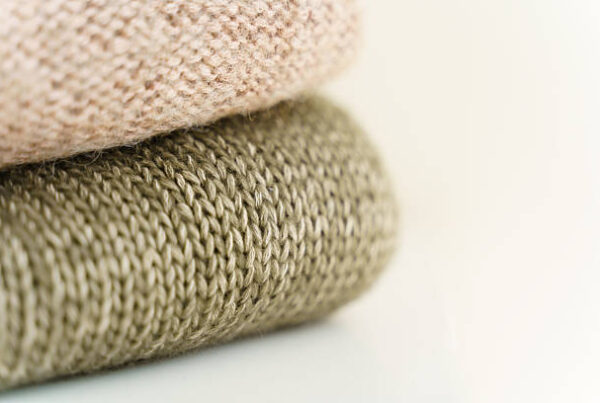
Flat, basic knits no longer satisfy today’s consumers. Buyers across Europe, North America, and the Middle East now demand garments with tactile appeal. Cable knits, popcorn stitches, honeycomb weaves, and ribbed reliefs add depth and perceived value to sweaters and cardigans. These textured finishes also photograph well for e-commerce, making them a favorite among direct-to-consumer brands competing for attention on digital shelves.
Three-dimensional surface effects represent an even bolder direction within current custom knitwear design trends. Raised floral motifs, braided trims, and layered applique techniques transform a standard sweater into a statement piece. These designs require careful sampling and experienced technicians, so B2B buyers should request textured swatches from their OEM partners early in the development cycle. A factory experienced in multiple knitting techniques can execute these designs across flat-knit, circular-knit, and hand-loom methods without compromising quality or lead times.
Key textured knit categories for 2026-2027 include:
- Cable and Aran knits remain the most commercially reliable textured option
- Popcorn and bobble stitches appeal to the women’s mid-to-premium segment
- 3D floral and botanical motifs match the broader nature-inspired trend
- Ribbed and waffle textures work well for unisex and men’s collections
- Braided cable panels with metallic thread accents for evening and occasion wear

Earth-Toned and Nature-Inspired Color Palettes
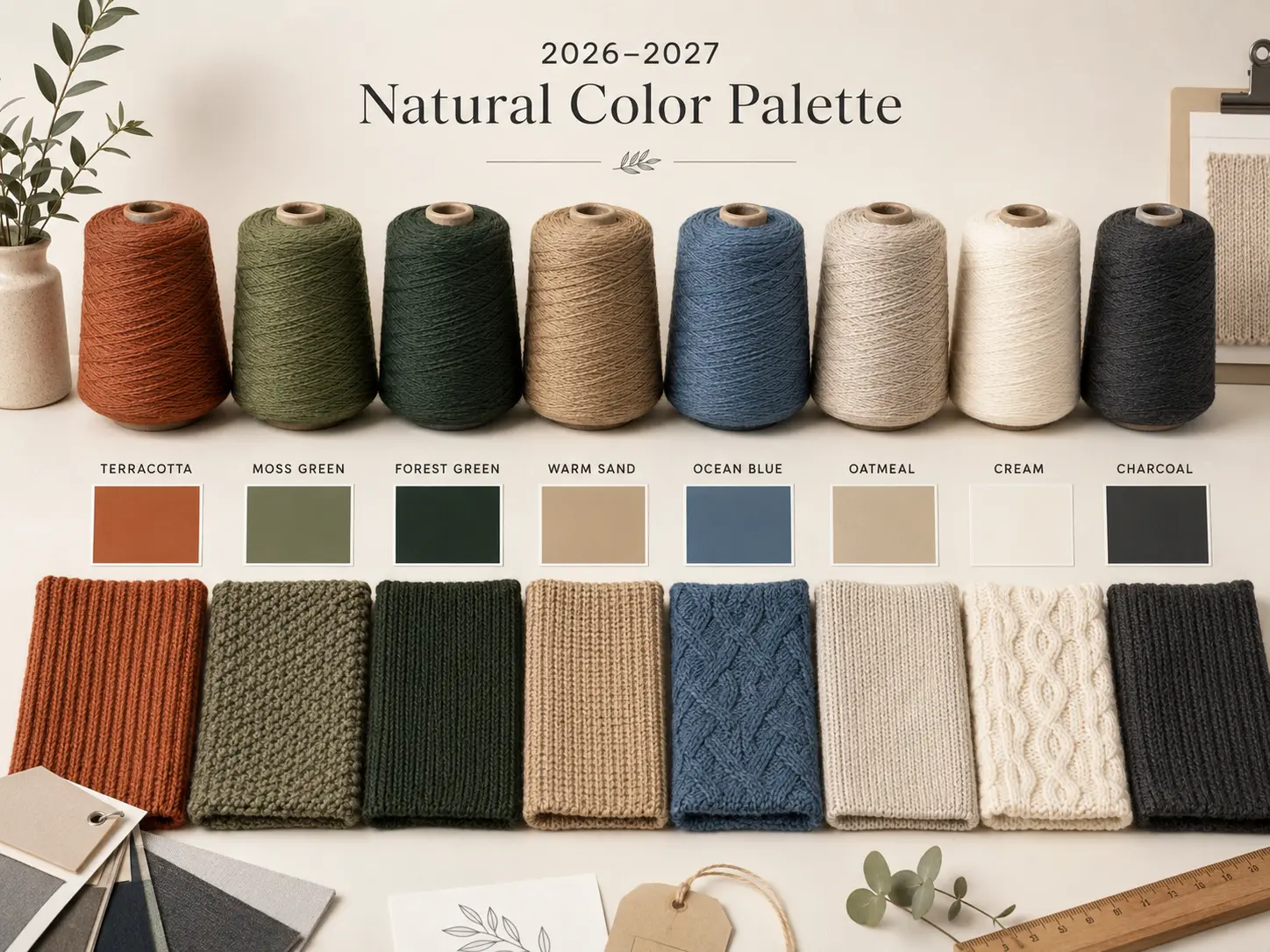
Color forecasting for 2026-2027 points strongly toward warm, grounding tones. Terracotta, burnt sienna, moss green, deep forest, warm sand, and ocean blue dominate the seasonal palette. These shades reflect a broader consumer desire for connection to nature and a deliberate move away from the synthetic neons and digital brights that defined earlier seasons.
Neutral bases remain essential for commercial success. Oatmeal, cream, charcoal, and taupe serve as collection anchors and account for roughly 60 percent of knitwear orders across major markets. The remaining 40 percent carries seasonal accent colors that differentiate a brand’s offering. B2B buyers should work with their OEM partners to confirm Pantone matching capabilities before committing to bulk production. A factory that offers in-house dyeing provides faster turnaround and tighter color consistency across batches, which proves especially valuable when producing knitwear across multiple product categories simultaneously.
Color-blocking continues as a key design technique within custom knitwear design trends. Paneled sweaters that combine two or three earth tones create visual interest without adding manufacturing complexity. This approach satisfies both aesthetic goals and cost-efficiency requirements, a balance that every B2B buyer appreciates.
Oversized Silhouettes and Relaxed Fits Continue to Dominate
Comfort-driven fashion shows no sign of retreat. Oversized cardigans, drop-shoulder pullovers, and slouchy turtlenecks remain top sellers across North America, Europe, and Asia-Pacific markets. The relaxed silhouette works especially well for unisex and gender-neutral collections, which continue to gain retail shelf space globally as consumer preferences shift away from rigid gender categories.
However, B2B buyers should note that oversized does not mean shapeless. Leading designers now pair generous volumes with structured details such as defined cuffs, contrasting ribbed hems, and belted waists. This balance between comfort and intentional design appeals to consumers who want ease without sacrificing a polished, put-together look. The key insight for sourcing professionals involves communicating these precise fit specifications to OEM partners, since oversized grading differs significantly from standard sizing across all markets.
Key oversized garment categories for 2026-2027 include:
- Chunky-knit boyfriend cardigans in mid-weight wool blends
- Drop-shoulder crewneck sweaters with side slits
- Oversized polo-collar knits bridging casual and smart-casual
- Slouchy funnel-neck pullovers in cashmere and cashmere blends
- Wide-sleeve batwing sweaters for the premium women’s segment
Sustainable and Circular Design Takes Center Stage
Sustainability has graduated from a nice-to-have to a non-negotiable requirement. Custom knitwear design trends for 2026-2027 integrate eco-conscious material choices and circular design principles as core product development requirements rather than afterthoughts. European and North American retailers increasingly mandate recycled content minimums and certified supply chains in their vendor agreements.
Recycled wool, reclaimed cashmere, organic cotton, and TENCEL Lyocell blends lead the sustainable fiber market. These materials perform comparably to virgin fibers while satisfying both consumer expectations and tightening regulatory requirements for lower environmental impact. Additionally, circular design thinking encourages brands to consider end-of-life scenarios during the initial design phase. Sweaters designed for disassembly or made from mono-materials recycle far more easily than blended garments that mix natural and synthetic fibers.
Certifications provide essential verification. Buyers should prioritize OEM partners that hold OEKO-TEX Standard 100, GOTS, or GRS certifications. These credentials confirm that materials and production processes meet internationally recognized environmental and safety standards. Working with a factory that already maintains these certifications saves months of audit time and significantly reduces compliance risk for importers.
B2B buyers who incorporate these sustainable custom knitwear design trends into their collections also gain a powerful marketing advantage. End-consumer surveys consistently show that verified sustainability claims influence purchase decisions, particularly among the valuable millennial and Gen Z demographic segments.
Technology-Integrated Knitwear: Smart Fibers and Performance Blends
Performance attributes increasingly appear in fashion knitwear. Temperature-regulating merino blends, moisture-wicking cotton-nylon mixes, and anti-bacterial bamboo fibers push knitwear beyond pure aesthetics. Today’s consumers expect sweaters that work across seasons and activities, not garments limited to a single climate or occasion.
The athleisure-knitwear crossover continues to evolve. Lightweight knit hoodies, performance polo sweaters, and travel-friendly wrinkle-resistant knits appeal to hybrid work-lifestyle consumers who move between office, home, and social settings throughout the day. B2B buyers should explore stretch-yarn integrations that add recovery and shape retention without compromising the natural hand feel that customers associate with premium knitwear.
Furthermore, UV-protective and quick-dry finishes add functional marketing angles that resonate with specific retail channels. These features appeal especially to resort wear, golf apparel, and outdoor lifestyle brands, all growing segments within the broader knitwear market. A capable OEM partner can recommend compatible yarns and finishing treatments tailored to specific performance requirements, turning a standard sweater into a multi-functional garment.
How B2B Buyers Can Act on Custom Knitwear Design Trends
Translating trend awareness into commercial success requires a structured approach. The table below maps each major direction within today’s custom knitwear design trends to concrete sourcing actions and recommended timelines.
| Trend Direction | Design Application | B2B Sourcing Action | Recommended Timeline |
|---|---|---|---|
| Textured and 3D Knits | Cable, popcorn, applique surfaces | Request textured swatches from OEM factory; confirm multi-gauge capability | Sample by Q4 2026 |
| Earth-Toned Palettes | Terracotta, moss, sand, ocean blue | Confirm Pantone matching and in-house dyeing availability | Lab dips by Q1 2027 |
| Oversized Silhouettes | Drop-shoulder, chunky cardigans, funnel necks | Provide detailed size grading specs across all target markets | Fit samples by Q4 2026 |
| Sustainable Materials | Recycled wool, organic cotton, TENCEL blends | Verify OEKO-TEX, GOTS, or GRS certifications | Material sourcing by Q3 2026 |
| Performance Knitwear | Temp-regulating, moisture-wicking, UV-protective | Test yarn blends for hand feel, durability, and wash performance | Yarn trials by Q3 2026 |
B2B buyers who align their sampling and production calendars with these timelines gain meaningful first-mover advantages. Early sampling also leaves room for iterations, which proves especially valuable when working with complex textured or performance-driven designs. A rushed development cycle, by contrast, often forces compromises on quality and fit that hurt retail sell-through rates.
When developing custom collections, partnering with an experienced OEM manufacturer simplifies trend adoption significantly. A factory that offers both OEM and ODM services can provide design suggestions based on its production experience with multiple international brands across different markets and price segments. For a deeper understanding of the end-to-end customization workflow, refer to our Complete OEM/ODM Sweater Customization Guide.
Material Innovation: Blended Yarns for the Next Season
Yarn blending opens new creative possibilities without inflating costs. Wool-cashmere blends deliver luxury hand feel at accessible price points that appeal to the mid-market segment. Cotton-linen blends offer breathability and drape for spring-summer knitwear collections. Merino-silk blends add subtle sheen and fluid drape for premium women’s wear lines.
The blended yarn trend also supports sustainability goals. Recycled polyester blended with natural fibers reduces virgin material consumption while maintaining durability and shape retention through repeated wear and washing. B2B buyers should discuss blend ratios with their OEM partners early in the development cycle, since yarn sourcing lead times vary significantly by fiber type, origin, and seasonal availability.
Additionally, unusual fiber combinations create unique selling propositions. Alpaca-wool blends offer exceptional warmth-to-weight ratios. Hemp-cotton knits appeal to eco-conscious streetwear brands. Cashmere-silk blends deliver the ultimate luxury proposition for high-end department store programs. A knowledgeable OEM partner helps buyers navigate these choices, balancing creative ambition with production feasibility and cost constraints.
Conclusion: Preparing Your 2026-2027 Knitwear Collection
Custom knitwear design trends for 2026-2027 reward buyers who plan ahead and act decisively. Textured surfaces, earth-toned palettes, oversized fits, sustainable materials, performance yarns, and innovative fiber blends define the season. Each trend direction presents a distinct sourcing opportunity, and the most successful brands combine multiple design directions into cohesive, commercially viable collections.
Start by aligning your design brief with your OEM partner’s technical capabilities and material access. Request trend-specific swatches early, confirm certification status, and build realistic timelines around yarn availability and factory sampling capacity. The brands that move now on these custom knitwear design trends will arrive at market with differentiated products, stronger margins, and satisfied retail partners. For B2B knitwear production support, explore WRAP-certified manufacturing standards to ensure your supply chain meets global compliance requirements.