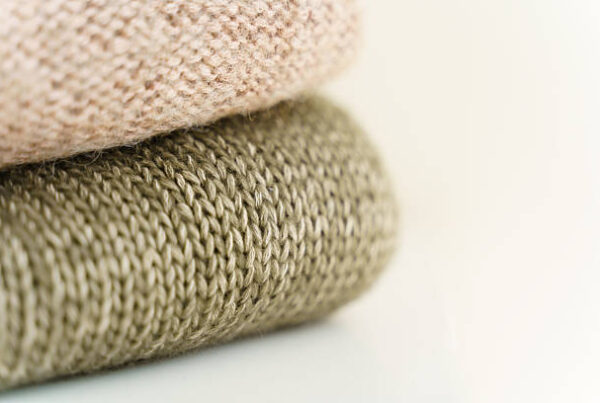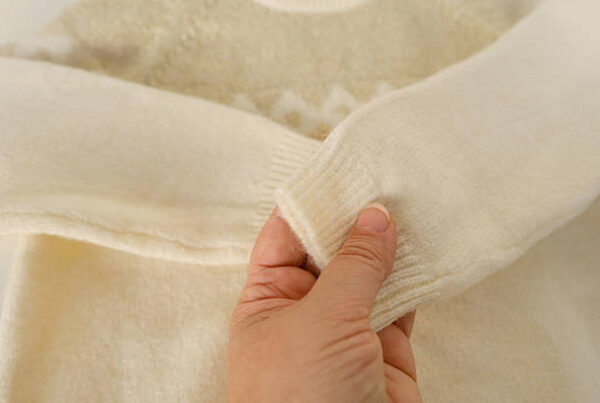
A sweater manufacturer that works well for one brand can be the wrong fit for another. Unit price alone reveals little about whether a factory can handle your yarn requirements, develop the stitch structures your designs call for, maintain sizing consistency across a multi-size order, or deliver on schedule. Finding a reliable sweater manufacturer means checking experience, sampling ability, yarn sourcing, quality control, capacity, communication and documentation.
The seven criteria below cover what B2B buyers should examine when evaluating a knitwear supplier — whether for a private label collection, seasonal replenishment, or a long-term OEM or ODM partnership.
1. Relevant Knitwear Manufacturing Experience
Common knitwear production methods include shaped panels made on flat knitting machines, which are linked or seamed into garments, and knitted fabric made on circular machines, which may be cut and sewn depending on the product construction. A factory that makes woven shirts or denim may not understand these processes.
When evaluating a custom sweater manufacturer, confirm whether their experience aligns with your product type and target market:
- Product categories. Men’s, women’s, baby and kids’ knitwear each involve different fits and safety requirements.
- Target markets. Suppliers serving the European Union should understand the applicable REACH restrictions and buyer-specific chemical requirements. Suppliers producing children’s apparel for the United States should be familiar with applicable CPSC requirements, while textile and wool labeling should follow relevant FTC rules. Applicable requirements vary by product type, target market and buyer specifications. Buyers should confirm compliance requirements with their importer, testing laboratory or compliance adviser before production.
- Yarn experience. Acrylic, cotton, merino wool and cashmere each require different tension settings, washing and finishing methods.
- Gauge range. A 3-gauge chunky knit and a 14-gauge fine knit run on different machine gauges with different yarn counts.
- Stitch and pattern development. Cable, jacquard, intarsia, rib, tuck stitch and pointelle each need specific programming and operator skill.
- Linking and finishing. The way panels are linked or seamed affects seam appearance, durability and cost.
Ask the factory to show samples or production records of similar work. A manufacturer that has produced a comparable gauge, yarn and construction can move from design review to sampling with fewer revisions.
2. Product Development and Sampling Ability
A reliable OEM sweater manufacturer assesses whether a design is ready for production and identifies potential issues before sampling or bulk production begins.
The sampling phase should cover:
- Review of reference images, design drawings or tech packs
- Yarn recommendation matched to target hand feel, weight and price point
- Gauge selection based on desired appearance and garment structure
- Stitch development and pattern programming (jacquard, cable, intarsia)
- Measurement adjustment when adapting a design from a different material or gauge
- Sample revisions, with each change recorded against the previous version
- Pre-production sample confirmation
Sample development time varies according to the design, yarn availability, stitch structure and number of revisions. A straightforward style in stock yarn can move quickly; a design calling for custom-dyed specialty yarn with a complex pattern takes longer. Before bulk production, confirm measurements, color, yarn, stitch structure, trims, labels and packaging on the approved pre-production sample.
3. Yarn and Material Sourcing
Yarn affects hand feel, weight, pilling, warmth, durability, care and cost. A manufacturer that understands yarn selection can match the specification to the price point; one that treats all fibers the same will produce inconsistencies.
Buyers should confirm these points before sampling:
- Fiber composition. 100% natural, 100% synthetic or blended — each has different knitting behavior, shrinkage and care properties.
- Yarn count. Nm or Ne number affects the gauge the yarn can run on and finished garment weight.
- Color availability. Stock-service colors may shorten yarn preparation time and reduce custom-dyeing minimums, while custom colors usually require additional lead time and minimum quantities.
- Minimum yarn order. Specialty fibers and custom colors often require a minimum per color, which flows through to the garment MOQ.
- Dye lot consistency. Where feasible, bulk production should use the same dye lot for each color. When multiple dye lots are necessary, agree on shade approval, lot separation and color consistency checks before production.
- Testing requirements. Fiber composition, colorfastness, pilling resistance and dimensional stability can be tested to the buyer’s market requirements.
- Certification documents, when required. If the buyer needs OEKO-TEX, GOTS, RWS or similar documentation, confirm the applicable certification scope and required documents at the material sourcing stage.
- Substitute yarn options. If the preferred yarn exceeds the budget, ask for alternatives with a similar look and weight.
For first-time buyers, requesting physical yarn swatches or color cards before sampling sets expectations early.
4. Quality Control System
Sweater quality control is not a single end-of-line check. A knitwear manufacturer with a structured QC process inspects at multiple production stages.
A complete quality control workflow for knitwear should include:
- Incoming yarn inspection. Checking yarn count, color, evenness and coning quality.
- Knitting inspection. Monitoring stitch density, pattern alignment and defect rate.
- Linking and seam inspection. Verifying seam strength, alignment and appearance.
- Measurement checking. Comparing key measurements against the approved spec.
- Washing and finishing inspection. Checking shrinkage, hand feel, colorfastness and pressing quality.
- Appearance inspection. Checking for stains, uneven stitches and trimming quality.
- Label and packaging inspection. Verifying care labels, brand labels, hang tags, polybag type and carton markings.
- Final inspection. Sampling finished goods based on agreed criteria before shipment.
Before production, agree on measurement tolerances, defect classification, approved color standard, shrinkage and pilling requirements, garment weight when relevant, and packaging standards. Inspection criteria should be agreed before bulk production.
5. MOQ, Production Capacity and Lead Time
MOQ, capacity and lead time are linked. A buyer who asks only “what’s your MOQ” and “how fast can you deliver” gets numbers that may not apply to their product.
MOQ is evaluated according to the yarn type, color availability, design complexity, craftsmanship and order requirements. Stock yarn in fewer colors may support a lower MOQ than custom-dyed specialty fibers. Plain-stitch designs may also be easier to produce in smaller quantities than styles combining intarsia, embroidery and hand-crochet details.
Production capacity should be discussed in terms of current availability, not posted factory figures. Ask whether your target delivery window aligns with the factory’s current production schedule.
Lead time is made of several sequential stages. Confirm the timeline for each:
- Yarn preparation (stock or custom-dyed)
- Sampling
- Sample revisions
- Bulk production
- Inspection
- Shipping
Sample and bulk production schedules depend on yarn availability, design complexity, approval speed, order quantity and the current production schedule. Confirming the timeline for each stage is more useful than accepting a single aggregate number without the breakdown.
6. Communication and Project Management
In B2B knitwear, communication quality directly affects sample accuracy and delivery. Delayed responses to measurement or material questions can slow sample approval and production.
During the inquiry and sampling phases, assess whether the supplier:
- Asks clear technical questions instead of agreeing to all requests
- Confirms specifications in writing
- Replies within a reasonable time
- Identifies production risks early
- Provides sample and production updates without prompting
- Records approved changes and shares updated documentation
- Confirms packaging, labeling, shipping marks and document preparation
Important changes should not exist only in chat history. Update the tech pack, measurement chart or written specification so the factory floor works from the same version.
7. Compliance, Documentation and Transparency
Certification claims should be verified before they are used as part of a sourcing or compliance decision. When a supplier displays a certification logo, buyers should request the relevant document and check its validity and scope.
When a supplier provides a certification document, verify:
- Company name — does it match the supplier?
- Certificate number — can it be checked on the issuing body’s database?
- Issuing organization — is it a recognized certification body?
- Issue date and expiry date — is the certificate still valid?
- Certification scope — what exactly is covered?
- Factory address — does it match the production site?
- Covered products or materials — does the scope include your product category?
Document types to distinguish:
- Factory-level audit or management-system certification may apply to the production facility, depending on the audit program or certification scope.
- Product or material certification may apply to yarns, fabrics, garment components or finished products, depending on the certification scope. For GOTS orders, verify the supplier’s Scope Certificate and request a Transaction Certificate when proof is needed.
- Product testing report applies to a specific test on a specific sample
- Transaction or shipment documents apply to one order, not ongoing production
Buyers should request current documentation from their selected supplier and confirm whether the certification covers the factory, material or finished product.
Information to Prepare Before Contacting a Sweater Manufacturer
The table below lists the information a knitwear manufacturer needs for a realistic quotation.
| Information | Why It Matters |
|---|---|
| Reference image or tech pack | Helps the supplier understand the design, stitch structure and construction |
| Yarn composition | Affects hand feel, performance, care labeling and cost |
| Gauge or desired fabric weight | Affects the appearance, structure and yarn consumption |
| Measurement chart | Supports accurate sample development and size grading |
| Quantity by color and size | Helps assess MOQ, yarn planning and production scheduling |
| Logo and trim files | Clarifies customization requirements and placement |
| Label and packaging details | Affects quotation and production preparation |
| Target delivery date | Helps evaluate production feasibility and booking |
| Testing requirements | Helps confirm materials, inspection plans and documentation |
| Delivery destination | Helps assess shipping options and transit time |
Sweater Manufacturer Evaluation Checklist
- Does the supplier specialize in knitwear, not just general garment manufacturing?
- Has the supplier made products similar to yours in gauge, construction and fiber?
- Can the supplier review a tech pack, design drawing or reference sample and provide technical feedback?
- Are yarn composition, color and specifications confirmed in writing?
- Are MOQ and lead time explained with the conditions that affect them?
- Are quality standards and inspection criteria confirmed before production starts?
- Can the supplier provide valid, verifiable documents when certifications are required?
Custom Knitwear Development with HDL Fashion
HDL Fashion provides OEM and ODM knitwear development for men’s, women’s, baby and kids’ collections from a 5,000 m² factory with more than 20 years of knitwear experience. Buyers can provide reference images, samples, measurement charts or tech packs for an initial production assessment. Customization may include yarn, color, stitch pattern, sizing, labels and packaging. MOQ, sampling time and bulk production schedules are evaluated according to the specific project requirements.
Identifying a reliable sweater manufacturer takes more than price comparison. Clear specifications and transparent communication help reduce sampling delays and quality issues. Before requesting a quotation, prepare the design reference, material requirements, size range, quantity by color, labeling details and target delivery schedule. Brands can send HDL Fashion these materials for an initial assessment.
Frequently Asked Questions
How do I verify whether a sweater manufacturer is reliable?
Review the supplier’s knitwear-specific experience and past production records. Evaluate how they handle sample development, written specifications, communication and quality control. Request verifiable documentation and check whether technical questions receive specific answers rather than general assurances.
What information should I provide for a sweater quotation?
Provide the design reference (tech pack, drawing, sample or clear photos), yarn composition or target hand feel, gauge or weight preference, measurement chart, quantity per color and size, logo and trim requirements, label and packaging details, and a target delivery date.
What affects the MOQ for custom sweaters?
MOQ is influenced by yarn type (stock or custom-dyed), number of colors, design complexity, craftsmanship, gauge, trim and label requirements, and how the total quantity is split across sizes and colorways. MOQ is evaluated according to the specific project requirements.
How long does custom sweater sampling take?
Sampling time depends on design complexity, yarn availability, stitch structure, the number of revisions and the factory’s sample workload. A simple style in stock yarn can be ready quickly; a complex design using custom-dyed yarn takes longer. Request a timeline per stage rather than a single number.
Should I request factory certifications?
Whether to request certifications depends on your sales market, customer requirements and product type. When a supplier provides a certificate, verify the company name, certificate number, issuing body, validity dates, and whether the scope covers the factory, material or finished product.
Can a sweater manufacturer work from reference photos?
Reference photos support an initial assessment — the factory can evaluate general style, stitch appearance, silhouette and approximate gauge. For accurate development, provide measurements, material preference, color references, construction details and quantity alongside the photos.