
Not every change after the first sweater sample requires another full garment sample. Depending on what the change affects and what still needs physical verification, a buyer and manufacturer may confirm it through an updated written specification, a swatch or test panel, or another garment sample. This article provides a practical framework for deciding which verification route may be appropriate. If you are deciding how many rounds to expect overall, see our guide to how many sweater sample revisions are needed.
Three Possible Verification Routes for a Change After the First Sample
A practical way to evaluate post-sample changes is to consider three possible verification routes. The appropriate route depends on how the change affects the approved specification, garment construction, fit, appearance and production risk:
- Written specification update. Some changes may be documented without another knitted sample when both sides agree that physical verification is not required.
- Swatch or panel review. Some material, color, stitch or motif changes can be evaluated on a representative swatch or test panel before bulk.
- Garment resample. Changes that materially affect fit, construction, proportions, drape or several interacting variables may need another garment sample.
These are decision routes rather than fixed categories. The same type of change may require different verification depending on its scale and the agreed approval process.
Changes That May Be Confirmed in Writing
Some changes that do not alter the knit, color, fit or other physically approved requirements may be handled through an updated written specification when no additional physical verification is needed. Common examples include:
- Care label wording and the fiber content statement, as long as it matches the actual material
- Hang tag copy, price ticket, and barcode information
- Packaging details such as polybag type, folding method, or carton markings
- A trim or button swap within an already-approved color and material range
- Logo or label placement already shown on the approved spec sheet
These changes may not require another knitted garment when the revised requirement is clear and both sides agree that no additional physical verification is needed. Update the controlling specification and record the approval before bulk production. For trims, labels or packaging, confirm whether the project requires a physical reference, photo approval or written confirmation.
Changes That May Be Evaluated on a Swatch or Panel
Some changes affect a surface quality that is hard to judge from a drawing or a written note alone. These may be evaluated on a representative swatch or test panel before bulk:
- A color shade adjustment after the first yarn dip or knitdown
- A stitch density change, which may affect hand, weight, measurements or fit
- A small motif resized, or a single color placement adjusted
- A yarn substitution, where twist, plying, supplier or finishing may also affect hand, drape or weight
A swatch or panel can be appropriate when it represents the property that needs approval without hiding effects on fit, dimensions or construction. If the change may alter the garment as a whole, the swatch should be treated as an intermediate check rather than an automatic substitute for a garment resample. Our color approval guide explains how yarn dips and knitdown swatches work for shade changes.
 Changes That May Require a Full Garment Resample
 Changes That May Require a Full Garment Resample
When a change materially affects structure, fit, fabric behavior or several interacting parts of the garment, a swatch alone may not provide enough information for approval. In these cases, another garment sample may be needed to evaluate the revised result before bulk. Examples include:
- A gauge change, which can affect stitch size, weight, hand and finished measurements
- A yarn fiber or blend change, which can affect drape, hand, weight and fabric behavior
- A silhouette change, such as moving from a relaxed to a fitted body
- A neckline, collar, cuff, or hem construction change
- A sleeve change, such as set-in to raglan
- A pattern or colorwork change that alters motif placement across seams
These changes can be more involved because they may affect several parts of the garment at the same time. For the differences that can legitimately appear between a sample and bulk, see why sweater samples differ from bulk production.
The Change Matrix: What Each Change Touches and a Possible Verification Route
The table below groups common post-sample changes by what they affect and shows possible ways they may be verified. Use it as a rough decision guide rather than a fixed rule. Use it as a rough map when you are deciding how to request a change.
| Change after the first sample | What it touches | Possible Verification Route |
|---|---|---|
| Care label or hang tag copy | Documentation | Written confirmation; physical proof if required |
| Packaging or carton markings | Documentation | Written or artwork approval; physical reference where required |
| Trim or button swap within an approved range | Component | Written, photo or physical approval depending on the change |
| Color shade adjustment | Surface color | Yarn dip, color reference or knitdown swatch depending on yarn and project |
| Stitch density adjustment | Hand, weight, measurements, fit | Knitdown panel; garment re-evaluation if measurements or fit may change |
| Small motif resize | Pattern | Swatch/panel or garment sample depending on placement and scale |
| Yarn substitution (same fiber and count range) | Hand, weight, drape | Swatch/panel; garment sample if hand, drape, weight or fit changes materially |
| Gauge change | Stitch size, weight, hand | Construction and measurement re-evaluation; may require garment resampling |
| Yarn fiber or blend change | Drape, hand, weight | Physical material evaluation; may require garment resampling |
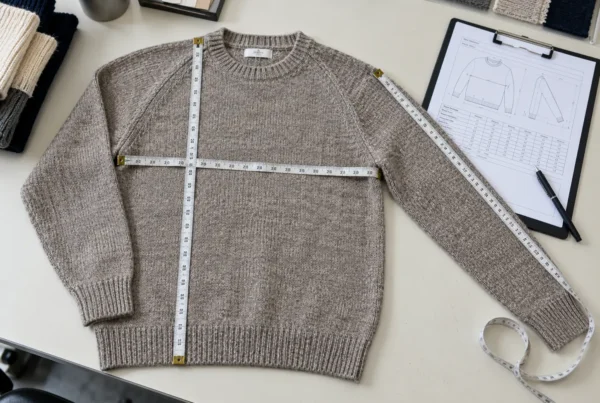
| Silhouette or fit change | Proportions, measurements | Garment resample may be appropriate |
| Neckline, collar, or sleeve construction | Structure, fit | Garment resample may be appropriate |
| Pattern placement restructure | Seam matching, motif position | Panel or garment resample depending on seam placement and scale |
What a Verification Route May Mean for Lead Time and Cost
The verification route can affect both schedule and development cost, but the impact depends on the specific change and production stage. A written update may involve documentation, sourcing or artwork work even when no new garment is knitted. A swatch or panel requires additional knitting and approval, while a garment resample adds another physical development step.
The commercial impact should therefore be confirmed project by project. Before approving a change, ask the manufacturer whether it affects material sourcing, programming, knitting, finishing, approval timing or the planned production schedule.
How to Submit a Change Request That Does Not Waste a Round
The way a change is communicated often determines whether it is resolved in one pass or needs another round. A clear request groups changes, ties them to the original reference, and states the priority:
- List every change in one message rather than sending them one at a time.
- Reference the exact area, such as “right cuff, 2 cm longer,” rather than “make the cuffs better.”
- Attach a marked-up image or note the change against the original tech pack.
- Separate changes that must be made from changes that are nice to have.
- Confirm which changes you want applied to bulk and which still need a physical check.
Grouped, specific feedback lets the factory evaluate the changes together and confirm an appropriate verification route for each. It also prevents parallel or conflicting instructions.
Locking the Change Before Bulk
Once the change is agreed, record it in the current specification before bulk production. Before you authorize production, confirm:
- The updated tech pack or spec sheet reflects the change
- The approved swatch, panel, or resample is signed off, where one was required
- The revised color, trim, or label detail is noted in writing
- The change’s impact on schedule and cost has been confirmed
Record every approved change in the current controlling written specification. Where a swatch, panel or garment sample was used for approval, retain it as a supporting physical reference where applicable. Before bulk, confirm that both sides are working from the same specification version and approved references. See our sample approval checklist for the full pre-bulk review, and our development sample vs PP sample guide for how different approval checkpoints may be used during development.
Frequently Asked Questions
Can I change the color after the first sample without making a new sample?
A color change does not automatically require another full garment sample. Depending on the yarn source, color process and approval requirements, the revised shade may be reviewed through a yarn color reference, dip or knitdown swatch. If the new color affects other design or construction decisions, additional physical verification may still be appropriate.
Can I change the yarn after the first sample?
It depends on how different the new yarn is. A substitution with a similar fiber and count may need only a swatch or panel, but twist, plying, supplier or finishing can also affect hand, drape or weight. A change to a different fiber or blend changes drape, hand, and weight, so it may require a full garment resample to judge the result.
Can I change measurements in writing instead of making a new sample?
Small measurement adjustments can sometimes be handled in writing if they do not change the overall fit or construction. Larger changes to the body, shoulder, or armhole may need a resample so the new fit can be verified physically before bulk.
What changes may be approved without another full garment sample?
Documentation, packaging, label or certain previously approved component changes may be confirmed without another full garment sample when they do not alter fit, construction, material behavior or other approved requirements. The required evidence can still be written approval, artwork proof, photos or a physical reference depending on the project.
How much does resampling cost, and how long does it take?
The cost and time depend on the specification, the yarn, and the scope of the change. The cost and timing depend on the specification, yarn, production stage and scope of the change. A swatch or panel may require less knitting than a full garment, but the actual schedule also depends on material availability and the approval process. Ask the manufacturer to confirm the project-specific impact before authorizing the change. The factory should confirm the exact impact of the change before you authorize it.
How do I phrase a change request so it does not waste a round?
Group all changes into one message, reference the exact area and measurement, attach a marked-up image, and separate required changes from optional ones. Specific, consolidated feedback can reduce avoidable back-and-forth compared with vague or piecemeal comments.
Send Your Change List With the Reference
If you have the first sample in hand and need to make changes, send us your change list together with the original reference image or tech pack, your target yarn and color, and the quantity, size range, and delivery date you are working toward. Our team can review the requested changes, identify an appropriate verification route, and discuss whether updated documentation, a swatch or panel, or another garment sample may be needed before bulk.