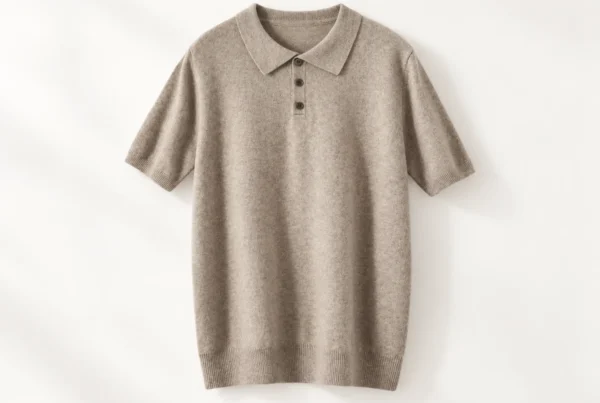
A development sample and a pre-production (PP) sample serve different purposes. A development sample is mainly used to evaluate and refine the design, silhouette, fit and construction. Where a PP sample forms part of the agreed approval process, it is used later to verify the approved production specification before bulk. Understanding what to review at each checkpoint can reduce avoidable resampling and approval delays.
What a Development Sample Confirms
A development sample is an early physical version used to evaluate the design, silhouette, fit direction, yarn feel and construction. Depending on the project, it may use the intended materials or suitable development substitutes while open specifications are still being refined.
At this stage the goal is design direction, not final specification. A development sample may use a close-match yarn if the exact fiber or color is not yet sourced, and it may not carry final trims, labels, or packaging. What matters is whether the shape, drape, neckline, cuff and hem treatment, and pattern placement match the design intent. It is the first step in a longer sequence; for the full workflow, see our guide to the custom sweater sampling process.
The development sample answers questions such as:
- Does the silhouette and proportion match the design?
- How does the yarn feel, weigh, and drape?
- Do the neckline, collar, cuff, and hem sit correctly?
- Are the stitch and pattern placement right?
- Does the construction approach (fully fashioned or cut-and-sew, linking, seaming) work for the design?
What a PP Sample Confirms
Where a pre-production (PP) sample forms part of the agreed approval process, it is used to verify the approved production specification before bulk. It should reflect the intended production yarn, gauge, colors, construction and relevant trims as closely as practical. The exact PP-sample requirements depend on the project, buyer approval process and production setup.
The main purpose of the PP sample is to verify production requirements rather than to develop the design from scratch. The buyer may review measurements against the agreed specification and tolerance, finished appearance, approved color references, trims and workmanship. This is the same type of review covered in our sample approval checklist. Where an approved physical or PP sample is retained, it can serve as a supporting production reference together with the controlling written specification and agreed acceptance criteria.
Development Sample vs PP Sample at a Glance
| Stage | Development Sample | PP Sample |
|---|---|---|
| Purpose | Evaluate and refine design, silhouette, fit and construction | Verify the approved production specification before bulk, where required |
| Yarn and color | Development or approved yarn depending on project stage; color may still be under review | Intended production yarn and approved color references |
| Gauge and stitch | Proposed gauge and stitch structure for development review | Intended production gauge and stitch structure |
| Trims and labels | May be omitted, substituted or still under development | Relevant approved trims and labels where included in the PP scope |
| Measurements | Reviewed against the current development specification, often in a selected reference size | Checked against the approved specification and agreed tolerance |
| Result of approval | Development direction confirmed or revised | Pre-production approval where required |
What to Approve at the Development Sample Stage
Approval at this stage focuses on design, fit and construction while some production details may still be open. Work through the following before you move on:
- Silhouette and overall proportion against your reference
- Fit direction — how the garment sits on the body or form
- Yarn hand, weight, and drape
- Neckline, collar, cuff, and hem shape
- Stitch and pattern placement, including cables, jacquard, intarsia, and stripes
- Construction method — fully fashioned or cut-and-sew, linking, and seaming
At this stage, review the current measurements and fit targets carefully, while recognizing that they may still be revised before the production specification is finalized. Color approval may also follow a separate process depending on the yarn source and project. Record feedback as specific comments rather than general notes such as “make it better,” so the factory can interpret the required changes clearly.
What to Approve at the PP Sample Stage
If a PP sample is part of the agreed approval process, use it to verify the production specification before final sign-off. Check the applicable items against your tech pack and approved references:
- Measurements against the approved specification, within the agreed tolerance
- Final color against the approved shade or other agreed physical color reference
- Finished appearance and any agreed wash, shrinkage or dimensional-change checks where applicable
- Final trims, labels and packaging included in the approved specification
- Logo or branding method
- Workmanship, including seams, linking and finishing
Once the production specification and required approvals are confirmed, later changes may require additional sampling or approval and may affect the production schedule.
What Happens When You Change Something After Each Stage
Changes are generally easier to evaluate while the design and production requirements are still being developed. Changes requested after the required pre-production approvals may require updated specifications, revised material or color approval, additional sampling or production rescheduling, depending on what has changed.
Mistakes to avoid at each stage:
- Skipping an agreed pre-production approval step simply to save time
- Leaving major design decisions until the final pre-production review
- Changing yarn, color, construction or measurements after the relevant approval without reviewing the downstream impact
- Treating any physical sample as the sole production reference without an agreed written specification
In our 20+ years of knitwear manufacturing, we have found that a clearer handoff from development decisions to the final written production specification can reduce avoidable questions before bulk.
Frequently Asked Questions
Is a development sample the same as a PP sample?
No. A development sample is primarily used to evaluate and refine design, fit and construction. A PP sample, where required, is used later to verify the agreed production specification before bulk. Materials, sample sizes and approval steps can vary by project.
Can I skip the PP sample to save time?
Not every project requires a separate PP sample. The buyer and manufacturer should agree on the required approval route before bulk. If a PP sample has been included as an approval checkpoint, skipping it without another agreed verification step can leave production details unconfirmed.
How many development sample rounds are needed before a PP sample?
The number depends on the design and how specific the feedback is. A simple style with clear references may need fewer rounds; a complex pattern or a new yarn may need more. Each round should move the sample closer to the final specification.
What should I send so the development sample matches my design?
A clear reference image or design drawing, a tech pack with measurements, and your material and color preference. The more specific the reference, the fewer interpretation gaps.
Can I change colors after the PP sample is approved?
Changing an approved color may require renewed yarn or color approval and may affect the production schedule. Whether another garment sample is needed depends on the yarn source, color process and agreed approval route.
Does the PP sample need to be made in every size?
Not necessarily. A PP sample does not need to be made in every size unless the agreed approval process requires it. Projects may use a selected reference size while grading is reviewed against the approved size specification. Additional size samples can be considered when fit risk, construction or buyer requirements justify them.
Confirm Your Sample Stages Before You Commit to Production
When you send an inquiry, include your reference image or design drawing, tech pack, material preference, target quantity, colors, size range, logo or technique requirements, packaging requirements and target delivery date. Contact our sampling team to discuss the appropriate development and approval checkpoints for your project and what information should be confirmed before bulk.